
V-linejaw surgery
Reshapes the lower jaw bone to change the width or angle of the jawline.

- Type
- Surgical
- Usually by
- Plastic surgeon
- Category
- V-line & face contouring
- First step
- Consultation
Information only. Suitability, risks, recovery and price are assessed by the treating doctor in a consultation.
Side effects and precautionsWhat to know about V-line jaw surgery before you book12
Reactions that usually settle, signs to tell the clinic about straight away, and times to wait. Your doctor goes through the risks that apply to you at the consultation.
Known risks
- Bleeding (rarely heavy), haematoma, infection, numbness of the lower lip or chin, uneven bone edges or asymmetry. In the series reviewed, most minor problems settled within about three weeks.
Usually settles on its own
- Long-lasting swelling around the chin, which one source describes as part of the normal course before the slimming effect shows.
- Numbness or tingling of the lower lip and chin; one source says most patients who have it get better without treatment in 6 months to 2 years.
- Temporary lower-lip numbness, which the 2026 review links to extensive dissection and pulling on the tissues during surgery.
Tell the clinic promptly
- Infection: in the 588-patient series it occurred in 19 patients (3.23%) within 2 weeks, with pain, swelling, redness, pus or fever; most cleared with IV antibiotics in 1 to 2 weeks, but 2 were still unresolved after 3 months.
- Lasting numbness: 9 of 588 patients (1.53%) still reported a sensory change more than a year after surgery.
- Heavy bleeding if a facial artery or vein is damaged; one patient in 588 needed a transfusion during surgery.
- Facial nerve weakness on one side, reported in one patient in 588, who recovered completely after 6 months.
- A new step or 'second angle' along the jaw edge, unintended bone fracture with curved cuts, sagging that looks like a double chin, and a corner that becomes prominent again or uneven over time.
Wait or rethink when
- Not yet being sure why you want it; the NHS advises asking yourself why you want a cosmetic procedure and speaking to a professional, such as a GP or mental health professional, first.
- Teeth that do not meet properly; BAAPS notes the chin may sit in the wrong position because the jaw as a whole is too large or too small so that the teeth do not meet properly, which is a different question from contouring.
- Width that may come mainly from the chewing (masseter) muscle: assess other treatments and whether surgery is needed first. A case report lists botulinum toxin and surgery among the options and says your expectations and physical findings should be evaluated thoroughly when planning; it describes botulinum toxin as minimally invasive, although injections are repeated about every 4 to 8 months.
Sources for this section 10
- Mandible Angle Resection with the Retroauricular Approach (PMC)
- Mandibular angle osteotomy in Asian patients: a narrative review (PMC)
- Tridimensional Genioplasty through T-shaped Osteotomy (PMC)
- Kang M. Incidence of Complications Associated with Mandibuloplasty: A Review of 588 Cases over 5 Years — Plastic and Reconstructive Surgery Global Open 2014 (PMC4174213)
- Lee J, Lee S. Facial Contouring Surgery—Mandibuloplasty: Genioplasty and Mandible Angle Correction — Plastic and Reconstructive Surgery Global Open 2017 (PMC5682158)
- Ayhan M et al. Combination of Medical and Surgical Treatments for Masseter Hypertrophy — Case Reports in Dentistry 2018 (PMC5907395)
- Reshaping chins and cheeks — British Association of Aesthetic Plastic Surgeons (BAAPS)
- Before you have a cosmetic procedure — NHS
- Cosmetic surgery abroad — NHS
- Foreign Patient Attraction Information System (MEDICALKOREA) — Korea Health Industry Development Institute
What is it?
The purpose, the change you can expect and the limits.
Reshapes the lower jaw bone to change the width or angle of the jawline.
Jaw reduction · square jaw reduction · jawline surgery
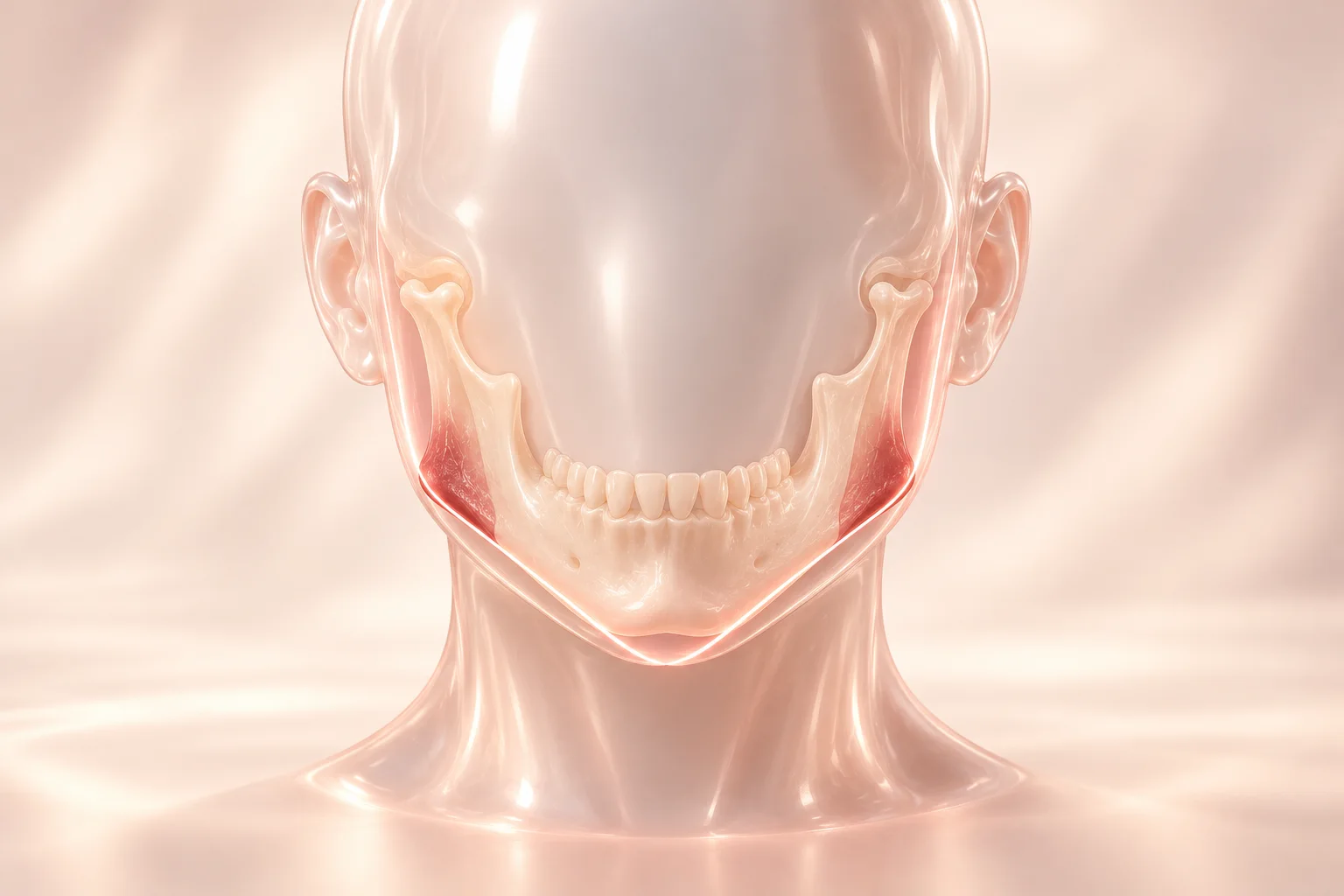
Techniques & materials
- 01Mandibular angle ostectomy
The surgeon removes the corner of the jawbone below the ear to soften a square jaw.
- 02Long curved ostectomy
A single curved cut runs from the back of the jaw towards the chin, staying below the nerve that runs inside the bone.
- 03Outer cortex reduction
The outer layer of the jawbone is shaved or split away to reduce width when the face is viewed from the front.
- 04T-shaped genioplasty
The chin bone is cut in a T shape, a middle piece is removed, and the remaining pieces are joined with small titanium plates to narrow the chin.
- 05Intraoral or behind-the-ear approach
Most surgeons work through cuts inside the mouth, which leaves no visible scar; a short cut behind the ear is a reported alternative.
Clinics do not all carry the same devices, products or techniques. Ask which one will be used, by name, before you book.
How it is done, in photos
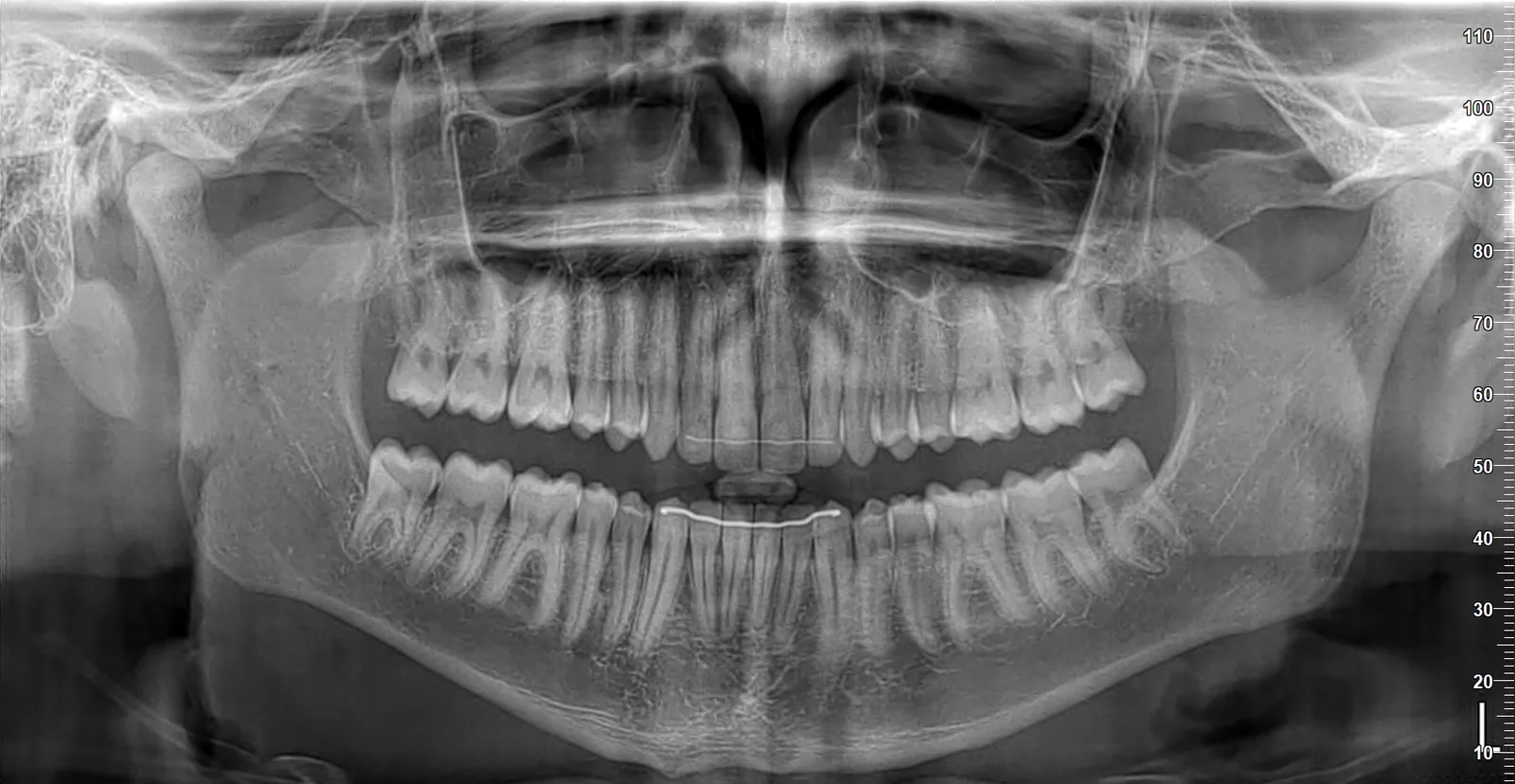
A panoramic X-ray shows the whole jaw; CT-guided planning keeps the bone cut 3 to 5 mm away from the nerve that runs inside the jawbone.
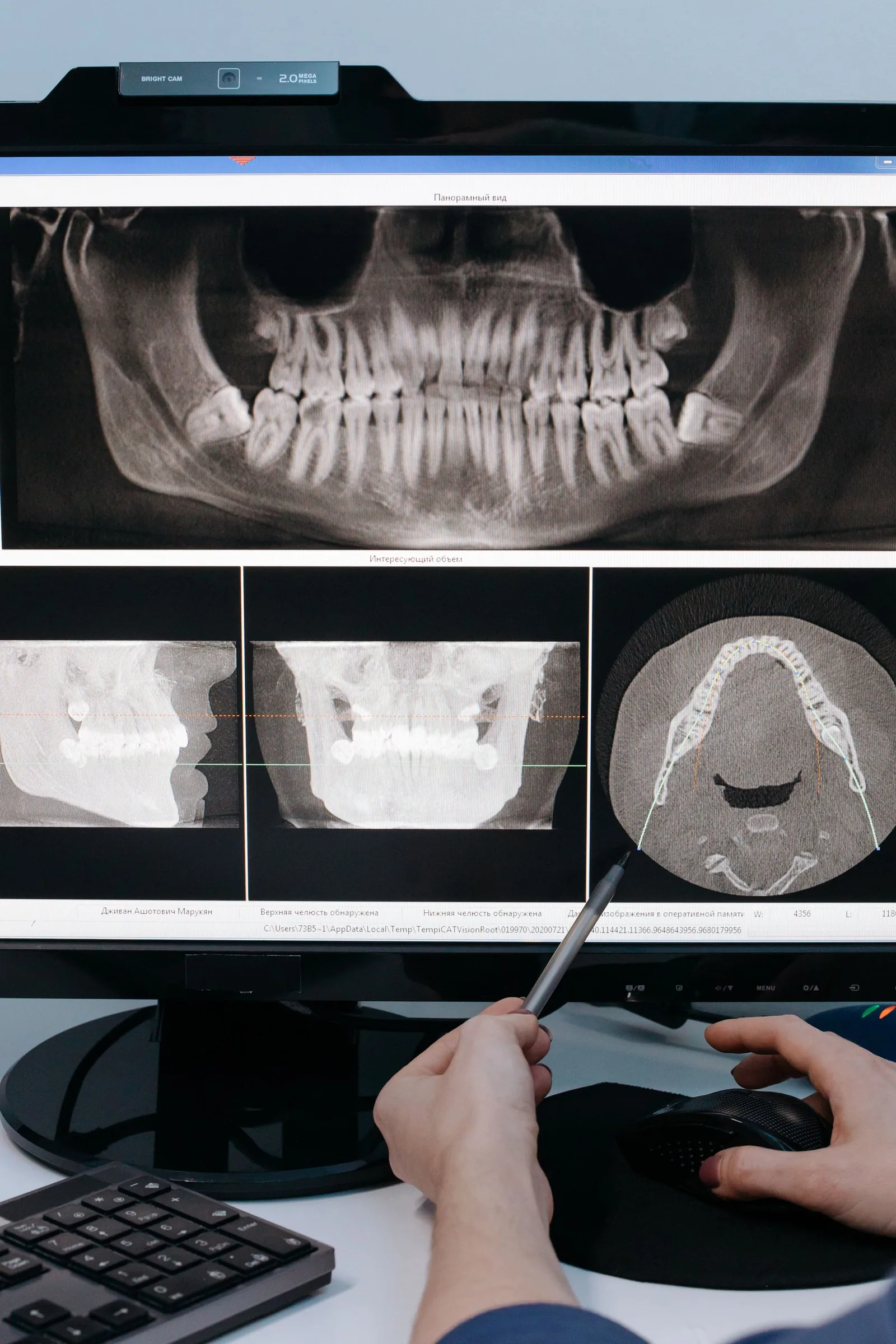
Jaw images, including CT cross-sections, are reviewed on screen before surgery to see where the nerve runs and how much bone can come off.
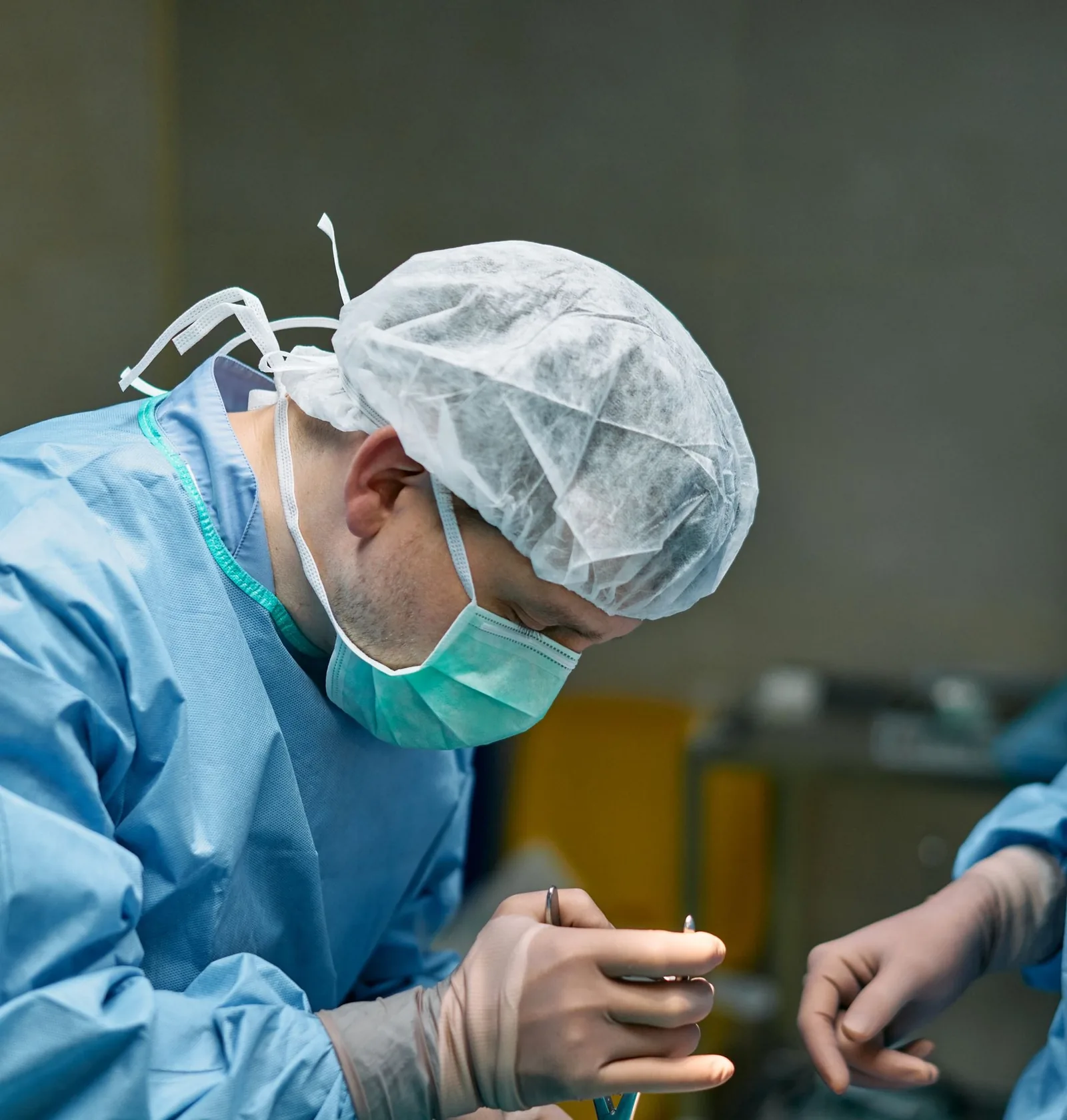
Jaw-angle reduction is done under general anaesthesia, usually through cuts inside the mouth; one hospital series averaged about 75 minutes for the angle alone.
Device and procedure images are provided by the manufacturers / licensed stock; they do not show COMEDI patients.
At a glance
- Approach
- Jaw-angle bone is removed or thinned, usually through the mouth, and chin narrowing may be added in the same operation. The cut is planned to keep a safe distance from the nerve inside the jaw.
- Anaesthesia
- General anaesthesia.
- Operating time
- One published hospital series reported an average of about 75 minutes for jaw-angle reduction alone. Adding chin surgery takes longer, and times vary by clinic and case.
- Stitches & dressings
- Cuts inside the mouth are generally closed with dissolving stitches. A drain or a compression dressing is commonly used for the first day or two.
Facial bone surgery is planned after CT and other tests show where the bone and nerves lie. Soft tissue does not always change the way the bone does, and swelling takes a long time to settle.
Soft tissue does not always follow the bone, and some sagging can occur.
Real cases
A case only helps when you can see the conditions behind it.
Sign in to see the before & after photos
Free. We use your Google name and email only to answer questions about these cases. Clinic names are shared in your private consultation.
 Before
 After
- Sessions
- Surgery (example)
- Combined
- None
- Photo timing
- 6 months after surgery (example)
 Before
 After
- Sessions
- Surgery (example)
- Combined
- None
- Photo timing
- 6 months after surgery (example)
 Before
 After
- Sessions
- Surgery (example)
- Combined
- None
- Photo timing
- 6 months after surgery (example)
- SessionsOne session, or the result of a course
- CombinedWhether other treatments or surgery were done together
- Photo timingHow long after the procedure the photo was taken
What to ask in a consultation
Questions about whether it suits you and what the alternatives are.
Often considered when
- People who want a slimmer lower face; a review of mandibular angle osteotomy describes it as widely performed in East Asian patients seeking lower-face contouring.
- People whose jaw corner itself is prominent; the same review names a prominent mandibular angle as the main concern the operation addresses.
- People whose wide jaw involves the bone and not only the chewing muscle; a case report notes that when the muscle has changed the bone, botulinum toxin alone has a low success rate and surgery should be considered.
- People who can plan a stay long enough for the hospital stay and early checks; in a series of 588 Korean patients, all were admitted for 1 to 2 days.
Checks in Korea
- Korea's Foreign Patient Attraction Information System (MEDICALKOREA), run by the Korea Health Industry Development Institute, lets you search registered medical institutions and facilitators by name; leaving the name blank lists all registered ones.
- Q01From my test results, how far is it safe to go?
- Q02What alternatives are there without bone surgery — a non-surgical treatment or a different operation?
- Q03Who is the operating surgeon, and what is their specialty?
- Q04What type of anaesthesia is used, and who monitors it?
- Q05How many follow-up visits are needed before it is safe for me to fly home?
- Q06What are the possible risks and complications, and how are they handled if I am abroad?
- Q07What is included in the written estimate — revisions, medication, garments, stitches out?
Check these yourself at the consultation
- Which cuts are planned (angle only, long curved, outer layer, chin narrowing) and why.
- Whether a CT scan is used to map the nerve inside the jaw before surgery.
- Whether a board-certified anaesthesiologist stays in the room and how heavy bleeding would be handled.
Recovery & schedule
Check swelling, daily routine, activity limits and review visits separately.
At a glance
- Planning distance from the nerve
- A 2026 review describes CT-guided planning that keeps a minimum distance of 3 to 5 mm between the cut line and the nerve-and-vessel bundle inside the jaw. How much bone can come off depends on where your nerve runs.
- Hospital stay & antibiotics
- In a published series of 588 Korean patients, all were admitted for 1 to 2 days; the first antibiotic dose was given during surgery and further doses every 8 hours for 2 more days.
- Eating & mouth care
- One published description lets patients start regular food from the day after surgery and encourages gargling for 2 weeks to protect the cuts inside the mouth. Your clinic sets its own diet plan.
- Opening the mouth
- The same source says patients must start practising opening their mouths after 2 weeks.
- When the slimmer line shows
- Swelling around the chin can last a long time, and the same source says that in most cases the slimming effect is apparent after 3 months.
- Change in the chewing muscle
- The 2026 review reports that the chewing muscle is detached from the bone during surgery and then shrinks; CT studies measured a volume decrease of about 21% to 40%.
- 01Swelling & bruising
Swelling around the chin can last a long time; one source says the slimming effect is apparent after about 3 months in most cases. How long it takes varies from person to person.
- 02Back to routine
In the 588-patient series, patients stayed 1 to 2 days in the clinic, and one published description lets patients start regular food from the day after surgery. When you return to work is set with your surgeon.
- 03Activity limits
Mouth-opening practice starts after about 2 weeks in one published description. The NHS advises resting after surgery abroad and not drinking alcohol, lying in the sun, sightseeing or going in the water.
- 04Follow-up & flying home
The NHS recommends not flying for 7 to 10 days after facial cosmetic procedures and agreeing beforehand where follow-up appointments will be and what happens if there are complications. In the 588-patient series, infections appeared within 2 weeks of surgery.
Published guidance; your own clinic sets the actual plan.
Before your visit day
What clinics ask of international patients, in one place.
- Bring your passportClinics register international patients with their passport, and any estimate or prescription is issued in the name on it.
- Patients under 19Adulthood in Korea starts at 19. For a younger patient, clinics generally ask a parent or legal guardian to consent in writing, and many ask them to attend. Tell us the patient's age when you write, and we check what the clinic needs.
- Coming with someoneA family member or friend can usually join you in the consultation room. Treatment and recovery areas follow each clinic's rules, so we check this before your visit. If more than one person is booking, tell us what each person is interested in.
- Language helpCoordinators reply in English, Japanese, Chinese and Korean. Interpretation on the day is arranged for your dates, and we confirm in writing what it covers before you travel.
- Medicines and allergiesWrite down the medicines you take and any allergies. The clinic asks about both before any treatment.
What changes the price
The same surgery can be quoted differently depending on the items below.
What differs from clinic to clinic
- Cut design and experience
- A 2026 review says the osteotomy design should be guided by the shape of your jaw, your aesthetic priorities and, importantly, the surgeon's experience; with curved cuts, deviation and unintended fractures are strongly influenced by that experience.
- Planning tools
- The same review describes digital cutting templates made with a 3D printer and navigation that gives real-time feedback on where the saw is relative to the planned line. Whether a clinic uses these, or plans from CT alone, differs.
- Approach and view
- A 2023 paper notes that through the mouth the surgeon's field of view is limited, and heavy bleeding can occur if the facial artery or mandibular vein is damaged; its authors used a cut behind the ear instead. Which approach a clinic uses changes the scar and the operation.
- Aftercare protocol
- One published series kept a bulky compression dressing for 4 to 5 days with a 1 to 2 day stay, while another used a gentle dressing for one day. What is included and how long you stay differ between clinics.
- Soft-tissue handling
- The 2026 review describes facial sagging after surgery and reattaching the detached muscle without tension as a way to address it. Ask how a clinic handles the muscle and soft tissue, not only the bone.
- Combined procedures
- In the 588-patient series, 190 had jaw-angle resection alone, while the rest also had chin and/or cheekbone surgery. Whether a clinic proposes one area or several changes the length of surgery, the stay and the quote.
- Cut design
- Whether the quote is for angle-only resection, a long curved cut, outer-layer grinding or splitting, or a combination.
- Chin narrowing
- Whether chin narrowing (such as a T-shaped cut) is part of the plan, and whether the plates used to fix it are included.
- Digital planning
- Whether CT-based 3D planning, a 3D-printed cutting guide or navigation is used, and whether it is priced separately.
- Combined areas
- Whether cheekbone reduction or chin work is added in the same operation and how each area is counted.
- Muscle treatment
- Whether botulinum toxin for the chewing muscle is suggested before or after surgery, and whether it is included.
- Touch-up policy
- What happens and what it costs if a step or second angle needs smoothing later.
- Extent
- Jaw, cheekbones, chin and how they are combined
- Tests
- CT and other pre-operative tests
- Anaesthesia & stay
- General anaesthesia, the anaesthesiologist and nights in hospital
- What is included
- Medication, compression band, review visits and the revision policy
Prices are set by the clinic after a consultation. Ask for an itemised, written estimate before you book, and check what is included and what could change.
Often charged separately
Ask whether each of these is in your estimate.
| Item | What to ask |
|---|---|
| Consultation fee | Whether the consultation is charged, and whether that amount comes off the surgery price. |
| Stitch removal and check-ups | How many follow-up visits are included, and how check-ups work once you have flown home. |
| Recovery stay | Whether an overnight stay at the clinic or a recovery facility is in the estimate. |
Clinics in Korea build a surgery estimate from the technique, the type of anaesthesia and the care around the operation.
The final figure is set after the surgeon examines you.
Ask for an itemised, written estimate that marks each item above as included or not, so you can compare two quotes on the same basis.
VAT before you compare quotes
The VAT refund for foreign visitors' cosmetic procedures covered only procedures received by 31 December 2025, so procedures received now are not refunded. Plan your budget without it, and ask each clinic whether VAT is included in the written quote so you compare the same total.
Ask COMEDI, for example
Clinics in Seoul differ in equipment, technique, specialist focus and what the price includes. Send us your question and we compare partner clinics for you.
- “Which partner clinics use 3D-printed guides or navigation for jaw-angle surgery?”
- “Which clinics would do angle-only resection for my jaw, and which would suggest a long curved cut or chin narrowing too?”
- “Do the quotes include the hospital stay, compression dressing and check-ups before I fly home?”
- “My jaw may be mostly muscle — can you compare clinics that would try botulinum toxin first?”
Precautions & aftercare
General information. Follow the written instructions from your treating doctor for anything specific to you.
Side effects and precautions for V-line jaw surgery are in one place at the top of this page.
Aftercare for this procedure
- Gargle as instructed to keep the cuts inside the mouth clean; one published protocol encourages gargling for 2 weeks.
- Start mouth-opening exercises when your surgeon says; one published description starts them after 2 weeks.
- Watch for pain, swelling, redness, pus or fever in the first 2 weeks, the period when infections appeared in the 588-patient series, and contact the clinic straight away.
- Keep the compression dressing on for as long as your clinic advises; published protocols range from one day to 4 to 5 days.
- Rest after surgery and avoid alcohol, sun, sightseeing and swimming, as the NHS advises after surgery abroad.
- Tell the clinic about dental or orthodontic treatment, jaw joint symptoms, medical conditions, medicines and smoking.
- Contact the clinic immediately for difficulty breathing, bleeding, fever or severe pain.
- This is surgery under general anaesthesia, so ask about pre-operative tests and emergency arrangements.
Information only. Suitability, risks, recovery and price are assessed by the treating doctor in a consultation.
Sources for this section 9
- Kang M. Incidence of Complications Associated with Mandibuloplasty: A Review of 588 Cases over 5 Years — Plastic and Reconstructive Surgery Global Open 2014 (PMC4174213)
- Xie Z et al. Mandibular angle osteotomy in Asian patients: a narrative review on techniques, emerging technologies, and personalized surgical strategies — JPRAS Open 2026 (PMC13382180)
- Lee J, Lee S. Facial Contouring Surgery—Mandibuloplasty: Genioplasty and Mandible Angle Correction — Plastic and Reconstructive Surgery Global Open 2017 (PMC5682158)
- Lee YJ et al. Mandible Angle Resection with the Retroauricular Approach — Journal of Clinical Medicine 2023 (PMC10094842)
- Ayhan M et al. Combination of Medical and Surgical Treatments for Masseter Hypertrophy — Case Reports in Dentistry 2018 (PMC5907395)
- Reshaping chins and cheeks — British Association of Aesthetic Plastic Surgeons (BAAPS)
- Before you have a cosmetic procedure — NHS
- Cosmetic surgery abroad — NHS
- Foreign Patient Attraction Information System (MEDICALKOREA) — Korea Health Industry Development Institute
Related questions & guides
Worth reading alongside this page.
Notes from people who used COMEDI
Written after a consultation we arranged, and matched to that request.
Common questions
How much does V-line jaw surgery cost in Korea?+
Prices are set by each clinic after a consultation and depend on the technique, area and your needs. Ask for an itemised, written estimate before you book — it should list what is included and what could change. We help you request and compare estimates.
Can foreigners get V-line jaw surgery in Korea?+
Yes. Many Seoul clinics see international patients. We help with clinic information, consultations in your language, written estimates and interpretation on the day.