
Breast reduction
Reduces breast size and weight by removing tissue and skin.

- Type
- Surgical
- Usually by
- Plastic surgeon
- Category
- Breast & body
- First step
- Consultation
Information only. Suitability, risks, recovery and price are assessed by the treating doctor in a consultation.
Side effects and precautionsWhat to know about Breast reduction before you book13
Reactions that usually settle, signs to tell the clinic about straight away, and times to wait. Your doctor goes through the risks that apply to you at the consultation.
Known risks
- Thick scars, uneven breasts or nipples, slow wound healing, loss of nipple sensation, reduced ability to breastfeed, loss of nipple or fat tissue, bleeding, infection and blood clots.
Usually settles on its own
- Numbness of the nipple and breast for 4 weeks or longer, and bruising, as one university hospital handout describes.
- Some drainage from the incisions, which the same handout calls normal.
- Changes in nipple sensation: ASPS says that most of the time nipple sensation improves over time.
Tell the clinic promptly
- Bleeding inside the breast (haematoma), which the NHS says generally happens within the first 24 hours after the operation.
- Excess skin left around the scars, which the NHS says may need to be surgically removed.
- Excessive firmness of the breast, loss of skin or tissue where incisions meet, pain that may persist and the possibility of revisional surgery, which ASPS lists.
- A fever above 38°C, shaking and chills, bleeding or drainage that soaks the dressing, or redness, rising pain, swelling or bad-smelling drainage at a wound: the handout says to call the clinic. The NHS adds severe pain or any unexpected symptom.
Wait or rethink when
- Smoking or vaping: ASPS lists non-smokers and non-vapers as candidates, and BAAPS advises stopping smoking 6 weeks before surgery and not smoking afterwards.
- A life-threatening illness or a medical condition that can impair healing (ASPS).
- Planning a pregnancy: BAAPS says that if you become pregnant after breast surgery, the outcome of the reduction is likely to be affected.
- Wanting to breastfeed in future: BAAPS says a reduction will reduce your chances of being able to breastfeed, so this is worth weighing first.
- A BMI of 30 or more, diabetes or previous radiation therapy: a 2025 meta-analysis found each linked to a higher chance of complications, and BAAPS recommends reaching the healthiest BMI possible before surgery.
Sources for this section 14
- NHS - Breast reduction (female)
- BAAPS - Breast reduction
- NHS - Cosmetic surgery abroad
- Breast Reduction Risks and Safety — American Society of Plastic Surgeons
- Breast Reduction or Mastopexy: What to expect and how to prepare — UW Medicine patient education
- Breast Reduction Candidates — American Society of Plastic Surgeons
- Breast Reduction Procedure Steps — American Society of Plastic Surgeons
- Breast Reduction Recovery — American Society of Plastic Surgeons
- Breast Reduction Results — American Society of Plastic Surgeons
- Ran et al. Risk factors for complications after reduction mammaplasty: a systematic review and meta-analysis — Eur J Med Res 2025 (PMC12128374)
- Wagner RD, Lisiecki JL, Chiodo MV, Rohrich RJ. Longevity of ptosis correction in mastopexy and reduction mammaplasty: A systematic review of techniques — JPRAS Open 2022 (PMC9428726)
- Alhebshi et al. The Role of Tranexamic Acid Use in Reduction Mammaplasty: A Systematic Review and Meta-Analysis — Aesthet Surg J Open Forum 2025 (PMC12201987)
- Cosmetic surgery abroad — NHS
- Foreign Patient Attraction Information System (MEDICALKOREA) — Korea Health Industry Development Institute
What is it?
The purpose, the change you can expect and the limits.
Reduces breast size and weight by removing tissue and skin.
Reduction mammoplasty
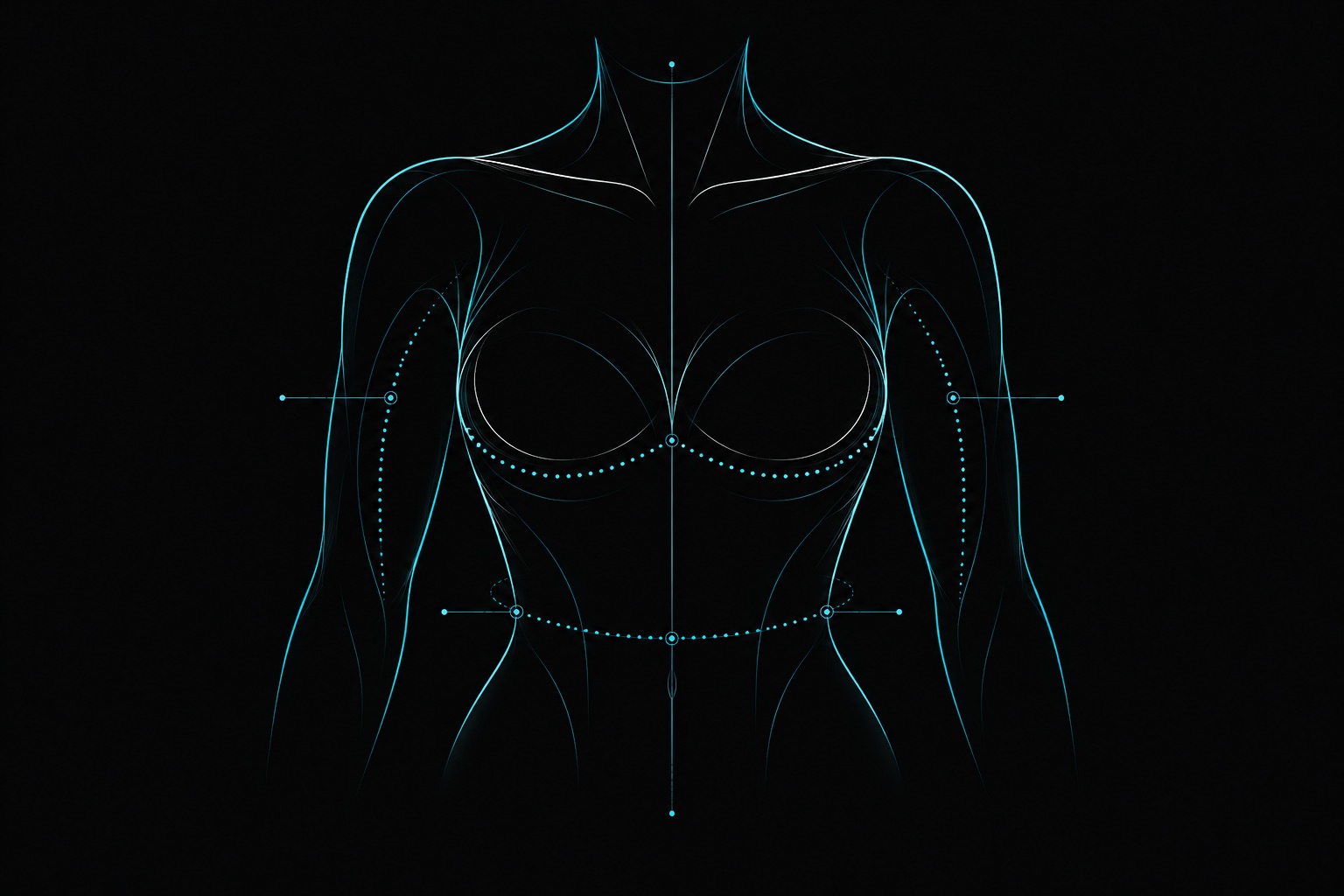
Techniques & materials
- 01Inverted-T (anchor) pattern
Cuts run around the areola, vertically down and along the breast fold, leaving an anchor-shaped scar.
- 02Vertical scar technique
Cuts run around the areola and vertically down only, without the cut along the fold.
- 03Pedicle techniques
The nipple stays attached to a bridge of tissue that carries its blood supply; the bridge may come from above, above-inner, or below.
- 04Free nipple graft
In selected cases the nipple is removed completely and stitched back in its new position as a skin graft.
- 05Liposuction-only reduction
Liposuction alone can reduce volume but cannot move the nipple to a higher position.
Clinics do not all carry the same devices, products or techniques. Ask which one will be used, by name, before you book.
How it is done, in photos
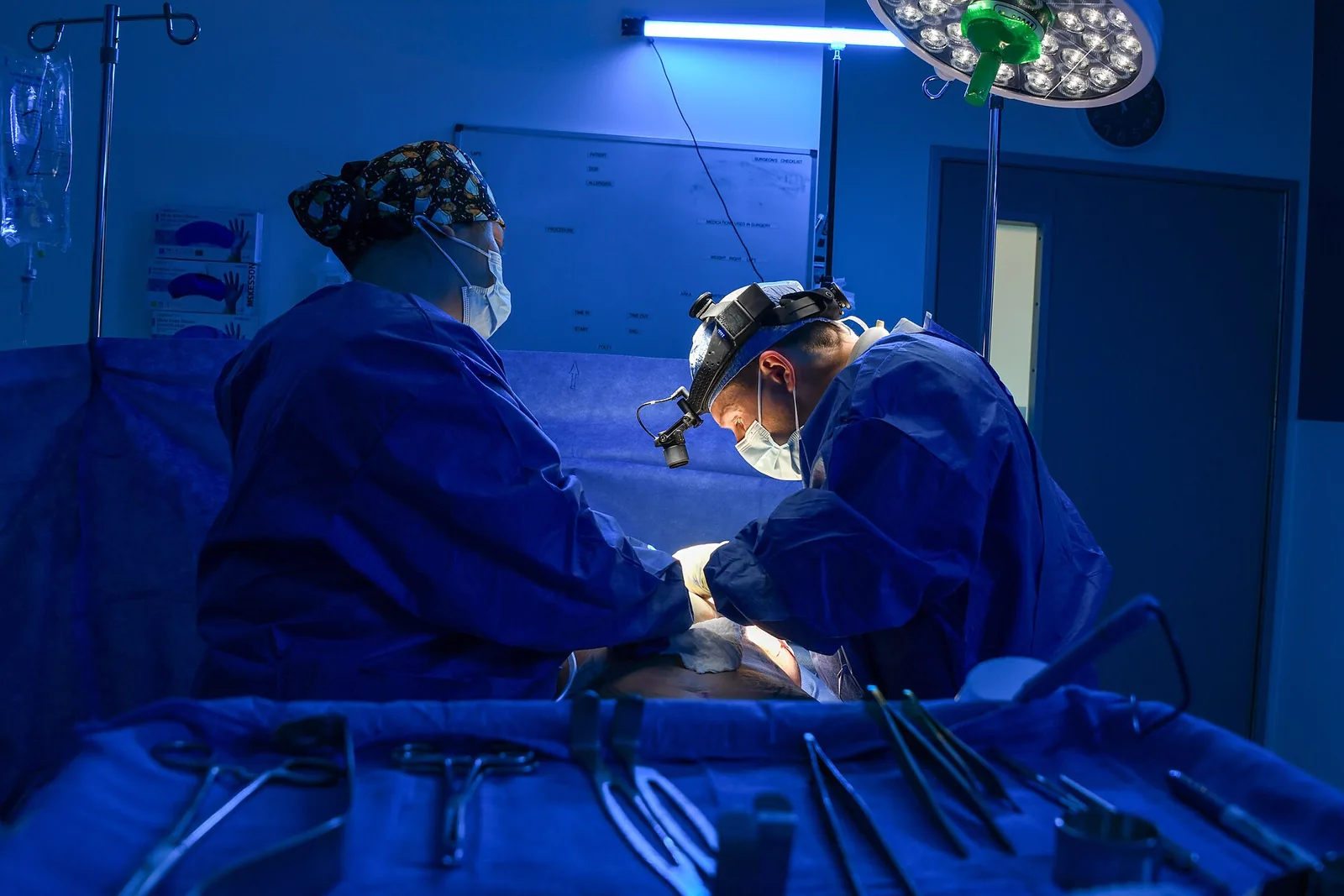
Breast reduction is done under general anaesthesia and generally takes two to three hours, depending on the clinic and the amount of tissue removed.
Photo: Tyler Frew MD / CC BY-SA 4.0 / CC BY-SA 4.0 via Wikimedia Commons
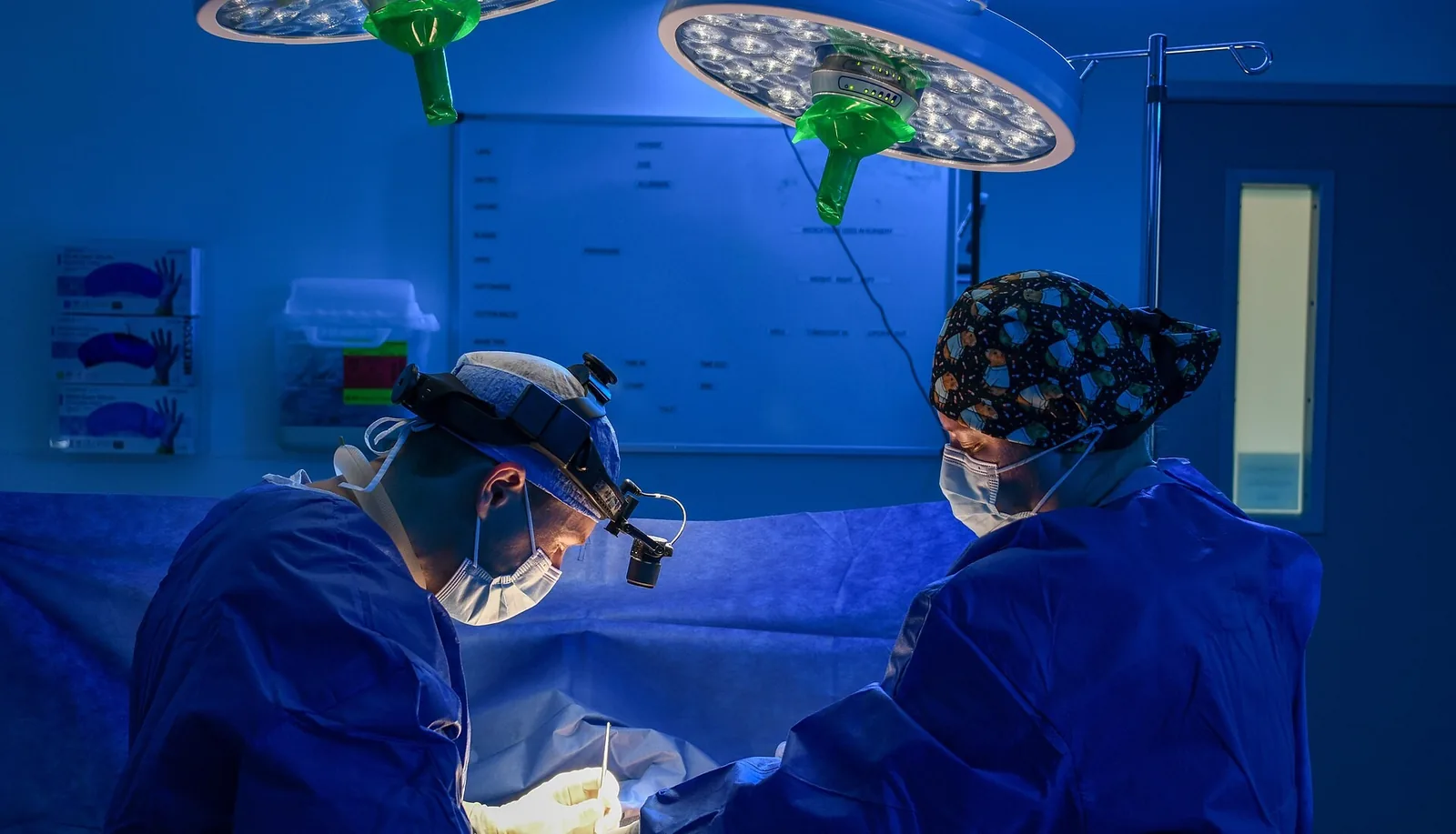
The surgical team works under operating lights to remove tissue and reshape the breast, usually keeping the nipple attached to its blood supply as it is moved up.
Photo: Tyler Frew MD / CC BY-SA 4.0 / CC BY-SA 4.0 via Wikimedia Commons
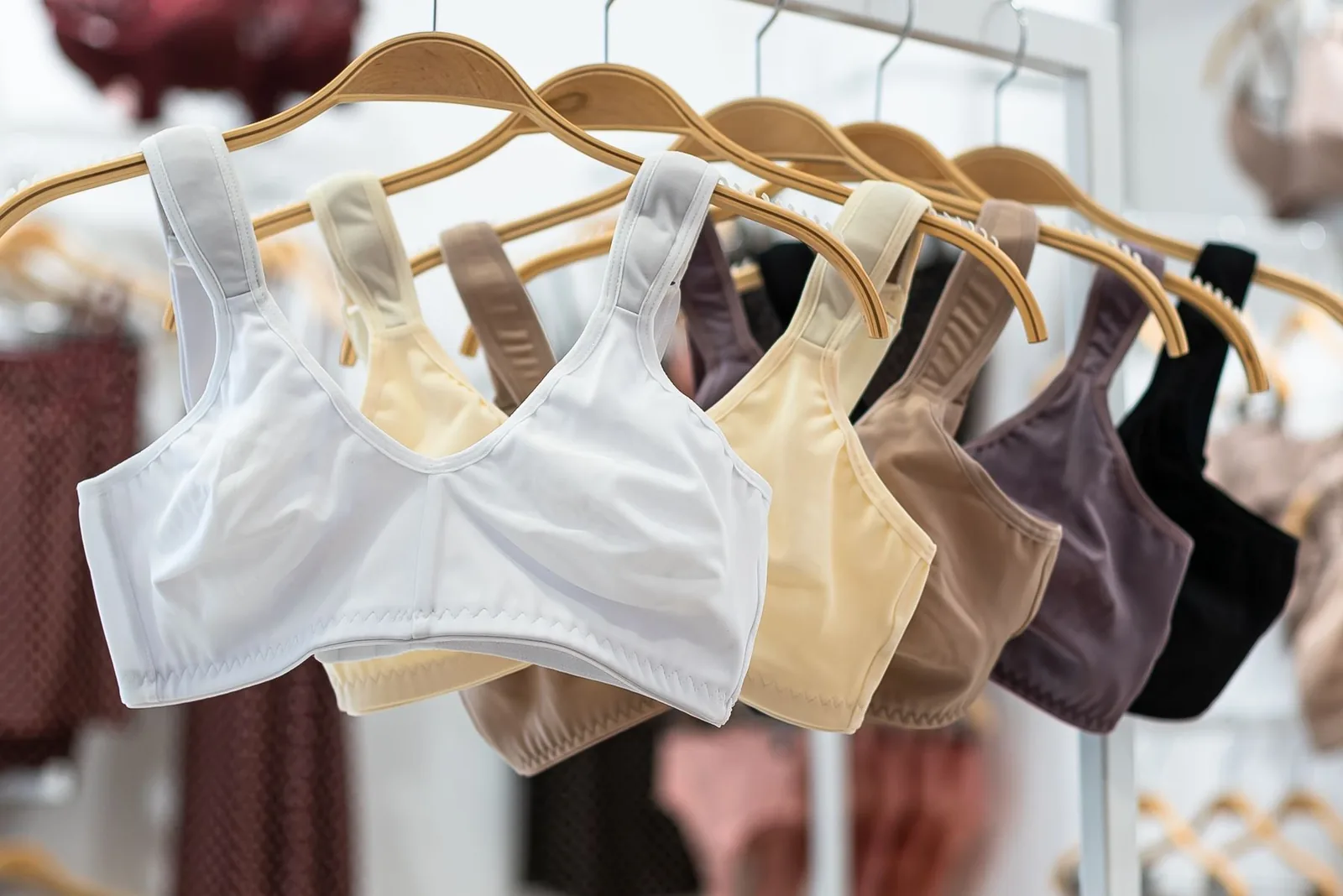
A soft sports bra may be advised day and night for up to three months after a reduction, while strenuous activity is avoided for about six weeks.
Device and procedure images are provided by the manufacturers / licensed stock; they do not show COMEDI patients.
At a glance
- Approach
- Fat, gland tissue and skin are removed, the breast is reshaped and the nipple is moved up, usually while still attached to its blood supply.
- Anaesthesia
- General anaesthesia.
- Operating time
- Generally 2 to 3 hours, depending on the clinic and the amount removed.
- Hospital stay
- Generally 1 to 2 nights. Drain tubes, if used, usually come out after 2 to 3 days; the NHS advises waiting 5 to 7 days after breast surgery before flying.
- Stitches & garments
- Stitches are usually dissolving. A sports bra may be advised day and night for up to 3 months, and strenuous activity is avoided for about 6 weeks.
The method depends on your build, skin elasticity and the size and shape you want. Scars remain, and the final shape settles after swelling goes down.
It leaves scars and can affect sensation or breastfeeding.
Real cases
A case only helps when you can see the conditions behind it.
- SessionsOne session, or the result of a course
- CombinedWhether other treatments or surgery were done together
- Photo timingHow long after the procedure the photo was taken
There are no published cases on this page yet. We only handle cases a clinic provides with the patient's consent, and we walk through them with their conditions in your private consultation.
What to ask in a consultation
Questions about whether it suits you and what the alternatives are.
Often considered when
- People bothered by the feeling that their breasts are too large, or who struggle with physical activity because of breast size, as ASPS describes candidates.
- People with back, neck and shoulder pain caused by the weight of their breasts.
- People with shoulder grooves from bra straps or skin irritation under the breast crease.
- Healthy adults who do not smoke or vape and have no life-threatening illness or condition that can impair healing.
- People with a positive outlook and specific goals for the reduction, which ASPS also lists.
Checks in Korea
- Korea's Foreign Patient Attraction Information System (MEDICALKOREA), run by the Korea Health Industry Development Institute, lets you search registered medical institutions and facilitators by name; leaving the name blank lists all registered ones.
- Q01Which method, size or extent suits my build?
- Q02Where will the scars be, and what long-term checks or care are needed?
- Q03Who is the operating surgeon, and what is their specialty?
- Q04What type of anaesthesia is used, and who monitors it?
- Q05How many follow-up visits are needed before it is safe for me to fly home?
- Q06What are the possible risks and complications, and how are they handled if I am abroad?
- Q07What is included in the written estimate — revisions, medication, garments, stitches out?
Check these yourself at the consultation
- Which scar pattern and nipple technique are planned, and why.
- How the plan affects nipple sensation and future breastfeeding.
- How long you should stay for drain removal and wound checks before flying.
Recovery & schedule
Check swelling, daily routine, activity limits and review visits separately.
At a glance
- Anaesthesia options
- ASPS lists intravenous sedation and general anaesthesia as the choices. Which one is planned, and who gives it, is worth confirming with the clinic.
- When the shape shows
- ASPS says swelling and bruising may at first hide the final result and that full recovery can take several months. The NHS says it can take 2 to 6 weeks to fully recover from the operation itself.
- How long it lasts
- ASPS describes the result as long-lasting, but breasts can still change with ageing, weight changes, hormones and gravity. BAAPS adds that the breast shape changes over time as gravity pulls on the remaining tissue.
- Breastfeeding later
- ASPS says a reduction may limit the ability to breastfeed, although most women can still breastfeed afterwards; BAAPS says it reduces the chances. How a planned technique affects this is a question for the surgeon.
- 01Swelling & bruising
ASPS says gauze or bandages go on the incisions and an elastic bandage or support bra limits swelling. One university hospital handout notes the nipple and breast may feel numb for 4 weeks or longer and the breast may be bruised.
- 02Back to routine
The NHS says you may need 2 to 3 weeks off work and should not drive until wearing a seatbelt is no longer painful. The handout allows a shower 48 hours after surgery. Your own surgeon sets the actual timeline.
- 03Activity limits
The handout advises avoiding running or any impact exercise and lifting more than 10 pounds (about 4.5 kg) for 4 weeks, and no bath, hot tub or swimming until every incision has healed.
- 04Follow-up & flying home
ASPS says your instructions include when to follow up with your surgeon. For surgery abroad, the NHS suggests asking where follow-up appointments will be, what happens if there are complications and what happens if you need more surgery.
Published guidance; your own clinic sets the actual plan.
Before your visit day
What clinics ask of international patients, in one place.
- Bring your passportClinics register international patients with their passport, and any estimate or prescription is issued in the name on it.
- Patients under 19Adulthood in Korea starts at 19. For a younger patient, clinics generally ask a parent or legal guardian to consent in writing, and many ask them to attend. Tell us the patient's age when you write, and we check what the clinic needs.
- Coming with someoneA family member or friend can usually join you in the consultation room. Treatment and recovery areas follow each clinic's rules, so we check this before your visit. If more than one person is booking, tell us what each person is interested in.
- Language helpCoordinators reply in English, Japanese, Chinese and Korean. Interpretation on the day is arranged for your dates, and we confirm in writing what it covers before you travel.
- Medicines and allergiesWrite down the medicines you take and any allergies. The clinic asks about both before any treatment.
What changes the price
The same surgery can be quoted differently depending on the items below.
What differs from clinic to clinic
- Which pedicle, and how the shape holds
- A 2022 systematic review found superior and superomedial pedicles tended to give greater long-term stability than inferior pedicles, while concluding that no single procedure is ideal for everyone. Which pedicle a surgeon uses for your size and droop differs.
- Drains or no drains
- A 2025 meta-analysis notes the ASPS clinical practice guideline recommends against routine drains in breast reduction, and found that tranexamic acid applied locally reduced 24-hour drain output, while the need for drains and how long they stayed in did not differ significantly. Whether a clinic uses drains, and how that affects the first days and your stay, is worth asking.
- Anaesthesia and pain control
- ASPS lists intravenous sedation or general anaesthesia, and says a pain pump may be used to reduce the need for narcotics. Clinics differ in which they offer and include.
- How risk is screened
- The 2025 meta-analysis linked BMI of 30 or more, smoking, diabetes, previous radiation and surgical technique with complications. How carefully a clinic checks these before booking, and adjusts the plan, varies.
- Surgeon experience and aftercare abroad
- The NHS suggests asking how long a surgeon has been practising, how many similar procedures they have done, and what happens if you need more surgery. How openly clinics answer, and how they follow up once you are home, differs.
- Incision pattern
- Anchor (inverted-T) or vertical, since the pattern sets how much skin is removed and where the scars sit.
- Nipple technique
- Which pedicle is used, or whether a free nipple graft is planned.
- Liposuction added
- Whether liposuction is added to remove extra fat, and which areas it covers.
- Anaesthesia and stay
- Sedation or general anaesthesia, who gives it, and whether a night in hospital is included.
- Breast imaging
- Whether a mammogram or breast ultrasound before surgery is included or must be brought from home.
- Drains, bra and follow-up
- Drains or a pain pump, the surgical bra, review visits before you fly, and the policy if scar or excess-skin revision is needed.
- Method
- Implants, fat transfer, incision approach
- Implant & extent
- Implant type, or the number and size of liposuction areas
- Anaesthesia & stay
- General anaesthesia, the anaesthesiologist and whether you stay overnight
- What is included
- Tests, medication, compression garment, review visits and the revision policy
Prices are set by the clinic after a consultation. Ask for an itemised, written estimate before you book, and check what is included and what could change.
Often charged separately
Ask whether each of these is in your estimate.
| Item | What to ask |
|---|---|
| Consultation fee | Whether the consultation is charged, and whether that amount comes off the surgery price. |
| Stitch removal and check-ups | How many follow-up visits are included, and how check-ups work once you have flown home. |
Clinics in Korea build a surgery estimate from the technique, the type of anaesthesia and the care around the operation.
The final figure is set after the surgeon examines you.
Ask for an itemised, written estimate that marks each item above as included or not, so you can compare two quotes on the same basis.
VAT before you compare quotes
The VAT refund for foreign visitors' cosmetic procedures covered only procedures received by 31 December 2025, so procedures received now are not refunded. Plan your budget without it, and ask each clinic whether VAT is included in the written quote so you compare the same total.
Ask COMEDI, for example
Clinics in Seoul differ in equipment, technique, specialist focus and what the price includes. Send us your question and we compare partner clinics for you.
- “Which partner clinics would plan a vertical scar for me, and which an anchor scar?”
- “Which pedicle does each clinic usually use, and do any plan a free nipple graft for my size?”
- “Do the quotes include imaging before surgery, a night in hospital and review visits before I fly?”
- “Which clinics use drains, and how does that change how long I should stay?”
Precautions & aftercare
General information. Follow the written instructions from your treating doctor for anything specific to you.
Side effects and precautions for Breast reduction are in one place at the top of this page.
Aftercare for this procedure
- Stop smoking at least 6 weeks before surgery and stay off it afterwards, as BAAPS advises.
- For 1 week before surgery, avoid aspirin and other products that affect blood clotting, such as ibuprofen and naproxen, as one university hospital handout instructs.
- Walk a few times every day after you leave hospital; the handout says moving helps keep blood clots from forming.
- Keep your weight stable: ASPS says weight changes can alter the breasts over time.
- If you had a mammogram before surgery, plan another 6 to 9 months later as the new baseline.
- Tell the clinic about medical conditions, any history of blood clots, medicines (including hormones), smoking and plans for pregnancy or breastfeeding.
- Contact the clinic immediately for shortness of breath, leg pain or swelling, fever or marked swelling on one side.
- Get your surgeon's written advice before a long-haul flight.
Information only. Suitability, risks, recovery and price are assessed by the treating doctor in a consultation.
Sources for this section 13
- Breast Reduction Candidates — American Society of Plastic Surgeons
- Breast Reduction Procedure Steps — American Society of Plastic Surgeons
- Breast Reduction Recovery — American Society of Plastic Surgeons
- Breast Reduction Risks and Safety — American Society of Plastic Surgeons
- Breast Reduction Results — American Society of Plastic Surgeons
- Breast reduction (female) — NHS
- Breast reduction — BAAPS
- Breast Reduction or Mastopexy: What to expect and how to prepare — UW Medicine patient education
- Ran et al. Risk factors for complications after reduction mammaplasty: a systematic review and meta-analysis — Eur J Med Res 2025 (PMC12128374)
- Wagner RD, Lisiecki JL, Chiodo MV, Rohrich RJ. Longevity of ptosis correction in mastopexy and reduction mammaplasty: A systematic review of techniques — JPRAS Open 2022 (PMC9428726)
- Alhebshi et al. The Role of Tranexamic Acid Use in Reduction Mammaplasty: A Systematic Review and Meta-Analysis — Aesthet Surg J Open Forum 2025 (PMC12201987)
- Cosmetic surgery abroad — NHS
- Foreign Patient Attraction Information System (MEDICALKOREA) — Korea Health Industry Development Institute
Related questions & guides
Worth reading alongside this page.
Notes from people who used COMEDI
Written after a consultation we arranged, and matched to that request.
Common questions
How much does Breast reduction cost in Korea?+
Prices are set by each clinic after a consultation and depend on the technique, area and your needs. Ask for an itemised, written estimate before you book — it should list what is included and what could change. We help you request and compare estimates.
Can foreigners get Breast reduction in Korea?+
Yes. Many Seoul clinics see international patients. We help with clinic information, consultations in your language, written estimates and interpretation on the day.