
Tummy tuck
Removes excess abdominal skin and can tighten the abdominal wall.

- Type
- Surgical
- Usually by
- Plastic surgeon
- Category
- Breast & body
- First step
- Consultation
Information only. Suitability, risks, recovery and price are assessed by the treating doctor in a consultation.
Side effects and precautionsWhat to know about Tummy tuck before you book15
Reactions that usually settle, signs to tell the clinic about straight away, and times to wait. Your doctor goes through the risks that apply to you at the consultation.
Known risks
- Fluid collecting under the skin (seroma) is the most frequently reported problem; others are infection, bleeding, poor wound healing, thick scars, lasting numbness and blood clots.
Usually settles on its own
- Pain and bruising, listed by the NHS among the side effects to expect.
- Numbness of the tummy; BAAPS says it is normal after surgery and usually resolves after 12 to 18 months, while the NHS says it can last a few months to years.
- Difficulty standing up straight with a pulling feeling, which the NHS says improves over time.
- Raised scars that may look red, which the NHS says should fade over 12 to 18 months.
Tell the clinic promptly
- Fluid collecting under the skin (seroma): a 2024 review calls it the most common complication of abdominoplasty and notes incidence rates of up to 25% have been reported.
- Death of fatty tissue deep in the skin (fat necrosis), skin loss, poor wound healing and persistent pain, as listed by ASPS.
- Deep vein thrombosis and cardiac and pulmonary complications, also listed by ASPS.
- Recurrent looseness of skin, asymmetry, unfavourable scarring and the possibility of revision surgery.
- Severe pain or any unexpected symptom; the NHS advises contacting the clinic where the operation was done as soon as possible.
Wait or rethink when
- Planning substantial weight loss: ASPS says such individuals would be advised to postpone a tummy tuck, and that it is not a substitute for weight loss or an appropriate exercise program.
- Women who may be considering future pregnancies, whom ASPS advises to postpone; BAAPS says that if you are pregnant or planning to become pregnant, your surgeon may suggest delaying.
- Being overweight: the NHS says it is not a procedure for someone who is overweight and is usually only recommended for people with a healthy BMI.
- Smoking (ASPS lists being a nonsmoker among good candidates and advises stopping before surgery).
- Hoping to remove stretch marks: ASPS says a tummy tuck cannot correct them, although marks on the skin that is cut away may be removed or somewhat improved.
Sources for this section 18
- NHS - Tummy tuck (abdominoplasty)
- Abdominoplasty - StatPearls
- NHS - Cosmetic surgery abroad
- Tummy tuck (abdominoplasty) — NHS
- Tummy Tuck Risks and Safety — American Society of Plastic Surgeons
- Tummy tuck (abdominoplasty) — British Association of Aesthetic Plastic Surgeons (BAAPS)
- Liao et al. Decreasing Seroma Incidence Following Abdominoplasty: A Systematic Review and Meta-Analysis of High-Quality Evidence — Aesthetic Surgery Journal Open Forum 2024 (PMC10995621)
- Tummy Tuck — American Society of Plastic Surgeons
- Tummy Tuck Candidates — American Society of Plastic Surgeons
- Tummy Tuck Preparation — American Society of Plastic Surgeons
- Tummy Tuck Procedure Steps — American Society of Plastic Surgeons
- Tummy Tuck Recovery — American Society of Plastic Surgeons
- Tummy Tuck Results — American Society of Plastic Surgeons
- Tummy Tuck Cost — American Society of Plastic Surgeons
- Cosmetic surgery abroad — NHS
- Rao et al. A Systematic Review and Meta-Analysis Evaluating the Surgical Outcomes of Progressive Tension Suturing Compared to Drains in Abdominoplasty Surgery — Aesthetic Surgery Journal 2024 (PMC11634385)
- Asiry et al. Utility of the Caprini risk assessment model in guiding venous thromboembolism prophylaxis after abdominoplasty — JPRAS Open 2025 (PMC12597074)
- Foreign Patient Attraction Information System (MEDICALKOREA) — Korea Health Industry Development Institute
What is it?
The purpose, the change you can expect and the limits.
Removes excess abdominal skin and can tighten the abdominal wall.
Abdominoplasty
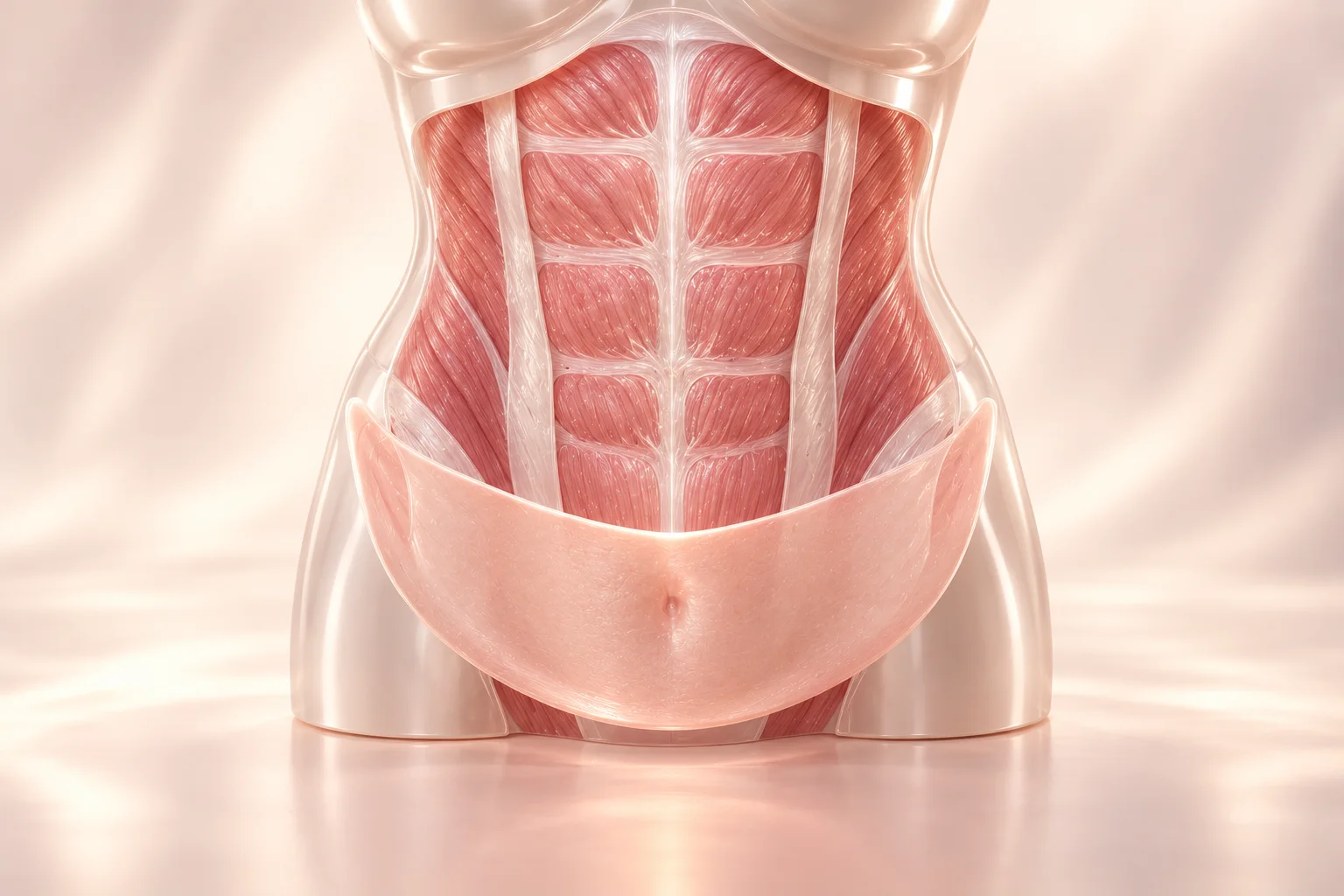
Techniques & materials
- 01Full abdominoplasty
A hip-to-hip cut low on the tummy plus a cut around the navel; skin and fat are removed, the muscles are tightened and the navel is repositioned.
- 02Mini (partial) abdominoplasty
A shorter, lower cut that removes skin and fat below the navel without moving the navel.
- 03Rectus muscle plication
The two vertical tummy muscles are stitched back together with permanent or slow-dissolving stitches to close a gap between them.
- 04Fleur-de-lis abdominoplasty
Adds a vertical midline cut to remove loose skin in both directions; mainly used after major weight loss.
- 05Drains or progressive tension sutures
One or two drains are typically placed to remove fluid; internal quilting stitches are an alternative that can avoid drains.
Clinics do not all carry the same devices, products or techniques. Ask which one will be used, by name, before you book.
How it is done, in photos
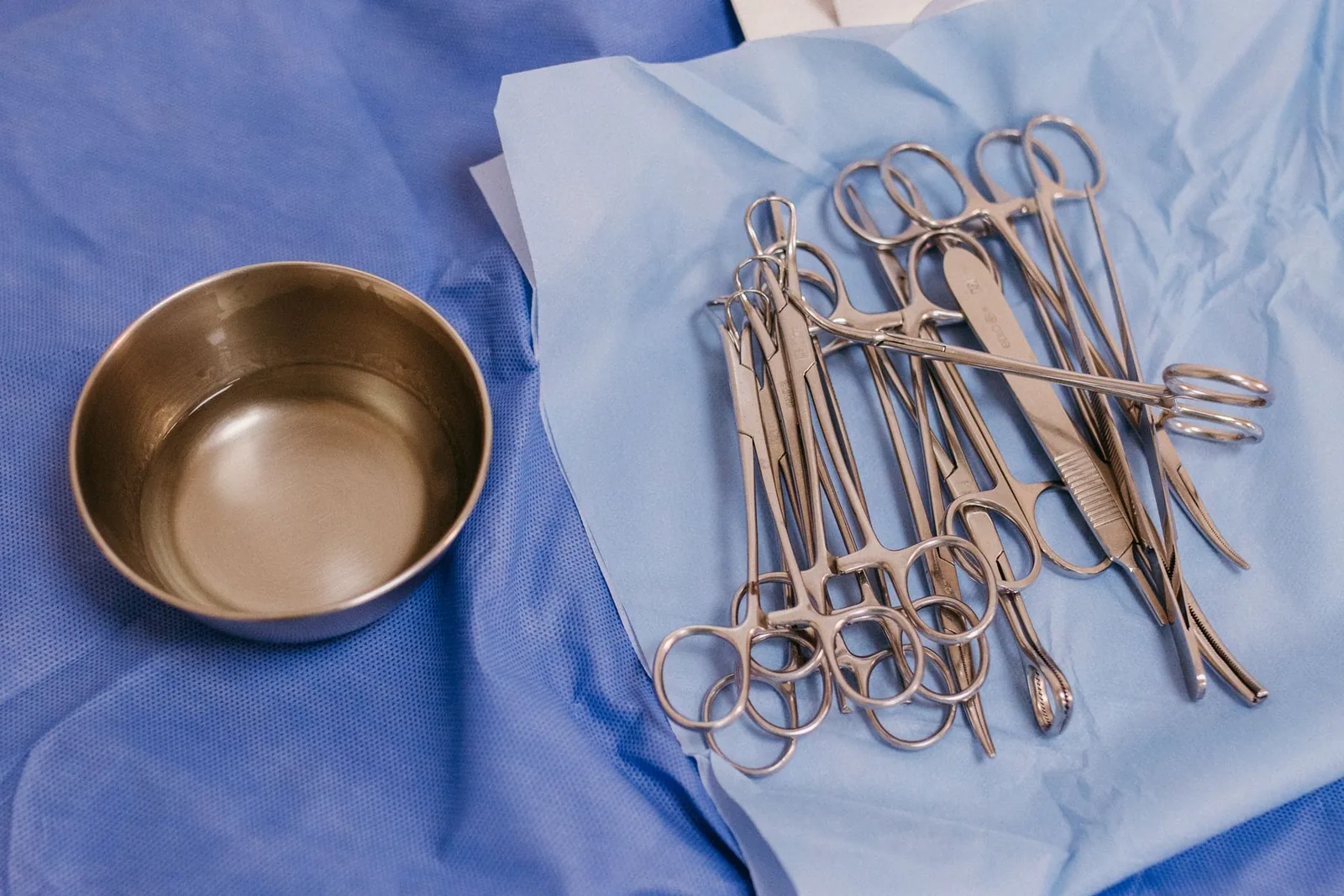
Clamps and a bowl are prepared on a sterile drape; a tummy tuck is done under general anaesthesia and generally takes two to five hours.
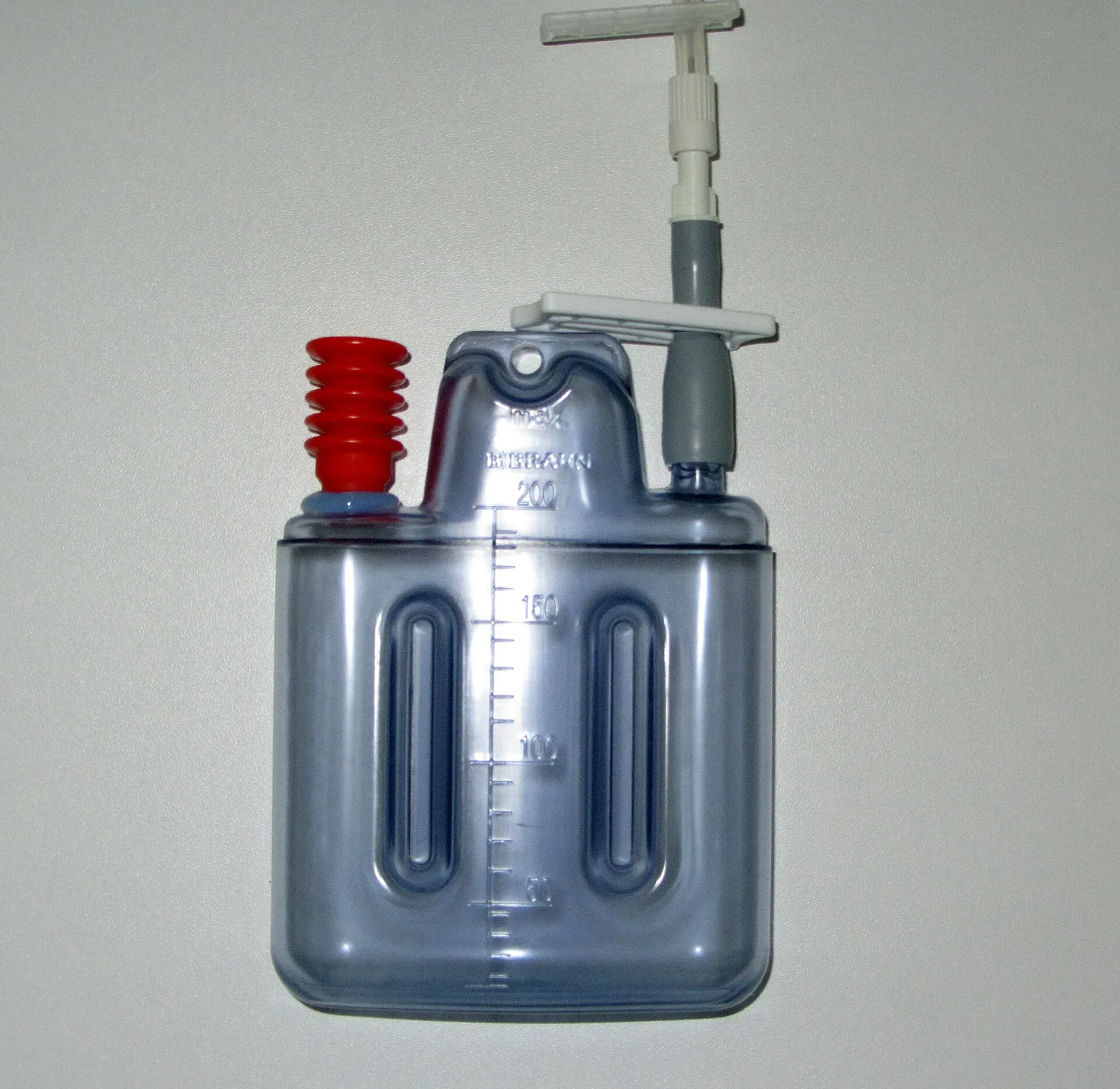
Some surgeons place drains that empty into a small suction bottle like this; others use internal tension stitches instead, so ask which is planned for you.
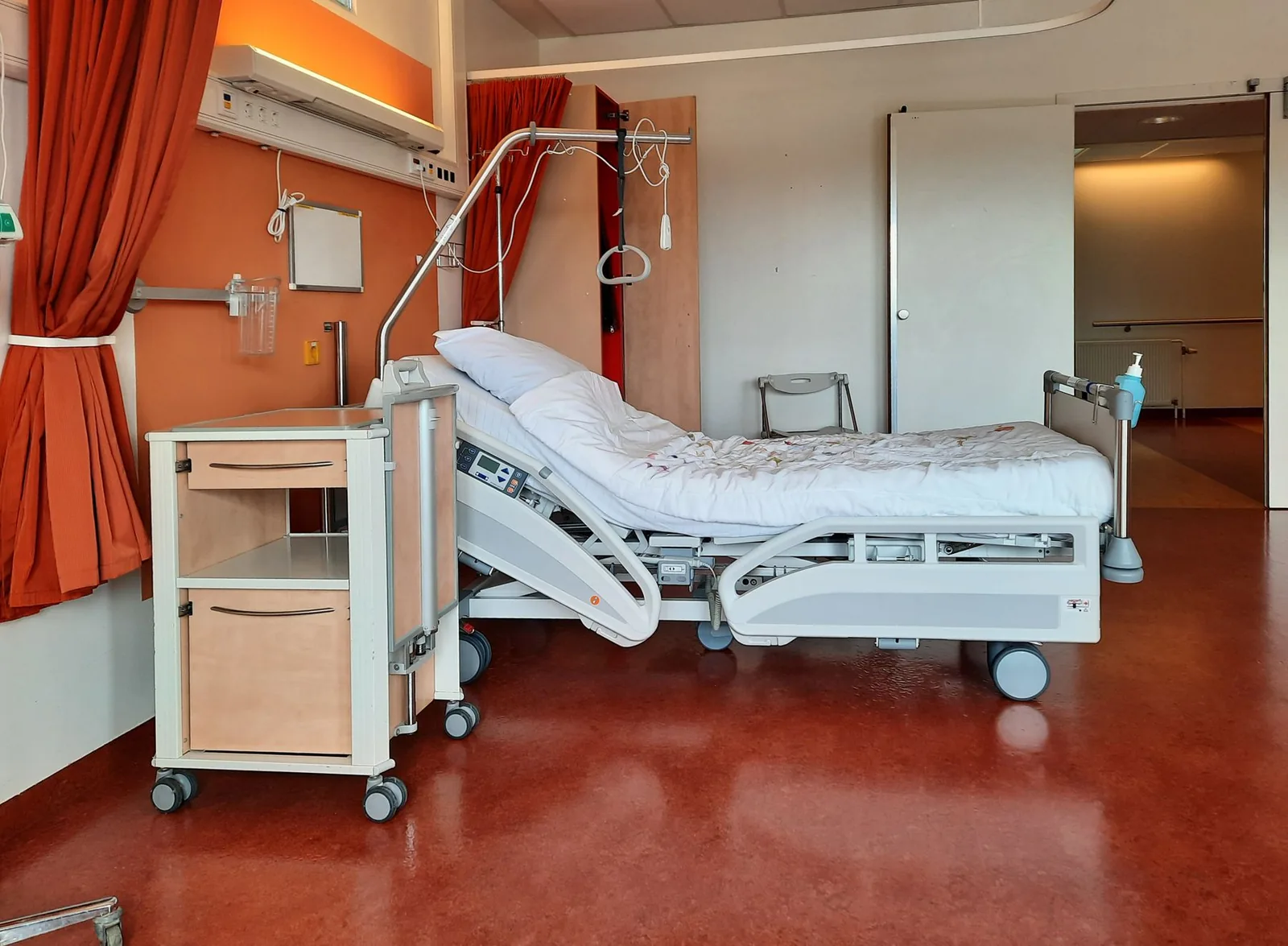
A tummy tuck generally means a few nights in a hospital room like this; standing fully upright can be difficult at first, and a support garment follows.
Device and procedure images are provided by the manufacturers / licensed stock; they do not show COMEDI patients.
At a glance
- Approach
- Loose skin and fat are removed through a low horizontal cut and, in a full procedure, the tummy muscles are tightened and the navel is brought out through a new opening.
- Anaesthesia
- General anaesthesia.
- Operating time
- Generally 2 to 5 hours, depending on the type of procedure and the clinic.
- Hospital stay
- Generally a few nights in hospital. The NHS advises waiting 7 to 10 days after a tummy tuck before flying, because surgery and air travel each raise the risk of blood clots.
- Garments & recovery
- A support garment is generally worn for about 6 weeks, with 4 to 6 weeks off work and exercise. Standing fully upright can be difficult at first.
The method depends on your build, skin elasticity and the size and shape you want. Scars remain, and the final shape settles after swelling goes down.
It leaves a long scar, and timing should be discussed if you plan a pregnancy.
Real cases
A case only helps when you can see the conditions behind it.
Sign in to see the before & after photos
Free. We use your Google name and email only to answer questions about these cases. Clinic names are shared in your private consultation.
 Before
 After
- Sessions
- Surgery (example)
- Combined
- None
- Photo timing
- 6 months after surgery (example)
- SessionsOne session, or the result of a course
- CombinedWhether other treatments or surgery were done together
- Photo timingHow long after the procedure the photo was taken
What to ask in a consultation
Questions about whether it suits you and what the alternatives are.
Often considered when
- People who are physically healthy and at a stable weight, as ASPS describes good candidates.
- People with the changes BAAPS says the operation addresses after weight gain or pregnancy: excess skin forming an apron or overhang in the lower tummy, and separation of the tummy muscles (rectus divarication).
- People who are bothered by the appearance of their abdomen and have realistic expectations, in ASPS's words.
Checks in Korea
- Korea's Foreign Patient Attraction Information System (MEDICALKOREA), run by the Korea Health Industry Development Institute, lets you search registered medical institutions and facilitators by name or business registration number; leaving the name blank lists all registered ones.
- Q01Which method, size or extent suits my build?
- Q02Where will the scars be, and what long-term checks or care are needed?
- Q03Who is the operating surgeon, and what is their specialty?
- Q04What type of anaesthesia is used, and who monitors it?
- Q05How many follow-up visits are needed before it is safe for me to fly home?
- Q06What are the possible risks and complications, and how are they handled if I am abroad?
- Q07What is included in the written estimate — revisions, medication, garments, stitches out?
Check these yourself at the consultation
- Whether a full or mini procedure is planned and whether the muscles will be stitched.
- Whether drains are used and when they are removed.
- What blood-clot prevention is given and how many days to stay before a long flight.
Recovery & schedule
Check swelling, daily routine, activity limits and review visits separately.
At a glance
- Pre-surgery checks
- ASPS says you may be asked to get lab testing or a medical evaluation, take or adjust certain medications, stop smoking, and avoid aspirin, anti-inflammatory drugs and herbal supplements because they can increase bleeding.
- Anaesthesia options
- BAAPS says it is usually done under general anaesthetic although it can be performed under sedation and local anaesthetic; ASPS lists intravenous sedation and general anaesthesia as the choices. Your surgeon and anaesthetist decide which suits your plan.
- Incision length
- ASPS says the shape and length of the incision are determined by the amount of excess skin. BAAPS describes it as placed low on the abdomen, usually within the underwear line. For women who have had a caesarean section, ASPS says the existing scar may be incorporated into the new scar.
- When the shape shows
- The NHS says it takes about 6 weeks to fully recover and see the full effect. ASPS notes the final result may at first be obscured by swelling and by not yet being able to stand fully upright.
- Scar fading
- The NHS says scars may look red and raised at first and should fade over 12 to 18 months; ASPS says the scar may take several months to a year to fade as much as it will.
- How long it lasts
- ASPS says the results are technically permanent, but the outcome can be greatly diminished by significant fluctuations in weight. It also notes previous abdominal surgery may limit the potential results.
- 01Swelling & bruising
The NHS lists pain and bruising among the side effects to expect. ASPS says you may be wrapped in an elastic bandage or compression garment to minimise swelling, and lists prolonged swelling among the risks to discuss.
- 02Back to routine
The NHS says it takes about 6 weeks to fully recover and that you will not be able to drive for a few weeks. The exact timing depends on your job and recovery and is set by your surgeon.
- 03Activity limits
The NHS says it may feel like your tummy is being pulled when you try to stand up straight, and that this improves over time. ASPS suggests asking your surgeon when you can resume normal activity and exercise and how long to wear the pressure garment.
- 04Follow-up & flying home
ASPS says small tubes may be placed temporarily under the skin to drain blood or fluid, and suggests asking when stitches will be removed. The NHS advises agreeing beforehand where follow-up appointments will be and how easily you could travel back if more surgery were needed.
Published guidance; your own clinic sets the actual plan.
Before your visit day
What clinics ask of international patients, in one place.
- Bring your passportClinics register international patients with their passport, and any estimate or prescription is issued in the name on it.
- Patients under 19Adulthood in Korea starts at 19. For a younger patient, clinics generally ask a parent or legal guardian to consent in writing, and many ask them to attend. Tell us the patient's age when you write, and we check what the clinic needs.
- Coming with someoneA family member or friend can usually join you in the consultation room. Treatment and recovery areas follow each clinic's rules, so we check this before your visit. If more than one person is booking, tell us what each person is interested in.
- Language helpCoordinators reply in English, Japanese, Chinese and Korean. Interpretation on the day is arranged for your dates, and we confirm in writing what it covers before you travel.
- Medicines and allergiesWrite down the medicines you take and any allergies. The clinic asks about both before any treatment.
What changes the price
The same surgery can be quoted differently depending on the items below.
What differs from clinic to clinic
- Drains or drain-free stitching
- BAAPS says drains are often used. A 2024 meta-analysis found progressive tension sutures, placed to close the space under the skin flap, significantly reduced seroma and reoperation rates compared with drains, and notes drains are associated with more pain and a risk of infection. Clinics differ in which they use.
- Seroma-reduction steps
- A 2024 review found that, compared with the standard placement of two drains, alternatives such as quilting sutures, preserving Scarpa's fascia (a layer under the skin) and tissue adhesives are likely more effective at reducing seroma. Whether a surgeon uses any of these is worth asking.
- Combining liposuction
- BAAPS says combining liposuction with abdominoplasty can produce a better overall abdominal shape but carries the additional risks of liposuction. Whether it is proposed, and for which areas, is a point where plans differ.
- Blood-clot prevention
- A 2025 study notes abdominoplasty carries one of the highest blood-clot risks among aesthetic procedures, and compares giving blood-thinning injections to every patient with a risk-score (Caprini) approach. How a clinic assesses and prevents clots matters before a long flight.
- Anaesthesia set-up
- BAAPS says it is usually done under general anaesthetic but can be performed under sedation and local anaesthetic, so the set-up and who provides it can differ between clinics.
- Experience and aftercare abroad
- ASPS says fees depend on the surgeon's experience and the type of procedure. The NHS suggests asking how many similar procedures the surgeon has done, whether they speak a language you understand, where follow-up will be and what happens if complications or more surgery arise.
- Full or mini procedure
- Whether the quote is for a full abdominoplasty with navel repositioning or a mini procedure below the navel, and how long the planned incision is.
- Muscle repair
- Whether stitching separated tummy muscles together is included or priced separately.
- Added liposuction
- Whether liposuction of the flanks or upper tummy is part of the plan and how it is counted in the quote.
- Anaesthesia and nights in hospital
- Which anaesthesia is used, who gives it, and how many nights of hospital stay are included.
- Drains, garments and medicines
- Whether drains or drain-free stitching, compression garments, blood-clot prevention medicine and prescriptions are in the price.
- Check-ups and revision policy
- Whether stitch removal, check-ups until you fly home and any revision surgery are covered.
- Method
- Implants, fat transfer, incision approach
- Implant & extent
- Implant type, or the number and size of liposuction areas
- Anaesthesia & stay
- General anaesthesia, the anaesthesiologist and whether you stay overnight
- What is included
- Tests, medication, compression garment, review visits and the revision policy
Prices are set by the clinic after a consultation. Ask for an itemised, written estimate before you book, and check what is included and what could change.
Often charged separately
Ask whether each of these is in your estimate.
| Item | What to ask |
|---|---|
| Consultation fee | Whether the consultation is charged, and whether that amount comes off the surgery price. |
Clinics in Korea build a surgery estimate from the technique, the type of anaesthesia and the care around the operation.
The final figure is set after the surgeon examines you.
Ask for an itemised, written estimate that marks each item above as included or not, so you can compare two quotes on the same basis.
VAT before you compare quotes
The VAT refund for foreign visitors' cosmetic procedures covered only procedures received by 31 December 2025, so procedures received now are not refunded. Plan your budget without it, and ask each clinic whether VAT is included in the written quote so you compare the same total.
Ask COMEDI, for example
Clinics in Seoul differ in equipment, technique, specialist focus and what the price includes. Send us your question and we compare partner clinics for you.
- “Which partner clinics use drain-free stitching, and which use drains?”
- “Would I need a full or mini tummy tuck, and does the quote include muscle repair and liposuction?”
- “How does each clinic prevent blood clots before I fly home?”
- “Which clinics include check-ups until I leave and cover revision surgery?”
Precautions & aftercare
General information. Follow the written instructions from your treating doctor for anything specific to you.
Side effects and precautions for Tummy tuck are in one place at the top of this page.
Aftercare for this procedure
- Follow the instructions you are given on caring for the surgical site and drains, and on medicines to aid healing and reduce the chance of infection, as ASPS describes.
- Stop smoking before surgery and avoid aspirin, anti-inflammatory drugs and herbal supplements, which can increase bleeding.
- Arrange for someone to take you to and from surgery and stay with you for at least the first night.
- Keep your weight stable; ASPS says significant weight fluctuations can greatly diminish the result.
- If you are thinking about a future pregnancy, discuss timing with your surgeon first, since ASPS and BAAPS both advise postponing.
- Tell the clinic about medical conditions, any history of blood clots, medicines (including hormones), smoking and plans for pregnancy or breastfeeding.
- Contact the clinic immediately for shortness of breath, leg pain or swelling, fever or marked swelling on one side.
- Get your surgeon's written advice before a long-haul flight.
Information only. Suitability, risks, recovery and price are assessed by the treating doctor in a consultation.
Sources for this section 15
- Tummy tuck (abdominoplasty) — NHS
- Tummy Tuck — American Society of Plastic Surgeons
- Tummy Tuck Candidates — American Society of Plastic Surgeons
- Tummy Tuck Preparation — American Society of Plastic Surgeons
- Tummy Tuck Procedure Steps — American Society of Plastic Surgeons
- Tummy Tuck Recovery — American Society of Plastic Surgeons
- Tummy Tuck Results — American Society of Plastic Surgeons
- Tummy Tuck Risks and Safety — American Society of Plastic Surgeons
- Tummy Tuck Cost — American Society of Plastic Surgeons
- Tummy tuck (abdominoplasty) — British Association of Aesthetic Plastic Surgeons (BAAPS)
- Cosmetic surgery abroad — NHS
- Rao et al. A Systematic Review and Meta-Analysis Evaluating the Surgical Outcomes of Progressive Tension Suturing Compared to Drains in Abdominoplasty Surgery — Aesthetic Surgery Journal 2024 (PMC11634385)
- Liao et al. Decreasing Seroma Incidence Following Abdominoplasty: A Systematic Review and Meta-Analysis of High-Quality Evidence — Aesthetic Surgery Journal Open Forum 2024 (PMC10995621)
- Asiry et al. Utility of the Caprini risk assessment model in guiding venous thromboembolism prophylaxis after abdominoplasty — JPRAS Open 2025 (PMC12597074)
- Foreign Patient Attraction Information System (MEDICALKOREA) — Korea Health Industry Development Institute
Related questions & guides
Worth reading alongside this page.
Notes from people who used COMEDI
Written after a consultation we arranged, and matched to that request.
Common questions
How much does Tummy tuck cost in Korea?+
Prices are set by each clinic after a consultation and depend on the technique, area and your needs. Ask for an itemised, written estimate before you book — it should list what is included and what could change. We help you request and compare estimates.
Can foreigners get Tummy tuck in Korea?+
Yes. Many Seoul clinics see international patients. We help with clinic information, consultations in your language, written estimates and interpretation on the day.