
Acnescar treatment
Combinations of procedures for depressed or uneven acne scars, planned over more than one session.

- Type
- Non-surgical
- Usually by
- Dermatologist
- Category
- Skin & acne care
- First step
- Consultation
Information only. Suitability, risks, recovery and price are assessed by the treating doctor in a consultation.
Side effects and precautionsWhat to know about Acne scar treatment before you book14
Reactions that usually settle, signs to tell the clinic about straight away, and times to wait. Your doctor goes through the risks that apply to you at the consultation.
Known risks
- Subcision can leave bluish bruising and a small collection of blood under the skin. A PDLLA microneedling study reported mild redness and swelling that settled within 48 hours.
Usually settles on its own
- Bleeding and bruising after microneedling
- Redness, tightness, itching and peeling, which typically go away after a few days or weeks
- Redness after fractional laser, lasting from days to a few weeks depending on the laser
Tell the clinic promptly
- Dark or light spots on the skin, or lines on the face
- Stinging when moisturiser or sunscreen is applied
- A flare-up of cold sores, swollen lymph nodes or infection
- With RF microneedling, the US FDA has reports of burns, scarring, fat loss, disfigurement and nerve damage
- If a chemical peel is part of the plan: a published review says prolonged redness, infection, pigment change and scarring after peels are more common in darker skin types, with deeper peels and with sun exposure
Wait or rethink when
- If you are still having acne breakouts: the American Academy of Dermatology says your plan will likely begin with acne treatment.
- For microneedling, the US FDA says it may not be suitable if you have a known history of clotting or bleeding disorders such as haemophilia, or take medicine to thin your blood.
- For microneedling, the US FDA also lists an active skin infection (bacterial, viral or fungal), a current outbreak of cold sores, and currently taking acne medication with the ingredient isotretinoin (Accutane) or having taken isotretinoin in the past 6 months.
- The US FDA says you may want to avoid microneedling if you have conditions that affect your skin, such as eczema or diabetes, or a weakened immune system.
- If you arrive for laser treatment with a tan or sunburn, the American Academy of Dermatology says your dermatologist cannot treat you.
Sources for this section 13
- American Academy of Dermatology – Acne scars: Diagnosis and treatment
- Acne Scar Subcision (PubMed Central, PMC2956956)
- Journal of Cosmetic Dermatology 2023 – Subcision in acne scarring: a review of clinical trials
- Dermatologic Surgery 2002 – Focal treatment of acne scars with trichloroacetic acid (CROSS method)
- Plastic and Reconstructive Surgery Global Open 2025 – Microneedling with poly-D,L-lactic acid (Juvelook)
- US FDA 510(k) K254271 – Capri (indications include atrophic acne scars)
- Acne Scarring—Pathogenesis, Evaluation, and Treatment Options — PubMed Central (PMC5749614)
- Microneedling Devices: Getting to the Point on Benefits, Risks and Safety — US FDA
- Potential Risks with Certain Uses of Radiofrequency (RF) Microneedling: FDA Safety Communication — US FDA
- 10 things to know before having laser treatment for your scar — American Academy of Dermatology
- Microneedling Devices — US FDA
- 의료 해외진출 및 외국인환자 유치 지원에 관한 법률 제6조 — 국가법령정보센터
- 의료기기전자민원시스템 — 식품의약품안전처
What is it?
The purpose, the change you can expect and the limits.
Combinations of procedures for depressed or uneven acne scars, planned over more than one session.
Subcision · fractional laser · microneedle RF
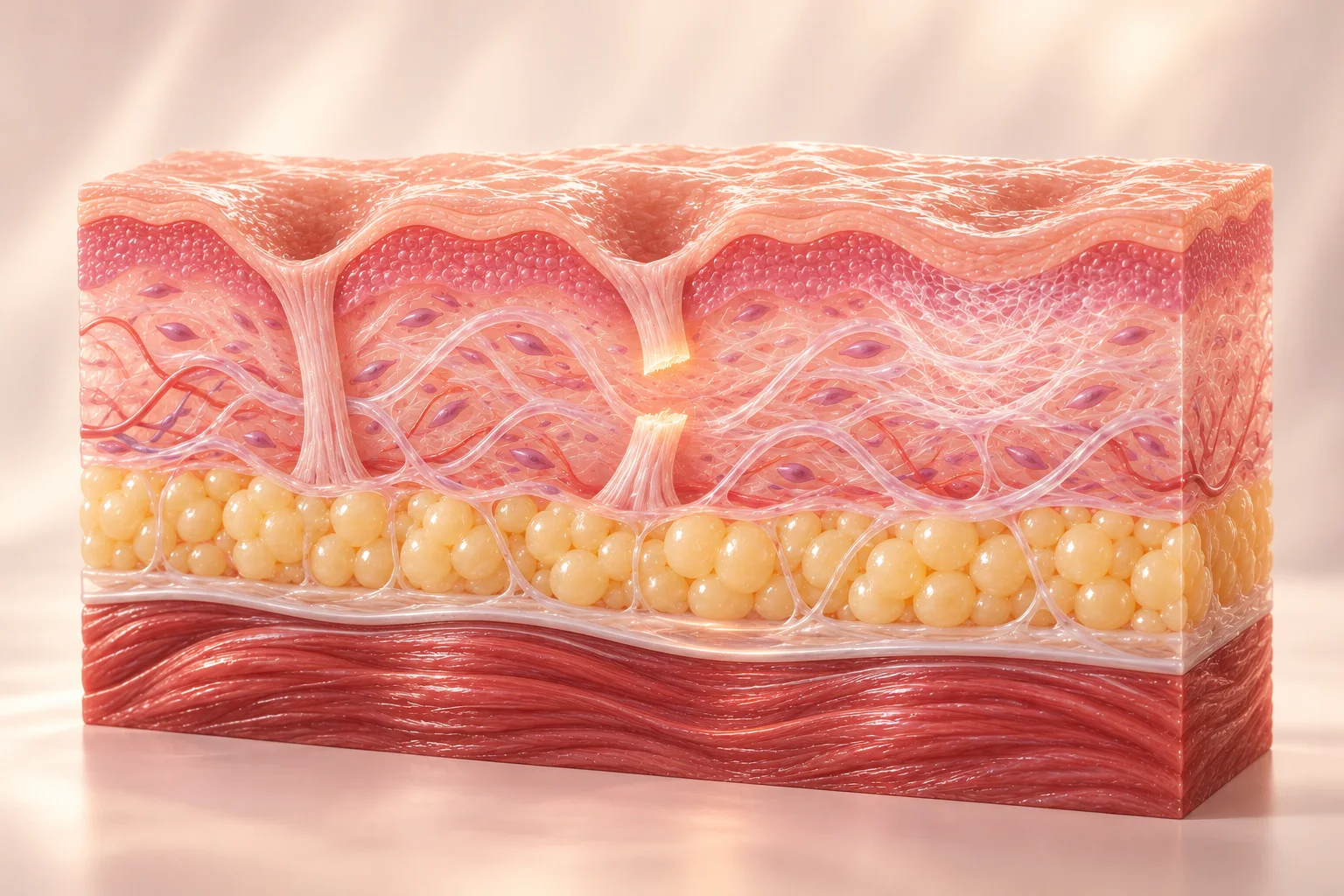
- Juvelook
Devices & products used
- 01Subcision
A needle or blunt cannula is passed under a sunken scar and moved back and forth to cut the fibrous strands pulling it down; it is mainly used for rolling scars.
- 02Laser resurfacing
Laser energy resurfaces the skin and prompts it to make new collagen and elastin.
- 03Radiofrequency microneedling
Fine needles puncture the skin and deliver radiofrequency heat to stimulate collagen; the American Academy of Dermatology describes it as suitable for all skin tones.
- 04TCA CROSS
High-strength trichloroacetic acid (65–100% in the original study) is dabbed only into individual scars rather than over the whole face.
- 05JuvelookVAIM Inc., Korea
An injectable containing poly-D,L-lactic acid (PDLLA); a published case series used it with microneedling in three sessions three weeks apart to study pores and skin texture.
- 06Dermal fillers
Filler is injected under a sunken scar to add volume; depending on the product, the effect lasts from about three months to two years, and some are permanent.
Clinics do not all carry the same devices, products or techniques. Ask which one will be used, by name, before you book.
How it is done, in photos
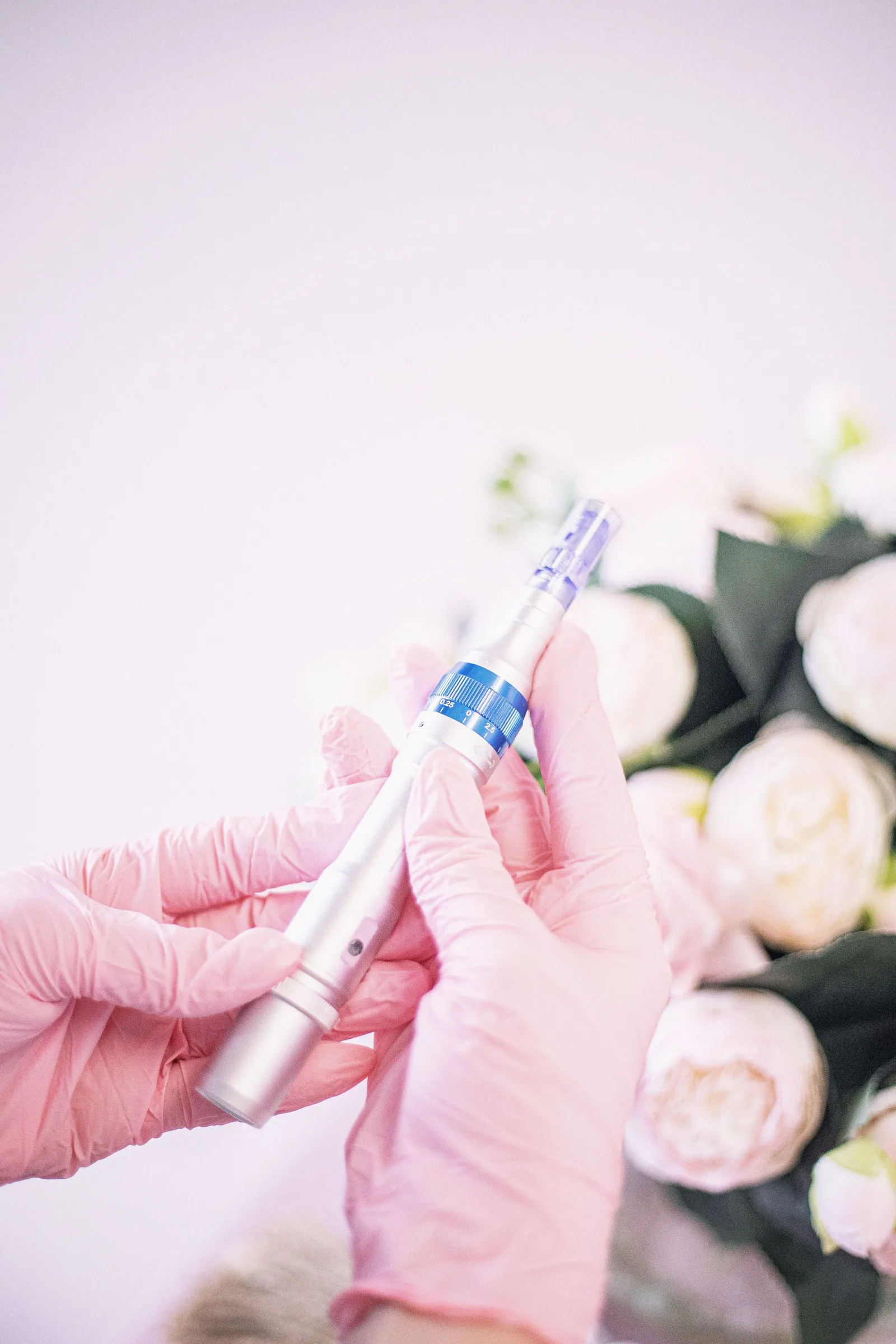
A microneedling pen fitted with a disposable needle cartridge; published acne scar studies used courses such as three monthly sessions.
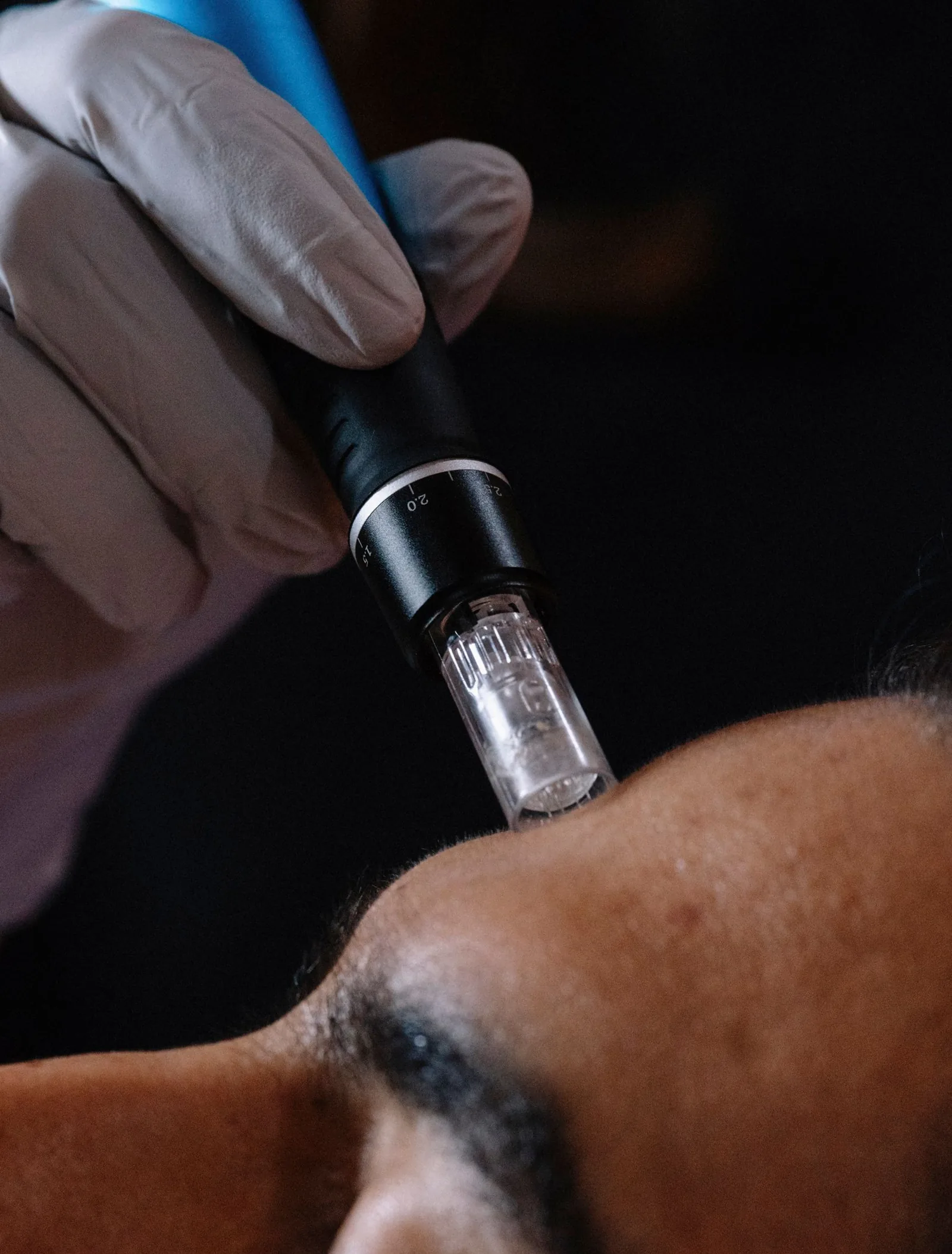
The microneedling pen is moved across the forehead in small sections; bleeding, bruising and redness afterwards typically settle without treatment.
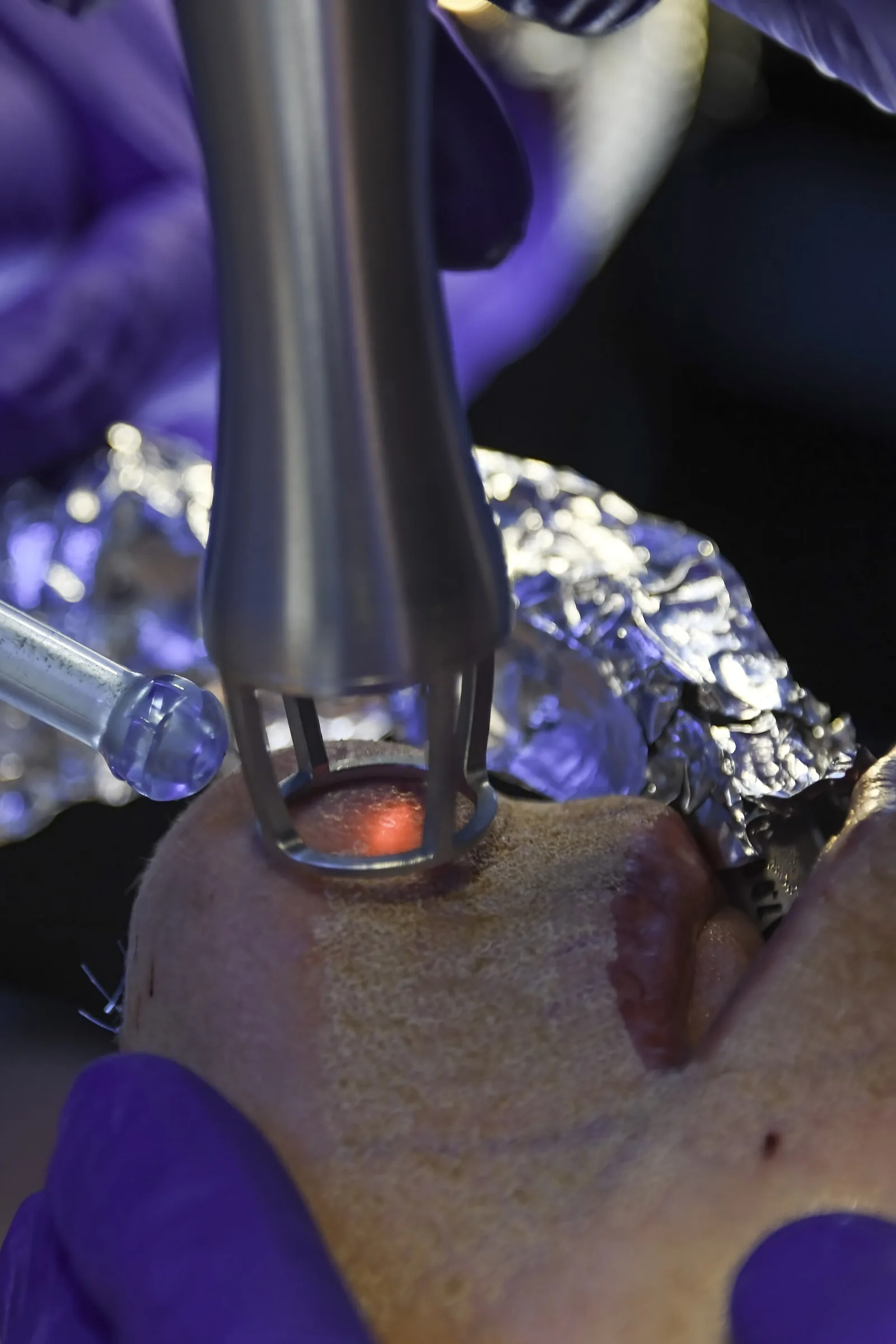
A laser handpiece treats a small area of facial skin while foil shields the skin around it; a few laser sessions may be needed.
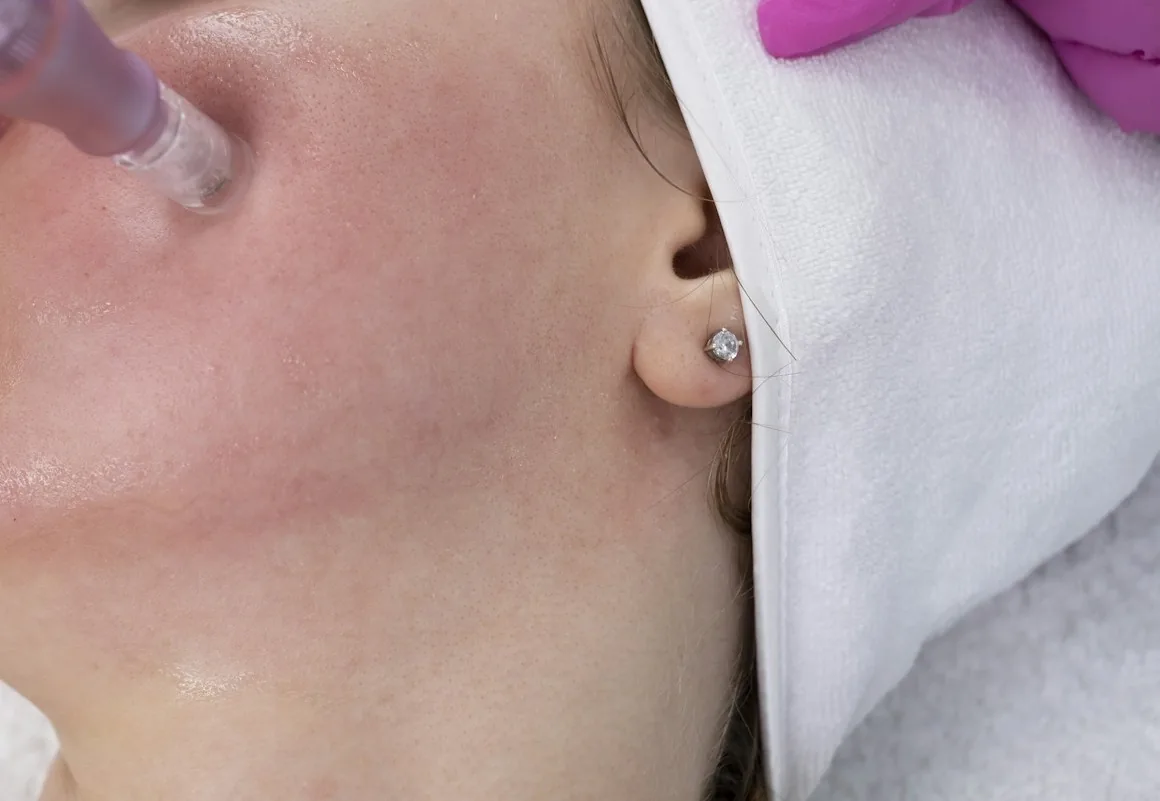
The pen glides over the cheek in small sections; afterwards, redness, tightness and peeling typically go away within a few days or weeks.
Device and procedure images are provided by the manufacturers / licensed stock; they do not show COMEDI patients.
At a glance
- How it works
- Most treatments either release the tissue that tethers a scar down or trigger the skin to rebuild collagen. Clinics often combine two or more methods.
- Anaesthesia
- Subcision is done under local anaesthesia, either numbing cream or an injection. Ask what is used for the laser or needle treatment you are offered.
- Sessions & interval
- Subcision is usually repeated, with about three weeks between sessions in published practice. Mild and medium peels for scars are given as 3–5 treatments every 2–4 weeks, and the original TCA CROSS study reported its results after five or six courses.
- Which scars
- Sunken scars and raised scars are treated differently. Raised and keloid scars are usually managed with injections, laser, surgery or freezing rather than the methods above, and keloids can return.
Acne, scars, exfoliation and pore care work as a planned series alongside daily skin care rather than as a single session. Scars respond differently by type and may not disappear completely.
Different scar types respond differently, and scars may soften without disappearing.
References 6
- American Academy of Dermatology – Acne scars: Diagnosis and treatment
- Acne Scar Subcision (PubMed Central, PMC2956956)
- Journal of Cosmetic Dermatology 2023 – Subcision in acne scarring: a review of clinical trials
- Dermatologic Surgery 2002 – Focal treatment of acne scars with trichloroacetic acid (CROSS method)
- Plastic and Reconstructive Surgery Global Open 2025 – Microneedling with poly-D,L-lactic acid (Juvelook)
- US FDA 510(k) K254271 – Capri (indications include atrophic acne scars)
Real cases
A case only helps when you can see the conditions behind it.
Sign in to see the before & after photos
Free. We use your Google name and email only to answer questions about these cases. Clinic names are shared in your private consultation.
 Before
 After
- Sessions
- 4 sessions (example)
- Combined
- None
- Photo timing
- after 4 sessions (example)
 Before
 After
- Sessions
- 4 sessions (example)
- Combined
- None
- Photo timing
- after 4 sessions (example)
 Before
 After
- Sessions
- 4 sessions (example)
- Combined
- None
- Photo timing
- after 4 sessions (example)
- SessionsOne session, or the result of a course
- CombinedWhether other treatments or surgery were done together
- Photo timingHow long after the procedure the photo was taken
What to ask in a consultation
Questions about whether it suits you and what the alternatives are.
Often considered when
- People with sunken acne scars (ice-pick, boxcar or rolling), since a published review matches each of these scar types to different methods.
- People with rolling scars, the wide, shallow scars with gently sloping edges, which is where subcision is described as working best.
- People whose active acne is already under control; dermatologists treat breakouts first so that new spots do not scar areas that have just been treated.
- People who can wait for results: it can take months to see the results of laser scar treatment.
Checks in Korea
- Korean hospitals and clinics that intend to attract foreign patients must register with the city or provincial government. Requirements include at least one board-certified specialist for each department through which they intend to attract foreign patients (except departments that are not specialties designated by Presidential Decree), and medical liability insurance or membership of a medical liability mutual aid association; registration is valid for three years from the date of registration.
- Korea's Ministry of Food and Drug Safety runs an online medical device information system (emedi.mfds.go.kr) with a medical device search service, so you can ask the clinic for the laser or needle device's product name and look it up there.
- Q01Which combination suits my skin, and what should come first?
- Q02How does the expected range differ for my type of scars or breakouts?
- Q03Who will perform the treatment, and what is their specialty?
- Q04Which device or product will be used, and is it the original I asked about?
- Q05How many sessions are usually planned, and can they fit into my stay?
- Q06What should I avoid before and after — sun, alcohol, flights, exercise?
- Q07What is included in the written estimate, and what could change after the consultation?
Check these yourself at the consultation
- Ask which type of scar you have (for example rolling or ice-pick) and which method is planned for each.
- Ask for the name and manufacturer of any laser, needle device, filler or injectable used, and the strength of any acid.
- Ask how many sessions are planned and how long the gap between them should be, especially if your stay in Korea is short.
Recovery & schedule
Check swelling, daily routine, activity limits and review visits separately.
At a glance
- Subcision instrument
- A published description of subcision uses an 18- or 20-gauge needle or a Nokor needle (1.5 inch, 18-gauge) passed under the scar.
- Laser sessions
- The American Academy of Dermatology says you may need a few laser treatments; the actual number is planned by your doctor.
- RF microneedling course
- A published review describes improvement after 3 to 4 sessions, with results best judged about three months after the last session, because collagen takes time to build.
- Microneedling course
- The US FDA says you may need more than one procedure; published studies on acne scars used, for example, three monthly sessions or five sessions.
- Keeping results
- According to the US FDA, improvement from microneedling may be temporary, and keeping it may require additional procedures over time. Laser can make a scar less noticeable but cannot get rid of it.
- 01Swelling & bruising
Swelling & bruising: in the published subcision method, ice is applied to the treated area on the day. After microneedling, bleeding, bruising, redness, tightness, itching and peeling typically go away without treatment after a few days or weeks.
- 02Back to routine
Back to routine: a published review reports an average recovery time of about three days after non-ablative fractional laser, and describes redness after ablative fractional CO2 laser lasting 3 to 14 days and resolving by 12 weeks. These are figures reported in studies, not a promise for you; recovery varies from person to person, and your doctor will tell you what to expect.
- 03Activity limits
Activity limits: avoid tanning or sunburn before a laser session, ask your doctor about stopping vitamin E, aspirin and other medicines or supplements that can delay healing, and stop smoking for at least 2 weeks beforehand.
- 04Follow-up & flying home
Follow-up & flying home: laser results can take months to show, and a published review describes judging RF microneedling results about three months after the last session. If you will already be home by then, agree with the clinic in advance how progress will be checked and when the next session would be.
Published guidance; your own clinic sets the actual plan.
Before your visit day
What clinics ask of international patients, in one place.
- Bring your passportClinics register international patients with their passport, and any estimate or prescription is issued in the name on it.
- Patients under 19Adulthood in Korea starts at 19. For a younger patient, clinics generally ask a parent or legal guardian to consent in writing, and many ask them to attend. Tell us the patient's age when you write, and we check what the clinic needs.
- Coming with someoneA family member or friend can usually join you in the consultation room. Treatment and recovery areas follow each clinic's rules, so we check this before your visit. If more than one person is booking, tell us what each person is interested in.
- Language helpCoordinators reply in English, Japanese, Chinese and Korean. Interpretation on the day is arranged for your dates, and we confirm in writing what it covers before you travel.
- Medicines and allergiesWrite down the medicines you take and any allergies. The clinic asks about both before any treatment.
What changes the price
The same treatment can be quoted differently depending on the items below.
What differs from clinic to clinic
- Which methods the clinic matches to your scars
- A published review rates punch excision and TCA CROSS for ice-pick scars, excision and fractional lasers for boxcar scars, and subcision, microneedling and fillers for rolling scars. Clinics differ in which of these they do routinely.
- Subcision technique
- Subcision can be done with an 18- or 20-gauge needle or a Nokor needle, and is repeated over several sessions; the tool and the number of sessions planned differ by doctor.
- RF microneedling experience and hygiene
- The US FDA advises choosing a licensed provider with training and experience in RF microneedling, and asking how the device is cleaned and whether a new needle cartridge is used for each patient.
- Downtime that fits your trip
- A published review reports an average recovery of about three days after non-ablative fractional laser, but describes redness after ablative fractional CO2 laser that can last days to weeks and resolves by 12 weeks, so the type of laser a clinic chooses affects how you plan your travel dates.
- Chemical peels and your skin tone
- For chemical peels, a published review says prolonged redness, infection, pigment change and scarring are more common in darker skin types and with deeper peels, so it is worth asking whether a peel is planned, how deep it is, and how much experience the doctor has with your skin type.
- Method for each scar type
- Which of subcision, laser, microneedling, CROSS or excision is planned for which scars, since one face often has several scar types.
- Laser type
- Whether the laser is ablative or non-ablative fractional, since this changes downtime and how many sessions are planned.
- Needle cartridge
- Whether a new microneedle cartridge or tip is used for each session and is included in the quote.
- Spot treatments
- Whether CROSS or punch excision is charged per scar or as a set number of scars.
- Filler or injectable added
- Which product is used under rolling scars and how many syringes or vials are included.
- Combination
- Which procedures are combined
- Area & sessions
- Full face or part, and the planned sessions
- Prescriptions & products
- Whether medicines and care products are included
- Numbing & care
- Numbing cream and soothing care
Prices are set by the clinic after a consultation. Ask for an itemised, written estimate before you book, and check what is included and what could change.
Often charged separately
Ask whether each of these is in your estimate.
| Item | What to ask |
|---|---|
| Consultation fee | Whether the consultation is charged, and whether that amount comes off the treatment price. |
| Check-up and top-up visits | Whether a review visit, or a top-up within a set period, is part of the quoted price. |
Clinics in Korea build a treatment estimate from the area, the amount used or the number of sessions.
The final figure is set after the doctor sees you at the consultation.
Ask for an itemised, written estimate that marks each item above as included or not, so you can compare two quotes on the same basis.
VAT before you compare quotes
The VAT refund for foreign visitors' cosmetic procedures covered only procedures received by 31 December 2025, so procedures received now are not refunded. Plan your budget without it, and ask each clinic whether VAT is included in the written quote so you compare the same total.
Ask COMEDI, for example
Clinics in Seoul differ in equipment, technique, specialist focus and what the price includes. Send us your question and we compare partner clinics for you.
- “I have a mix of ice-pick and rolling scars. Which partner clinics do both CROSS and subcision?”
- “Which clinics use non-ablative fractional laser, and how many days of redness should I plan for?”
- “Does the clinic use a new needle cartridge for each RF microneedling session, and is it in the quote?”
- “Can the clinic review my results remotely about three months after I fly home?”
Precautions & aftercare
General information. Follow the written instructions from your treating doctor for anything specific to you.
Side effects and precautions for Acne scar treatment are in one place at the top of this page.
Aftercare for this procedure
- Follow your doctor's at-home care instructions after laser treatment; the American Academy of Dermatology says this helps with your results and with preventing possible side effects.
- In the published subcision method, antibiotics and anti-inflammatory medicine are given for 5 to 7 days; ask whether anything is prescribed and take it as directed.
- Keep the treated skin out of the sun between sessions, since a tan or sunburn means the next laser session cannot go ahead.
- If you get cold sores, tell the clinic beforehand, because microneedling can set off a flare-up.
- If you have any problem or complication after RF microneedling, such as a burn, contact the clinic; the US FDA asks patients to report such problems.
- Tell the clinic about acne medicines (including tablets), possible pregnancy and any history of sensitive skin.
- Contact the clinic for severe burning, oozing or pain after a session.
- Ask when you can restart the products you use at home.
Information only. Suitability, risks, recovery and price are assessed by the treating doctor in a consultation.
Sources for this section 9
- Acne scars: Diagnosis and treatment — American Academy of Dermatology
- Acne Scar Subcision — PubMed Central (PMC2956956)
- Acne Scarring—Pathogenesis, Evaluation, and Treatment Options — PubMed Central (PMC5749614)
- 10 things to know before having laser treatment for your scar — American Academy of Dermatology
- Microneedling Devices — US FDA
- Microneedling Devices: Getting to the Point on Benefits, Risks and Safety — US FDA
- Potential Risks with Certain Uses of Radiofrequency (RF) Microneedling: FDA Safety Communication — US FDA
- 의료 해외진출 및 외국인환자 유치 지원에 관한 법률 제6조 — 국가법령정보센터
- 의료기기전자민원시스템 — 식품의약품안전처
Related questions & guides
Worth reading alongside this page.
Notes from people who used COMEDI
Written after a consultation we arranged, and matched to that request.
Common questions
How much does Acne scar treatment cost in Korea?+
Prices are set by each clinic after a consultation and depend on the technique, area and your needs. Ask for an itemised, written estimate before you book — it should list what is included and what could change. We help you request and compare estimates.
Can foreigners get Acne scar treatment in Korea?+
Yes. Many Seoul clinics see international patients. We help with clinic information, consultations in your language, written estimates and interpretation on the day.