
Chemical peel
Acids are applied to the skin surface to exfoliate. Depth ranges from light to medium.

- Type
- Non-surgical
- Usually by
- Dermatologist
- Category
- Skin & acne care
- First step
- Consultation
Information only. Suitability, risks, recovery and price are assessed by the treating doctor in a consultation.
Side effects and precautionsWhat to know about Chemical peel before you book13
Reactions that usually settle, signs to tell the clinic about straight away, and times to wait. Your doctor goes through the risks that apply to you at the consultation.
Known risks
- Possible effects include lasting redness, temporary darkening or permanent lightening of the skin, cold sore flare-ups and, rarely, scarring. People with darker skin tones have a higher risk of lasting colour change and should see a doctor experienced with their skin type.
Usually settles on its own
- Redness followed by flaking or scaling as the treated layer comes off.
- Swelling, redness, burning or itching; a review describes these as usually mild and settling within weeks, though more serious after deep peels.
Tell the clinic promptly
- Burning, itching or swelling that you should report to the doctor.
- Infection, which rubbing or scratching the treated skin can cause.
- Reactivation of cold sores (herpes).
- Scarring, or a temporary or permanent lightening or darkening of the skin.
Wait or rethink when
- Pregnancy: a published review says medium to deep peels should be avoided and any peel should be used with caution, as safety evidence is lacking.
- A current bacterial, fungal or viral infection.
- A history of abnormal scarring or keloids, or a tendency to extra pigmentation in scars.
- Use of certain acne treatments within the last year.
- Skin conditions or medicines that make the skin more sensitive than normal.
- Weakened immunity (immunosuppression).
Sources for this section 9
- American Academy of Dermatology – Chemical peels: FAQs
- American Academy of Dermatology – Chemical peels: Overview
- American Society for Dermatologic Surgery – Chemical peels
- Chemical peel: Safety — American Society of Plastic Surgeons
- Chemical peels in the treatment of acne: patient selection and perspectives — Clin Cosmet Investig Dermatol (PMC)
- Chemical peels: Preparation — American Academy of Dermatology
- Chemical peel: Candidates — American Society of Plastic Surgeons
- Prevention of Complications in Chemical Peeling — J Cutan Aesthet Surg (PMC)
- 의료 해외진출 및 외국인환자 유치 지원에 관한 법률 제6조 — 국가법령정보센터
What is it?
The purpose, the change you can expect and the limits.
Acids are applied to the skin surface to exfoliate. Depth ranges from light to medium.
AHA · BHA · TCA peels
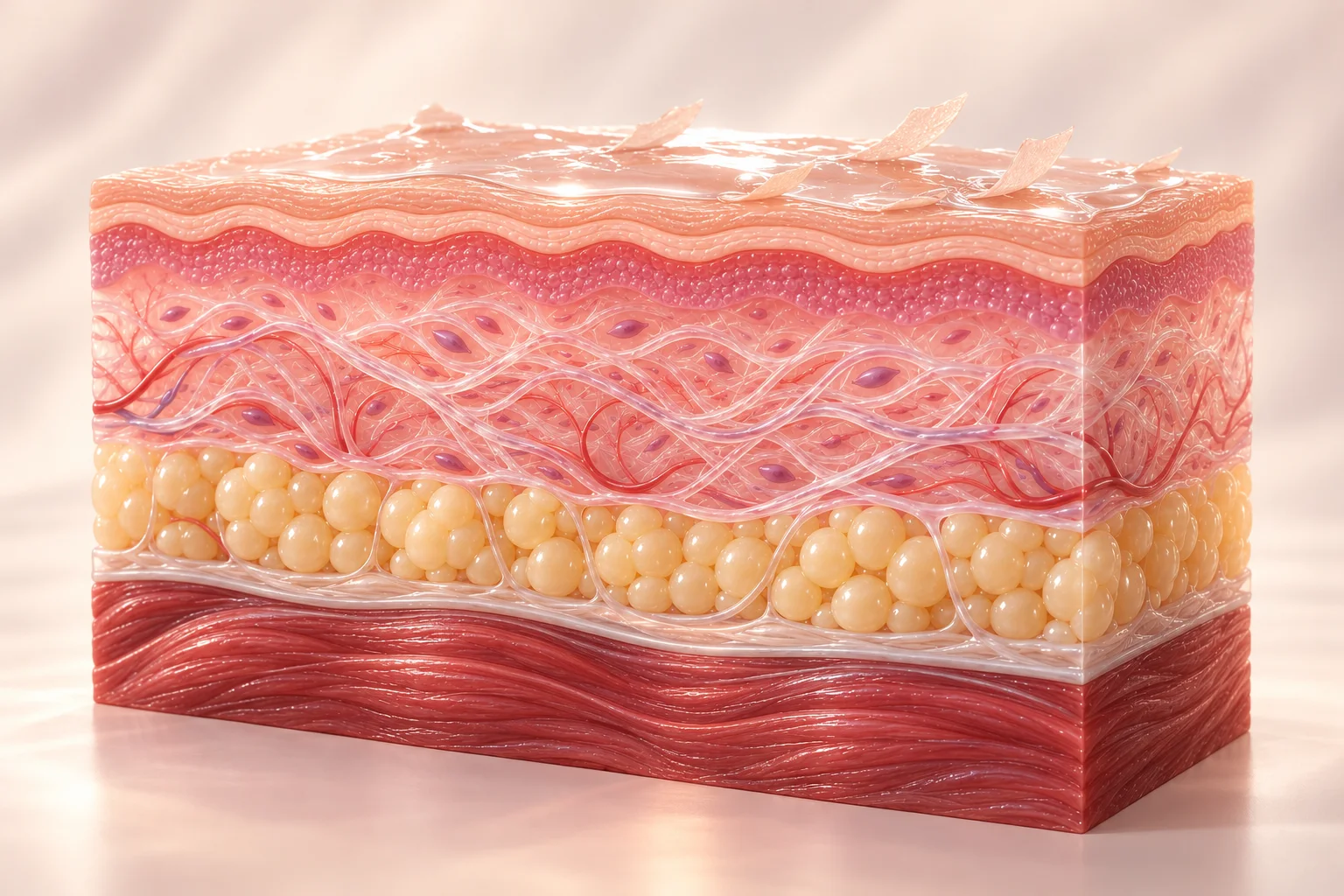
Devices & products used
- 01Glycolic acid (AHA) peel
An alpha-hydroxy acid used for superficial peels that act on the outer layer of skin; glycolic acid is also used for medium-depth peels.
- 02Salicylic acid peel
A mild acid used for superficial peels.
- 03Jessner's solution
A named peel solution that the American Society for Dermatologic Surgery mentions alongside medium-depth peels; ask the clinic what its version contains.
- 04TCA (trichloroacetic acid) peel
Used for medium peels that reach the outer and middle layers of skin, and for deep peels depending on strength.
- 05Phenol peel
A deep peel that penetrates the middle layer of skin; it has the longest recovery and is done only once.
Clinics do not all carry the same devices, products or techniques. Ask which one will be used, by name, before you book.
How it is done, in photos
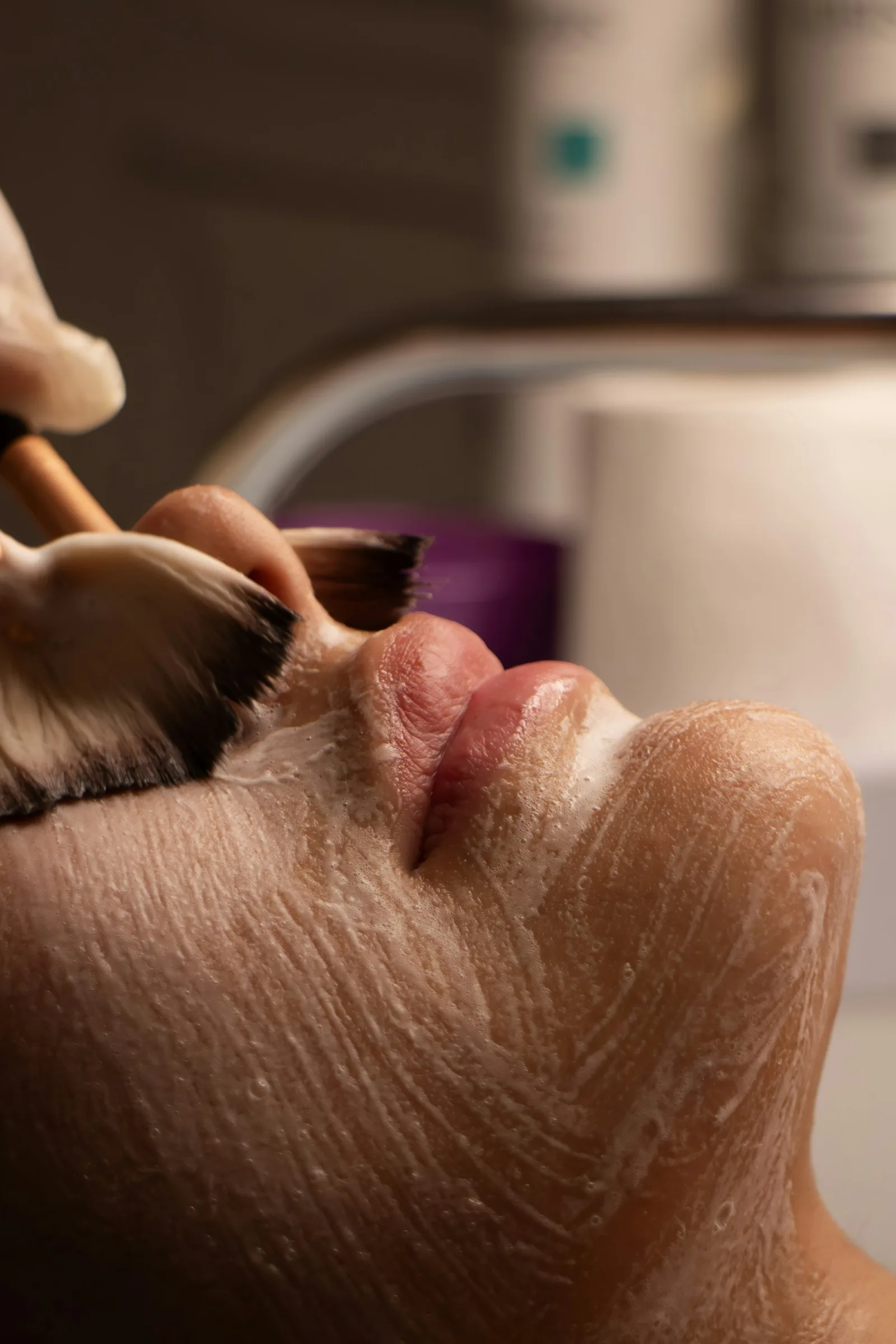
The peel is brushed on quickly and evenly across the lower face, covering the cheek and chin in a thin, even layer.
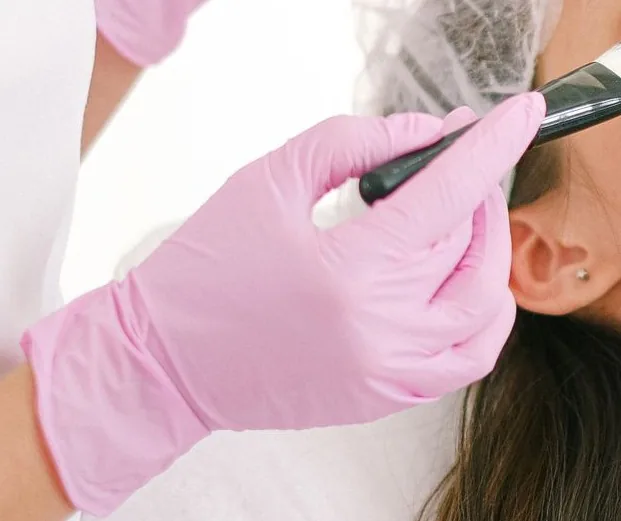
A gloved clinician takes the solution from its container and applies it with a flat brush, working quickly and evenly over the cheek.
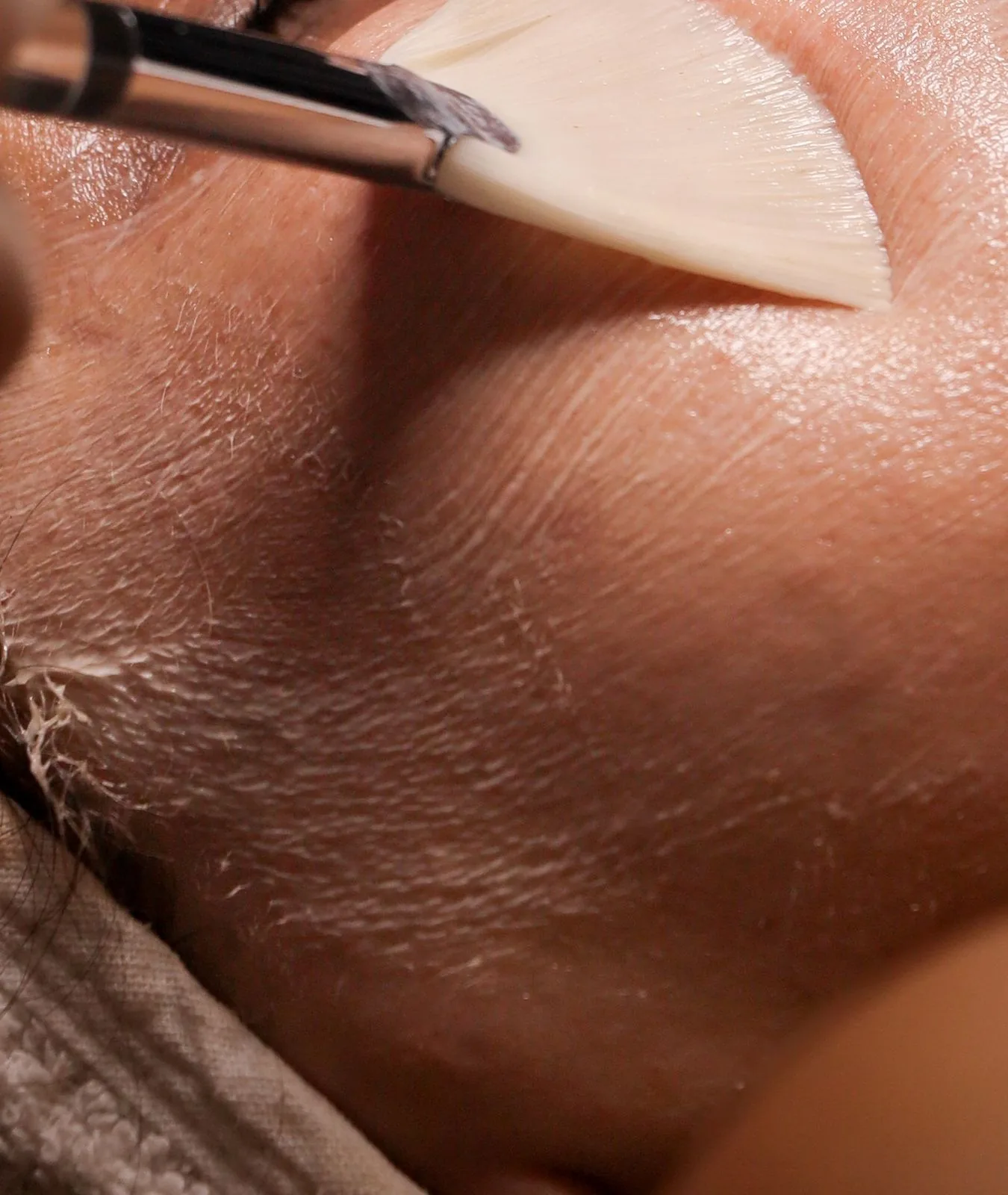
A fan brush spreads a thin layer over the cheek; glycolic acid peels are then neutralised, while salicylic acid and TCA peels are self-limiting.
Device and procedure images are provided by the manufacturers / licensed stock; they do not show COMEDI patients.
At a glance
- How it works
- A chemical solution is applied to remove the outer layers of skin so that new skin grows in its place. The type and strength of acid decide how deep the peel goes.
- Healing time
- Light peels heal in about 1–7 days, medium peels in 7–14 days and deep peels in 14–21 days. Swelling after a medium peel tends to peak at around 48 hours.
- Anaesthesia
- Light peels need only skin cleansing beforehand. Deep peels are done under general anaesthesia in a surgical setting.
- Sessions & interval
- Light peels are often given as a series of 3–5 treatments spaced 2–5 weeks apart. Light and medium peels can be repeated; a deep peel is done only once.
- Aftercare
- Medium and deep peels involve daily soaks, ointment and a course of antiviral medicine. After a deep peel you need to stay out of the sun for 3–6 months.
Acne, scars, exfoliation and pore care work as a planned series alongside daily skin care rather than as a single session. Scars respond differently by type and may not disappear completely.
It has limits for deep scars and laxity, and deeper peels need more recovery.
Real cases
A case only helps when you can see the conditions behind it.
Sign in to see the before & after photos
Free. We use your Google name and email only to answer questions about these cases. Clinic names are shared in your private consultation.
 Before
 After
- Sessions
- 3 sessions (example)
- Combined
- None
- Photo timing
- after 3 sessions (example)
 Before
 After
- Sessions
- 3 sessions (example)
- Combined
- None
- Photo timing
- after 3 sessions (example)
 Before
 After
- Sessions
- 3 sessions (example)
- Combined
- None
- Photo timing
- after 3 sessions (example)
- SessionsOne session, or the result of a course
- CombinedWhether other treatments or surgery were done together
- Photo timingHow long after the procedure the photo was taken
What to ask in a consultation
Questions about whether it suits you and what the alternatives are.
Often considered when
- People bothered by age spots, freckles, melasma or uneven colour from sun damage.
- People with a dull complexion or skin that feels rough.
- People with fine lines who want a change in texture and tone rather than tightening.
- People with some types of acne, as part of a plan agreed with a doctor.
Checks in Korea
- Under Korean law, a medical institution that wants to attract foreign patients must register with the provincial or metropolitan government (the mayor or governor). To register, it must have at least one board-certified specialist for each department through which it wants to attract foreign patients (this does not apply to departments that are not a specialty set by Presidential Decree), and it must hold medical malpractice liability insurance or belong to the medical liability mutual association.
- Registered institutions receive a registration certificate. The registration is valid for 3 years from the date of registration, and an institution that wants to keep attracting foreign patients after that must renew it before it expires.
- Q01Which combination suits my skin, and what should come first?
- Q02How does the expected range differ for my type of scars or breakouts?
- Q03Who will perform the treatment, and what is their specialty?
- Q04Which device or product will be used, and is it the original I asked about?
- Q05How many sessions are usually planned, and can they fit into my stay?
- Q06What should I avoid before and after — sun, alcohol, flights, exercise?
- Q07What is included in the written estimate, and what could change after the consultation?
Check these yourself at the consultation
- Ask which acid is used, at what strength, and how deep the peel is meant to go.
- If the peel has a brand name (such as a 'black peel'), ask for the full ingredient list.
- Ask how many days of visible peeling to expect and how long to avoid the sun, so you can plan your trip home.
Recovery & schedule
Check swelling, daily routine, activity limits and review visits separately.
At a glance
- Before the peel
- Some patients follow a pre-peel skin-care plan for 2 to 4 weeks. A published review describes priming for at least 2–4 weeks and stopping it 3–5 days before the peel; your doctor decides whether you need it.
- Test spot
- When a patient is anxious or a new peel is being tried, a review suggests a test peel behind the ear or on a small area first.
- Application
- The doctor applies the peel quickly and evenly; for a deep peel the skin is treated one small section at a time.
- Neutralising
- Glycolic acid must be neutralised with an alkaline solution such as sodium bicarbonate or saline, while salicylic acid and TCA are described as self-limiting or self-neutralising.
- Course in acne studies
- In studies reviewed for acne, peels were usually given every 2 weeks, around 4–6 sessions in total. Your own plan is set by your doctor.
- When results show
- Results are seen once the skin has healed.
- 01Swelling & bruising
After a light peel the skin is red; once the redness fades, scaling may develop and last 3 to 7 days.
- 02Back to routine
According to AAD guidance, makeup can usually be worn straight away or the next day after a light peel, and camouflaging makeup after 5 to 7 days after a medium peel; a deep peel means recuperating at home for 2 to 3 weeks. These are general ranges: healing differs from person to person, and your doctor tells you when you can return to your routine.
- 03Activity limits
Scratching the treated skin, wearing makeup too early or using tanning beds raises the risk of problems.
- 04Follow-up & flying home
A light peel needs no follow-up visit; a medium peel requires a follow-up visit after the procedure. After a deep peel the doctor sees you the next day and several times in the first week, so plan your flight around these visits.
Published guidance; your own clinic sets the actual plan.
Before your visit day
What clinics ask of international patients, in one place.
- Bring your passportClinics register international patients with their passport, and any estimate or prescription is issued in the name on it.
- Patients under 19Adulthood in Korea starts at 19. For a younger patient, clinics generally ask a parent or legal guardian to consent in writing, and many ask them to attend. Tell us the patient's age when you write, and we check what the clinic needs.
- Coming with someoneA family member or friend can usually join you in the consultation room. Treatment and recovery areas follow each clinic's rules, so we check this before your visit. If more than one person is booking, tell us what each person is interested in.
- Language helpCoordinators reply in English, Japanese, Chinese and Korean. Interpretation on the day is arranged for your dates, and we confirm in writing what it covers before you travel.
- Medicines and allergiesWrite down the medicines you take and any allergies. The clinic asks about both before any treatment.
What changes the price
The same treatment can be quoted differently depending on the items below.
What differs from clinic to clinic
- Acid and strength
- Concentrations used for acne range widely, for example salicylic acid 5–30%, glycolic acid 20–70% and TCA 15–50%, so the same word 'peel' can mean very different treatments.
- Technique
- Some acids need to be neutralised at the right moment and others stop on their own, and some doctors start with a test spot. How the peel is timed and layered differs between doctors.
- Preparation before you fly
- Some patients are asked to prepare the skin for 2 to 4 weeks before the peel, which may need to start at home before your trip.
- Who performs it
- The FDA advises using a chemical peel only under the supervision of a licensed, trained provider such as a dermatologist; ask who applies the peel on the day.
- Follow-up for travellers
- Medium and deep peels need follow-up visits, so clinics differ in how they schedule check-ups within your stay and how they review healing after you fly home.
- Peel agent & strength
- Which acid or solution is used and at what percentage.
- Depth
- Whether the plan is a light, medium or deep peel, which changes the recovery and the number of visits.
- Pre-peel plan
- Whether the skin-care products used before the peel are included.
- Course
- How many peels are planned and how far apart, and whether the quote covers one session or the whole course.
- Follow-up visits
- Whether the required check-ups after a medium or deep peel are included.
- Combination
- Which procedures are combined
- Area & sessions
- Full face or part, and the planned sessions
- Prescriptions & products
- Whether medicines and care products are included
- Numbing & care
- Numbing cream and soothing care
Prices are set by the clinic after a consultation. Ask for an itemised, written estimate before you book, and check what is included and what could change.
Often charged separately
Ask whether each of these is in your estimate.
| Item | What to ask |
|---|---|
| Consultation fee | Whether the consultation is charged, and whether that amount comes off the treatment price. |
Clinics in Korea build a treatment estimate from the area, the amount used or the number of sessions.
The final figure is set after the doctor sees you at the consultation.
Ask for an itemised, written estimate that marks each item above as included or not, so you can compare two quotes on the same basis.
VAT before you compare quotes
The VAT refund for foreign visitors' cosmetic procedures covered only procedures received by 31 December 2025, so procedures received now are not refunded. Plan your budget without it, and ask each clinic whether VAT is included in the written quote so you compare the same total.
Ask COMEDI, for example
Clinics in Seoul differ in equipment, technique, specialist focus and what the price includes. Send us your question and we compare partner clinics for you.
- “Which partner clinics offer a light peel I can fit into a short trip?”
- “Which acid and strength would each clinic use for my skin concern?”
- “Do I need to start any skin preparation at home before I fly?”
- “How are follow-up checks handled if I fly home before my skin has fully healed?”
Precautions & aftercare
General information. Follow the written instructions from your treating doctor for anything specific to you.
Side effects and precautions for Chemical peel are in one place at the top of this page.
Aftercare for this procedure
- Use the moisturiser exactly as directed; skin that dries out and cracks can scar.
- Do not pick, peel, scratch, rub or scrub the flaking skin; let it come off on its own.
- Once your skin has healed, apply sunscreen every day.
- Wait for the doctor's go-ahead before wearing makeup, and avoid tanning beds.
- Tell the clinic about acne medicines (including tablets), possible pregnancy and any history of sensitive skin.
- Contact the clinic for severe burning, oozing or pain after a session.
- Ask when you can restart the products you use at home.
Information only. Suitability, risks, recovery and price are assessed by the treating doctor in a consultation.
Sources for this section 8
- Chemical peels: FAQs — American Academy of Dermatology
- Chemical peels: Preparation — American Academy of Dermatology
- Chemical peels: Overview — American Academy of Dermatology
- Chemical peel: Candidates — American Society of Plastic Surgeons
- Chemical peel: Safety — American Society of Plastic Surgeons
- Prevention of Complications in Chemical Peeling — J Cutan Aesthet Surg (PMC)
- Chemical peels in the treatment of acne: patient selection and perspectives — Clin Cosmet Investig Dermatol (PMC)
- 의료 해외진출 및 외국인환자 유치 지원에 관한 법률 제6조 — 국가법령정보센터
Related questions & guides
Worth reading alongside this page.
Notes from people who used COMEDI
Written after a consultation we arranged, and matched to that request.
Common questions
How much does Chemical peel cost in Korea?+
Prices are set by each clinic after a consultation and depend on the technique, area and your needs. Ask for an itemised, written estimate before you book — it should list what is included and what could change. We help you request and compare estimates.
Can foreigners get Chemical peel in Korea?+
Yes. Many Seoul clinics see international patients. We help with clinic information, consultations in your language, written estimates and interpretation on the day.