
Doublejaw surgery
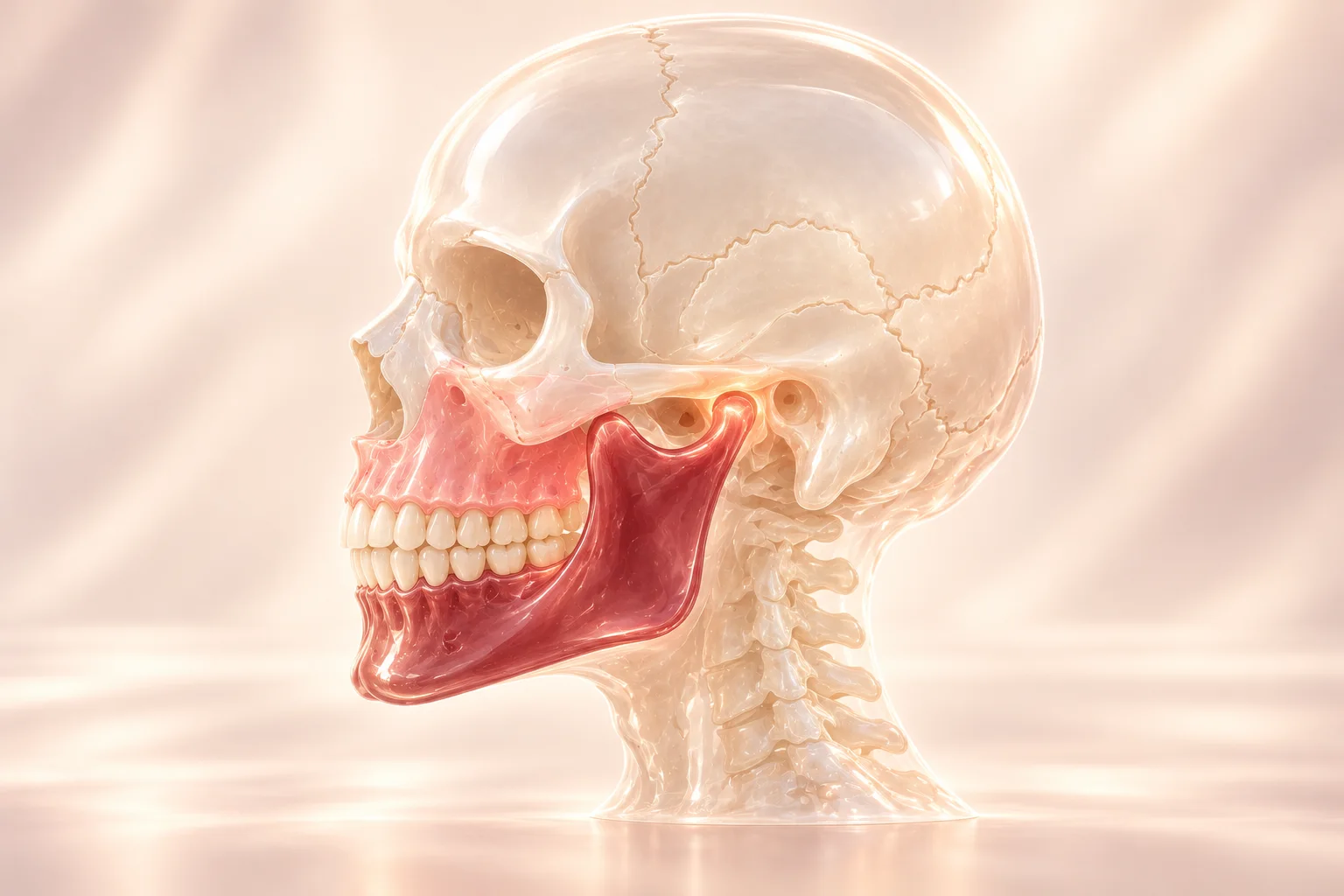
Repositions the upper and lower jaws, usually planned together with orthodontic treatment.

- Type
- Surgical
- Usually by
- Plastic surgeon
- Category
- V-line & face contouring
- First step
- Consultation
Information only. Suitability, risks, recovery and price are assessed by the treating doctor in a consultation.
Side effects and precautionsWhat to know about Double jaw surgery before you book15
Reactions that usually settle, signs to tell the clinic about straight away, and times to wait. Your doctor goes through the risks that apply to you at the consultation.
Known risks
- Numbness or tingling of the lower lip and chin is common and may take months, sometimes up to two years, to recover; one NHS leaflet states that in about 5% of cases feeling does not fully return. Swelling, nosebleeds and a blocked nose are expected in the first two weeks.
Usually settles on its own
- Jaw stiffness: one NHS leaflet says it is common and you will not be able to open your mouth fully for a few weeks.
- Drooling, which an NHS leaflet describes as common after this surgery and improving with time.
- Dry, cracked lips; lip balm is advised.
- Feeling low or tearful, which one NHS leaflet describes as normal, often around the third day.
- Tingling or numbness lasting several weeks, which one NHS leaflet puts at about one in 10 people.
Tell the clinic promptly
- Long-term change in feeling of the lower lip and chin; published figures differ widely by source and by how it is measured, from less than one in 100 lasting over a year in one NHS leaflet, to about 15 in 100 in another, to 10 to 30% in a surgical review.
- Plates and screws becoming infected; they are usually left in permanently, but occasionally need to be removed.
- A new bite that is not quite right, which rarely needs a second small operation to reposition the plates and screws.
- Jaw-joint pain and clicking, the symptoms a surgical review most often found when the joint was affected.
- Very rarely, wiring the jaws together at the end of the operation (with 24 hours in intensive or high-dependency care) or a blood transfusion.
Wait or rethink when
- Jaws that are still growing: an NHS leaflet says surgery before growth is complete may mean treatment is unsuccessful because the jaws keep growing.
- Smoking you cannot stop: an NHS leaflet strongly advises smokers to stop before this procedure, and another says patients who smoke are at a much higher risk of infection and problems after the operation.
- Not being able to attend regular orthodontic visits: one NHS leaflet describes adjustment appointments every 6 to 8 weeks, with more frequent visits around the time of surgery.
- A bite problem that orthodontics alone can manage: an NHS leaflet lists orthodontic treatment alone as the alternative, while noting the result is likely to be less satisfactory functionally or aesthetically when surgery has been advised.
Sources for this section 14
- University Hospitals Plymouth NHS Trust - Orthognathic surgery
- East and North Hertfordshire NHS Trust - Orthognathic Surgery leaflet
- Comparison study of the Le Fort I osteotomy using 2- and 4-plate fixation (PMC)
- Jaw or chin corrective surgery (orthognathic surgery): patient information and consent — Cambridge University Hospitals NHS Foundation Trust
- Orthognathic (jaw) surgery — University Hospitals Bristol NHS Foundation Trust
- Orthognathic Surgery (Jaw Surgery) — University Hospitals of North Midlands NHS Trust
- Jaw Surgery: information for patients — Oxford University Hospitals NHS Foundation Trust
- Post Operative Orthognathic Surgery — East Sussex Healthcare NHS Trust
- Monson LA. Bilateral Sagittal Split Osteotomy — Seminars in Plastic Surgery 2013 (PMC3805998)
- Orthognathic Treatment — University Hospitals Plymouth NHS Trust
- Askin MB, Manav ÖC. Surgery-first Versus Orthodontics-first in Orthognathic Surgery: A Systematic Review of Comparative Outcomes — Contemporary Clinical Dentistry 2025 (PMC12815333)
- Lee YC, Kim SG. Redefining precision and efficiency in orthognathic surgery through virtual surgical planning and 3D printing: a narrative review — Maxillofacial Plastic and Reconstructive Surgery 2023 (PMC10728393)
- Cosmetic surgery abroad — NHS
- Foreign Patient Attraction Information System — MEDICALKOREA
What is it?
The purpose, the change you can expect and the limits.
Repositions the upper and lower jaws, usually planned together with orthodontic treatment.
Orthognathic surgery
Techniques & materials
- 01Le Fort I osteotomy (upper jaw)
The upper jaw is cut above the teeth through the mouth, moved to the planned position and fixed with titanium plates.
- 02Sagittal split ramus osteotomy (lower jaw)
The lower jaw is split lengthwise on both sides so the tooth-bearing part can slide forwards or backwards, then fixed.
- 03Orthodontics before and after surgery
Fixed braces are usually worn before surgery to line up the teeth and for some months afterwards to finish the bite.
- 04Titanium plates and screws
Small plates and screws hold the jaws in their new position, so the jaws are not usually wired shut.
- 05Guiding elastics
Small elastic bands are attached to the braces from a day or two after surgery to guide the bite into its new position.
Clinics do not all carry the same devices, products or techniques. Ask which one will be used, by name, before you book.
How it is done, in photos
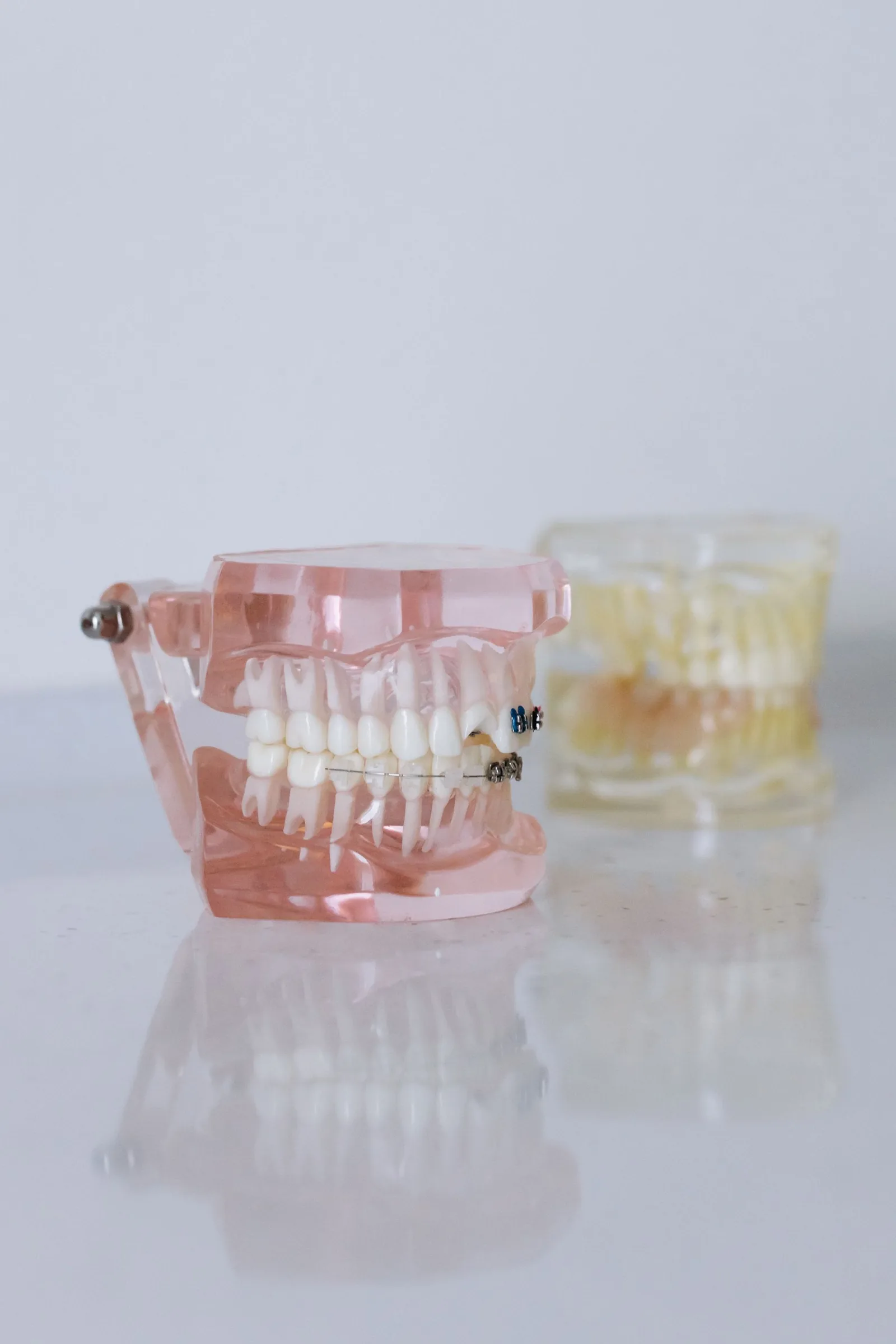
A dental model with fixed braces shows how brackets and a wire sit on the teeth; braces are worn before surgery and for months after it.
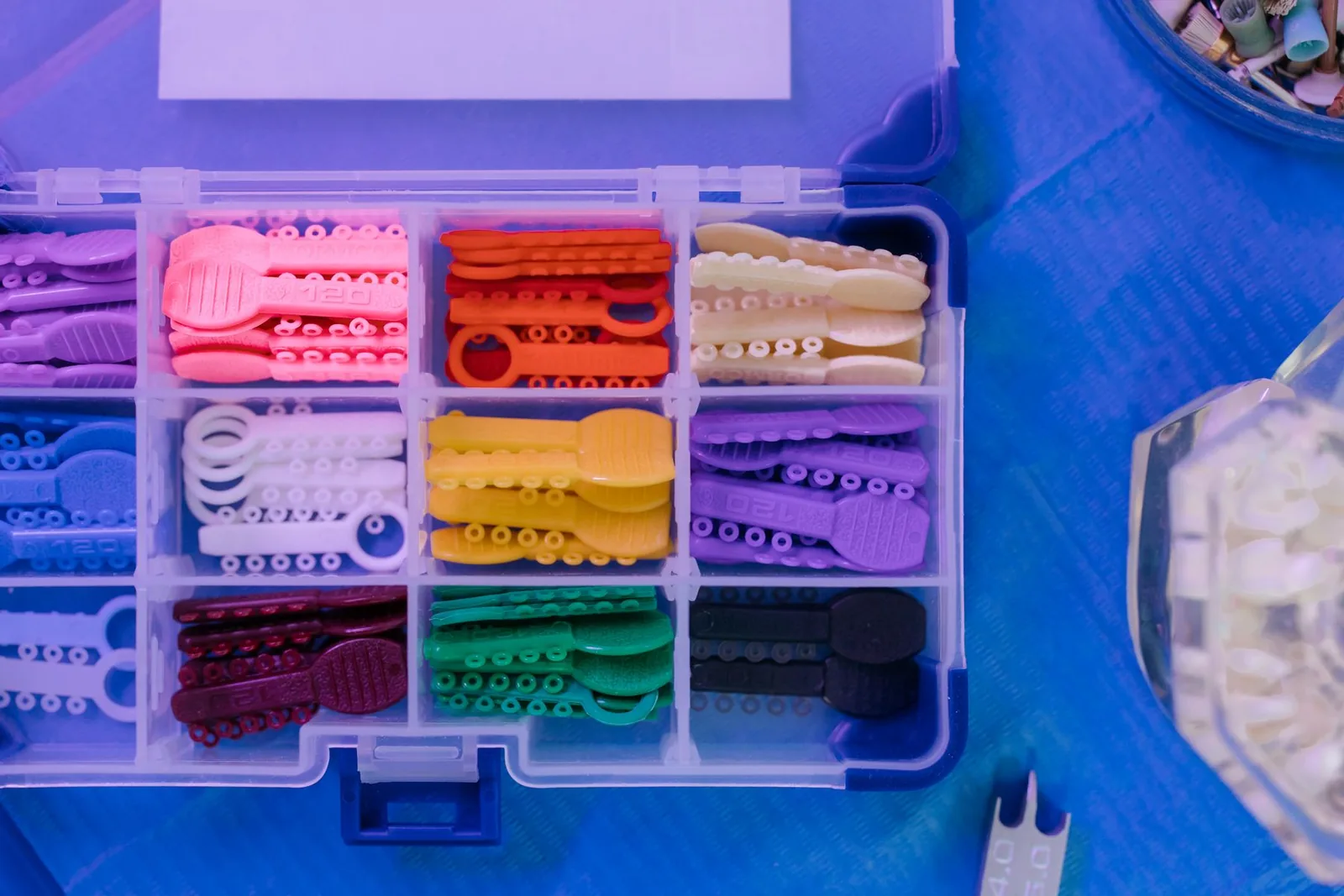
Small coloured elastic ties like these hold the wire in fixed braces, which are planned together with the jaw operation by the orthodontist and surgeon.
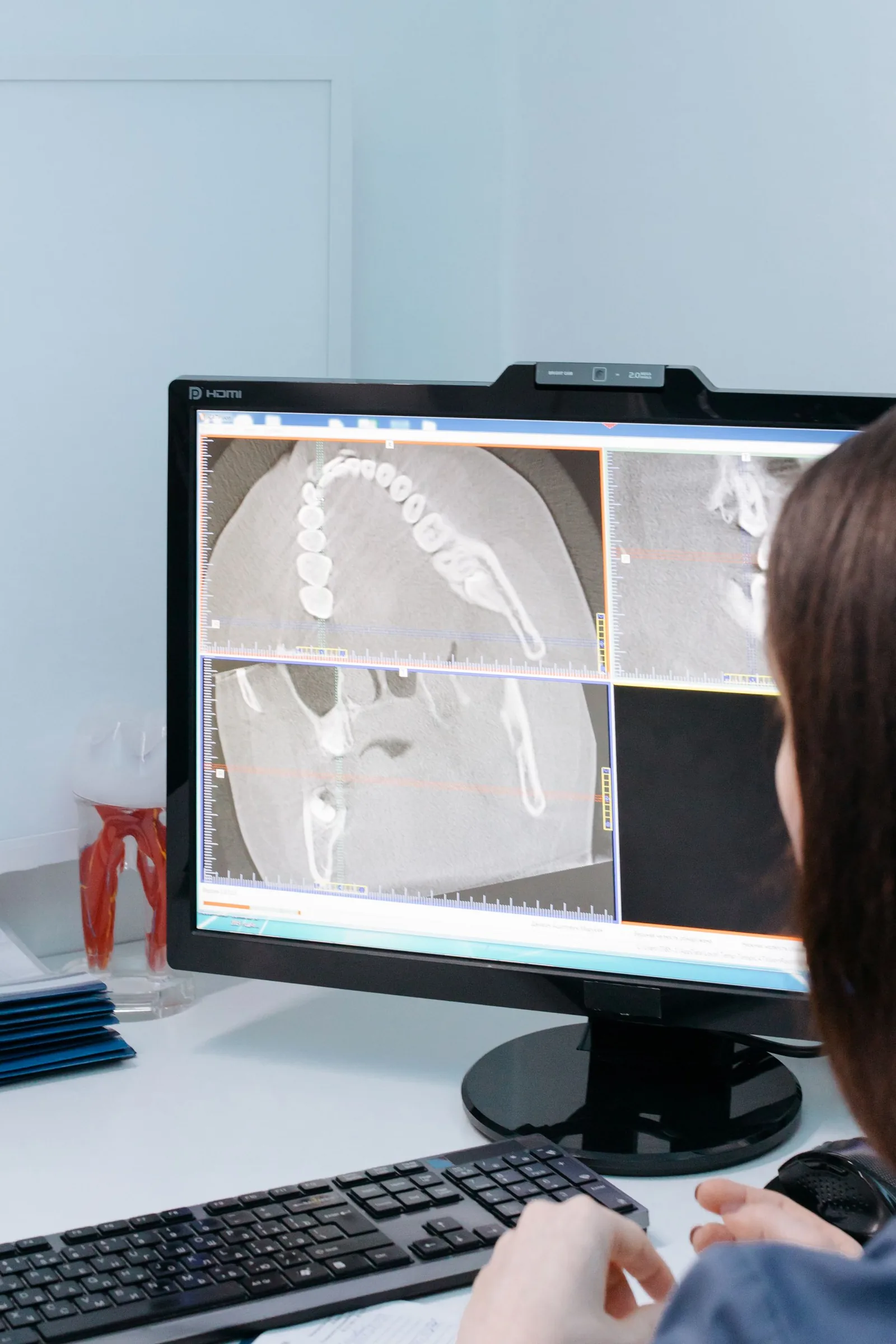
Before the operation is planned in detail, X-rays or 3D scans of the jaws and teeth are taken and reviewed on screen at separate planning visits.
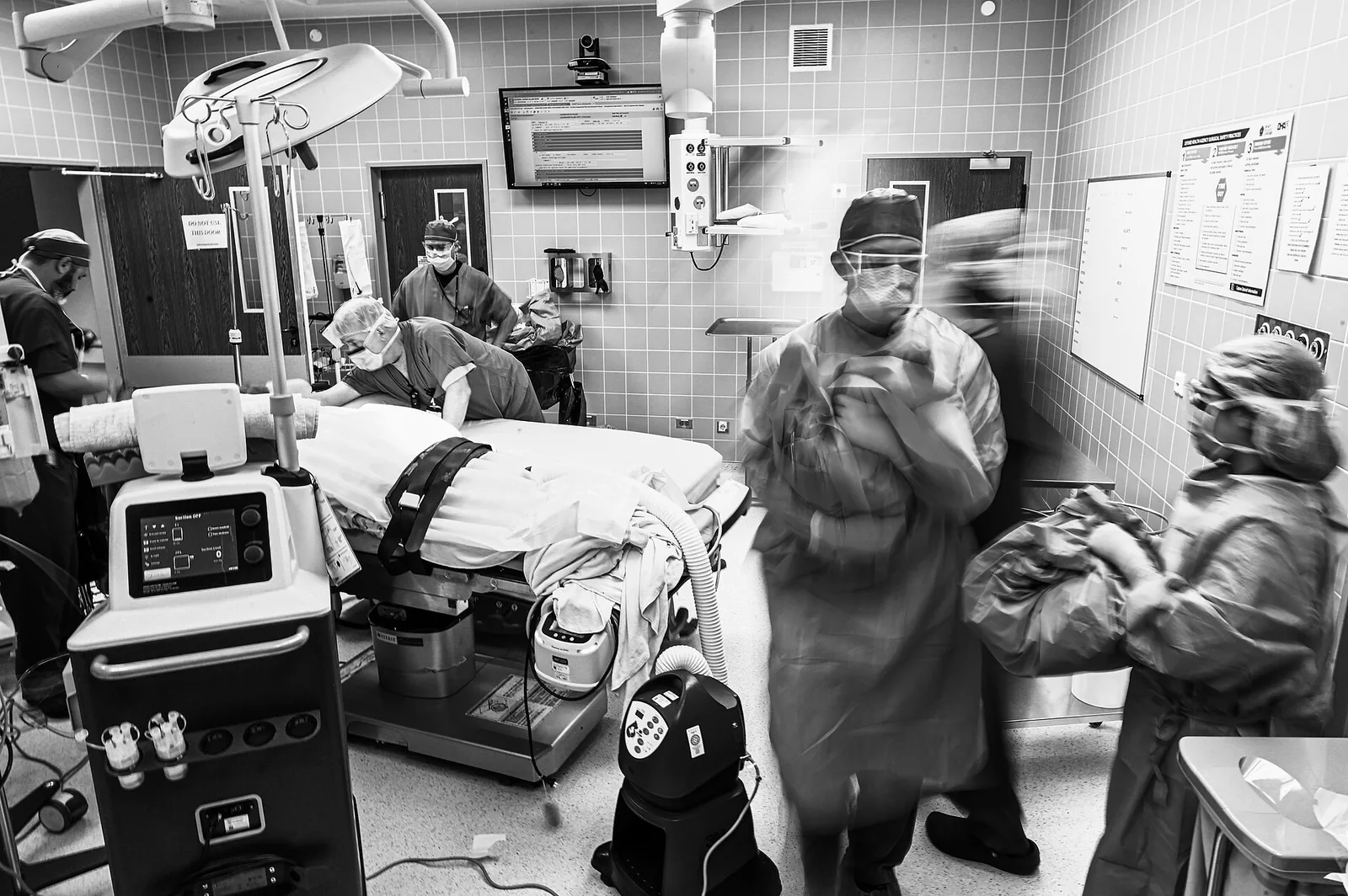
Theatre staff in gowns, caps and masks prepare an operating room for oral and maxillofacial surgery; double jaw surgery is done under general anaesthesia.
Photo: U.S. Air Force photo by Staff Sgt. Jacob Wongwai / Public domain via Wikimedia Commons
Device and procedure images are provided by the manufacturers / licensed stock; they do not show COMEDI patients.
At a glance
- Approach
- Both jaws are cut and repositioned through incisions inside the mouth, so there are normally no scars on the face. Surgery is planned together with an orthodontist.
- Anaesthesia
- General anaesthesia.
- Operating time
- Generally several hours. One published study of two-jaw cases reported median times of roughly four and a half to five and a half hours; this varies by hospital and case.
- Hospital stay
- Generally one to three days in the NHS leaflets reviewed. Length of stay differs between hospitals and countries.
- Stitches, diet & braces
- Stitches inside the mouth dissolve and start to come away after one to two weeks. A soft diet is usual for about six weeks, and braces generally stay on for around six months after surgery.
Facial bone surgery is planned after CT and other tests show where the bone and nerves lie. Soft tissue does not always change the way the bone does, and swelling takes a long time to settle.
It involves orthodontics and a long recovery, so it is hard to plan around a short visit.
Real cases
A case only helps when you can see the conditions behind it.
Sign in to see the before & after photos
Free. We use your Google name and email only to answer questions about these cases. Clinic names are shared in your private consultation.
 Before
 After
- Sessions
- Surgery (example)
- Combined
- None
- Photo timing
- 1 year after surgery (example)
 Before
 After
- Sessions
- Surgery (example)
- Combined
- None
- Photo timing
- 1 year after surgery (example)
 Before
 After
- Sessions
- Surgery (example)
- Combined
- None
- Photo timing
- 1 year after surgery (example)
- SessionsOne session, or the result of a course
- CombinedWhether other treatments or surgery were done together
- Photo timingHow long after the procedure the photo was taken
What to ask in a consultation
Questions about whether it suits you and what the alternatives are.
Often considered when
- People whose bite cannot be corrected by orthodontics alone; an NHS consent leaflet describes jaw surgery as correcting exactly that.
- Adults whose jaw growth is finished; an NHS leaflet notes that most growth is complete by the age of 18.
- People who can commit to a long course of braces; one NHS leaflet says to expect fixed braces for at least 2 years in total, usually about 18 months of it before surgery.
- People who can have someone with them after discharge; one NHS leaflet says it is essential for someone to look after you for the first week after leaving hospital.
Checks in Korea
- Korea's Foreign Patient Attraction Information System (MEDICALKOREA) lets you search registered medical institutions and facilitators by name; leaving the name blank lists all registered ones.
- Q01From my test results, how far is it safe to go?
- Q02What alternatives are there without bone surgery — a non-surgical treatment or a different operation?
- Q03Who is the operating surgeon, and what is their specialty?
- Q04What type of anaesthesia is used, and who monitors it?
- Q05How many follow-up visits are needed before it is safe for me to fly home?
- Q06What are the possible risks and complications, and how are they handled if I am abroad?
- Q07What is included in the written estimate — revisions, medication, garments, stitches out?
Check these yourself at the consultation
- Whether orthodontic treatment is planned before and after surgery, and who will continue it in your home country.
- How the jaws are fixed, and whether elastics or wiring are expected in your case.
- How long you should stay in Korea for check-ups, and when the clinic considers you fit to fly.
Recovery & schedule
Check swelling, daily routine, activity limits and review visits separately.
At a glance
- Planning records
- NHS leaflets describe separate planning visits: records of your teeth, dental scans or impressions, and X-rays or 3D imaging before the operation is planned in detail.
- Total time in braces
- Published NHS guidance gives about 2 years in fixed braces in total, and says it can take longer in some cases. Your own timeline is set by your orthodontist and surgeon.
- Bone healing
- One NHS leaflet says healing depends on age and fitness, but in general the jaw bones are almost healed after 2 to 3 months.
- Retainers after braces
- After the fixed braces come off, one NHS leaflet says a removable retainer is normally worn at night for a minimum of 12 months.
- Speech
- One NHS leaflet notes that moving the upper jaw forwards can occasionally make speech sound more or less nasal, so a speech assessment is done before treatment.
- Long-term reviews
- NHS leaflets describe reviews for up to two years, including checks at one and two years with scans, photographs or X-rays to follow how the jaws and teeth settle.
- 01Swelling & bruising
Swelling is generally worst on the second or third day; one NHS leaflet says most of it goes within about two weeks, with subtler swelling taking several months. Bruising can also appear under the chin and on the neck.
- 02Back to routine
NHS leaflets suggest about 2 to 4 weeks off work or study, and one says it takes around a month to get back into a normal routine. How long you need depends on your work and recovery.
- 03Activity limits
One NHS leaflet advises avoiding strenuous exercise during the weeks off and no contact sports for two months; another says at least 3 months. After upper-jaw surgery, do not blow your nose, just wipe it gently.
- 04Follow-up & flying home
Follow-up visits are probably weekly at first, and one NHS leaflet reviews the elastics about 5 days after surgery. The NHS recommends not flying for 7 to 10 days after facial cosmetic procedures and agreeing beforehand where follow-up appointments will be.
Published guidance; your own clinic sets the actual plan.
Before your visit day
What clinics ask of international patients, in one place.
- Bring your passportClinics register international patients with their passport, and any estimate or prescription is issued in the name on it.
- Patients under 19Adulthood in Korea starts at 19. For a younger patient, clinics generally ask a parent or legal guardian to consent in writing, and many ask them to attend. Tell us the patient's age when you write, and we check what the clinic needs.
- Coming with someoneA family member or friend can usually join you in the consultation room. Treatment and recovery areas follow each clinic's rules, so we check this before your visit. If more than one person is booking, tell us what each person is interested in.
- Language helpCoordinators reply in English, Japanese, Chinese and Korean. Interpretation on the day is arranged for your dates, and we confirm in writing what it covers before you travel.
- Medicines and allergiesWrite down the medicines you take and any allergies. The clinic asks about both before any treatment.
What changes the price
The same surgery can be quoted differently depending on the items below.
What differs from clinic to clinic
- Orthodontics first or surgery first
- A 2025 systematic review describes a surgery-first approach, where the jaws are corrected before substantial orthodontic preparation; in one cohort total treatment took about 21 months versus 34 months with orthodontics first. Which approach a clinic offers, and for whom, differs.
- Digital planning tools
- A 2023 review describes virtual surgical planning with 3D-printed guides, models and pre-bent plates, and notes that set-up and material costs can be high. Whether a clinic plans digitally and prints its own guides varies.
- Team set-up
- NHS leaflets say orthodontics and surgery should be planned together, and one describes a team that also includes speech and language therapists and psychologists. Who sits on a clinic's planning team differs.
- Hospital stay and post-op protocol
- Across NHS leaflets, stays range from same-day discharge to 4 days, and one offers a cooling mask for home use at extra charge. What a clinic includes after surgery is worth comparing.
- Care after you fly home
- NHS leaflets follow patients for up to two years with weekly visits at first. For an international patient, how a clinic hands over braces, elastics and long-term reviews to your home country differs.
- Jaws and add-ons
- Whether the quote covers both jaws or one, and whether chin surgery (genioplasty) or other contouring is added in the same operation.
- Orthodontics
- Whether braces before and after surgery, the retainers and orthodontic visits are included, or quoted separately by another provider.
- Digital planning
- Whether 3D virtual planning, 3D-printed splints or guides, or pre-bent plates are used and priced separately.
- Hospital stay and recovery aids
- How many nights are included, and whether items such as a cooling mask for swelling are included or charged.
- Revision and plate policy
- What happens and what it costs if the bite needs a second small operation or plates need to be removed later.
- Follow-up
- How many review visits in Korea are included, and how reviews over the following months and years are arranged once you are home.
- Extent
- Jaw, cheekbones, chin and how they are combined
- Tests
- CT and other pre-operative tests
- Anaesthesia & stay
- General anaesthesia, the anaesthesiologist and nights in hospital
- What is included
- Medication, compression band, review visits and the revision policy
Prices are set by the clinic after a consultation. Ask for an itemised, written estimate before you book, and check what is included and what could change.
Often charged separately
Ask whether each of these is in your estimate.
| Item | What to ask |
|---|---|
| Consultation fee | Whether the consultation is charged, and whether that amount comes off the surgery price. |
| Stitch removal and check-ups | How many follow-up visits are included, and how check-ups work once you have flown home. |
| Recovery stay | Whether an overnight stay at the clinic or a recovery facility is in the estimate. |
Clinics in Korea build a surgery estimate from the technique, the type of anaesthesia and the care around the operation.
The final figure is set after the surgeon examines you.
Ask for an itemised, written estimate that marks each item above as included or not, so you can compare two quotes on the same basis.
VAT before you compare quotes
The VAT refund for foreign visitors' cosmetic procedures covered only procedures received by 31 December 2025, so procedures received now are not refunded. Plan your budget without it, and ask each clinic whether VAT is included in the written quote so you compare the same total.
Ask COMEDI, for example
Clinics in Seoul differ in equipment, technique, specialist focus and what the price includes. Send us your question and we compare partner clinics for you.
- “Which partner clinics offer a surgery-first plan, and which would want braces first for my bite?”
- “Do the quotes include digital 3D planning and printed splints, or are they extra?”
- “How long would I need to stay in Korea, and who could continue my orthodontics back home?”
- “Can you compare what each clinic includes for follow-up, revision and plate removal?”
Precautions & aftercare
General information. Follow the written instructions from your treating doctor for anything specific to you.
Side effects and precautions for Double jaw surgery are in one place at the top of this page.
Aftercare for this procedure
- Brush with a small, soft (child-size) toothbrush as soon as possible after surgery; one NHS leaflet asks for cleaning three times a day.
- Use the prescribed mouthwash as directed (one NHS leaflet uses chlorhexidine 4 times a day for the first 7 days) and rinse with warm salt water after meals.
- After upper-jaw surgery, do not blow your nose; wipe it gently.
- Replace the elastics as you are shown, because they lose their flexibility.
- Keep your lips moist with lip balm, and put orthodontic wax on any part of the brace that rubs.
- Do not smoke and avoid alcohol; NHS leaflets note smoking reduces blood supply in the mouth and slows healing.
- Tell the clinic about dental or orthodontic treatment, jaw joint symptoms, medical conditions, medicines and smoking.
- Contact the clinic immediately for difficulty breathing, bleeding, fever or severe pain.
- This is surgery under general anaesthesia, so ask about pre-operative tests and emergency arrangements.
Information only. Suitability, risks, recovery and price are assessed by the treating doctor in a consultation.
Sources for this section 12
- Jaw or chin corrective surgery (orthognathic surgery): patient information and consent — Cambridge University Hospitals NHS Foundation Trust
- Orthognathic (jaw) surgery — University Hospitals Bristol NHS Foundation Trust
- Orthognathic Surgery (Jaw Surgery) — University Hospitals of North Midlands NHS Trust
- Jaw Surgery: information for patients — Oxford University Hospitals NHS Foundation Trust
- Post Operative Orthognathic Surgery — East Sussex Healthcare NHS Trust
- Orthognathic Treatment — University Hospitals Plymouth NHS Trust
- Orthognathic Surgery — University Hospitals Plymouth NHS Trust
- Monson LA. Bilateral Sagittal Split Osteotomy — Seminars in Plastic Surgery 2013 (PMC3805998)
- Askin MB, Manav ÖC. Surgery-first Versus Orthodontics-first in Orthognathic Surgery: A Systematic Review of Comparative Outcomes — Contemporary Clinical Dentistry 2025 (PMC12815333)
- Lee YC, Kim SG. Redefining precision and efficiency in orthognathic surgery through virtual surgical planning and 3D printing: a narrative review — Maxillofacial Plastic and Reconstructive Surgery 2023 (PMC10728393)
- Cosmetic surgery abroad — NHS
- Foreign Patient Attraction Information System — MEDICALKOREA
Related questions & guides
Worth reading alongside this page.
Notes from people who used COMEDI
Written after a consultation we arranged, and matched to that request.
Common questions
How much does Double jaw surgery cost in Korea?+
Prices are set by each clinic after a consultation and depend on the technique, area and your needs. Ask for an itemised, written estimate before you book — it should list what is included and what could change. We help you request and compare estimates.
Can foreigners get Double jaw surgery in Korea?+
Yes. Many Seoul clinics see international patients. We help with clinic information, consultations in your language, written estimates and interpretation on the day.