
Acne treatment
Clinic-based acne care that combines procedures and, where the dermatologist decides, prescriptions.

- Type
- Non-surgical
- Usually by
- Dermatologist
- Category
- Skin & acne care
- First step
- Consultation
Information only. Suitability, risks, recovery and price are assessed by the treating doctor in a consultation.
Side effects and precautionsWhat to know about Acne treatment before you book11
Reactions that usually settle, signs to tell the clinic about straight away, and times to wait. Your doctor goes through the risks that apply to you at the consultation.
Known risks
- Redness and swelling are common and usually settle within hours or days. Lasting pain, burns, blisters, changes in skin colour and scarring are reported as rare.
Usually settles on its own
- Redness and swelling
- Stinging or a burning feeling, usually gone within hours or by the next day
Tell the clinic promptly
- Pain that lingers
- Burns or blisters
- Changes in skin colour or scarring
- Permanent pigment problems after a peel, especially in darker skin treated without the right expertise
Wait or rethink when
- If you are pregnant: the American Academy of Dermatology lists isotretinoin, tazarotene and spironolactone as unsafe during pregnancy because they can cause serious birth defects, and some laser treatments need a numbing medicine that could affect the baby, so a dermatologist should be consulted first.
- If you could become pregnant and are considering isotretinoin: Korea's drug regulator requires a pregnancy check before prescribing and contraception from one month before, during and at least one month after treatment.
- If you cannot keep out of sunlight for 48 hours after photodynamic therapy (for example, outdoor sightseeing or a daytime flight), schedule it for another time.
- If your acne is mainly cysts or nodules, blue, red or infrared light alone is not the right choice, as these do not treat cysts or nodules.
Sources for this section 14
- American Academy of Dermatology – Lasers and lights: How well do they treat acne?
- American Academy of Dermatology – Pimple popping: Why only a dermatologist should do it
- US FDA 510(k) K203013 – AGNES (AGNES Medical Co., Ltd.)
- US FDA 510(k) K254271 – Capri (ORO Co., Ltd.)
- US FDA 510(k) K181518 – Sebacia Microparticles
- Lasers in Surgery and Medicine 2020 – single microneedle radiofrequency for acne (randomised controlled trial)
- Chemical peels: FAQs — American Academy of Dermatology
- Acne: Diagnosis and treatment — American Academy of Dermatology
- Isotretinoin: The truth about this acne treatment — American Academy of Dermatology
- Is any acne treatment safe to use during pregnancy? — American Academy of Dermatology
- Acne treatment — British Association of Dermatologists (Acne Support, linked from NHS)
- ABSORICA / ABSORICA LD (isotretinoin) prescribing information — DailyMed (US FDA label)
- 이소트레티노인 안전사용 카드뉴스 — 식품의약품안전처
- 의료 해외진출 및 외국인환자 유치 지원에 관한 법률 제6조 — 국가법령정보센터
What is it?
The purpose, the change you can expect and the limits.
Clinic-based acne care that combines procedures and, where the dermatologist decides, prescriptions.
Extraction · peels · light & laser
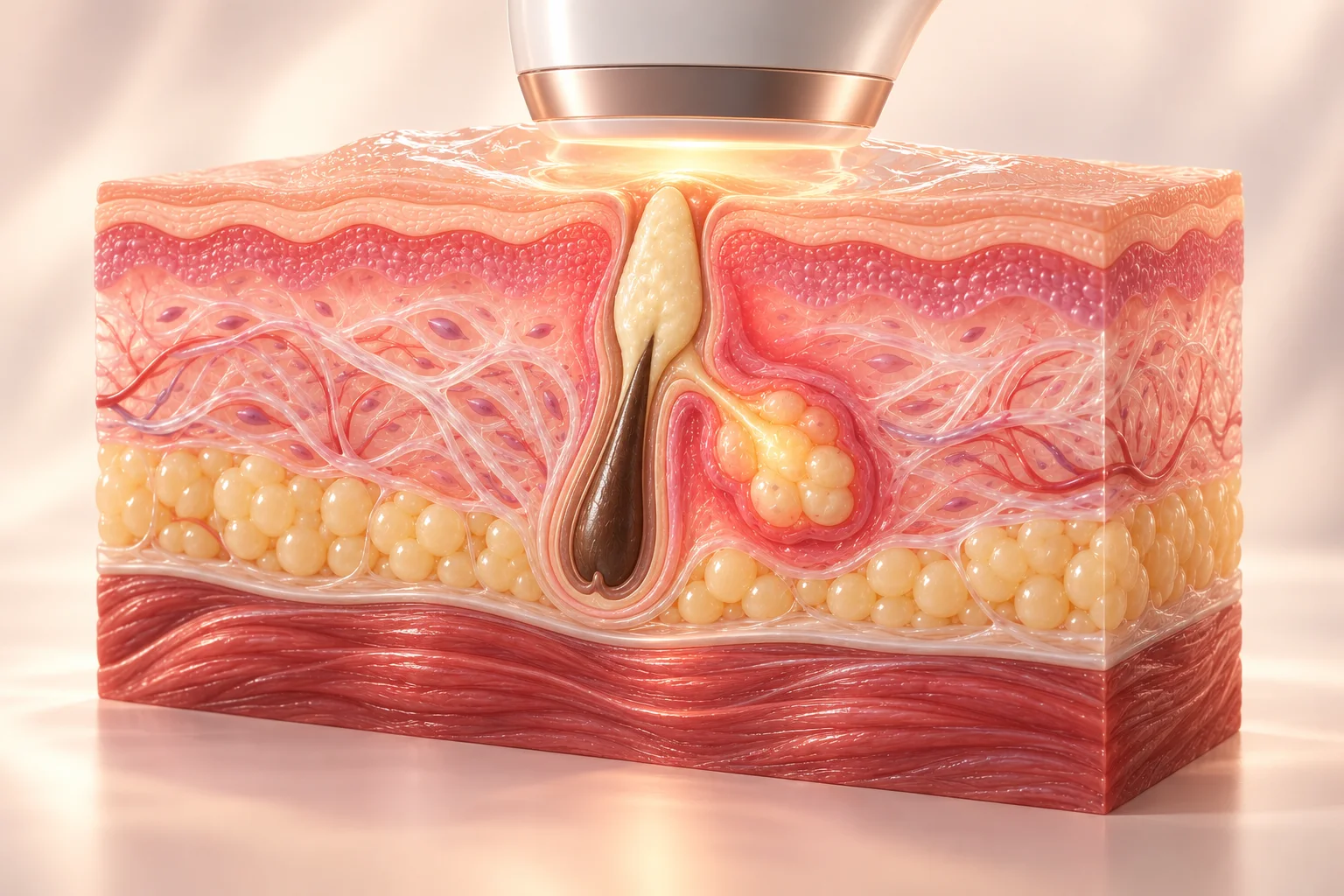
- AGNES
- Capri
Devices & products used
- 01Comedone extraction
Blackheads and whiteheads are removed by hand with sterile instruments.
- 02Photodynamic therapy (PDT)
A solution that makes the skin more sensitive to light is left on for 15 minutes to 3 hours, then the area is treated with a light or laser device.
- 03Blue / red light therapy
Visible light is used on inflamed pimples; the American Academy of Dermatology notes it does not treat blackheads, whiteheads, cysts or nodules.
- 04Gold photothermal therapy (Gold PTT)
Light-absorbing gold particles are applied to the skin and heated with a laser to warm the oil glands; in the US, Sebacia Microparticles are FDA-cleared as an accessory to 1064 nm lasers for mild to moderate inflammatory acne.
- 05AGNESAGNES Medical Co., Ltd., Korea
A radiofrequency device that delivers 1 MHz energy through a single-use fine needle electrode; its US FDA clearance covers electrocoagulation and haemostasis in dermatological procedures.
- 06CapriORO Co., Ltd., Korea
A 1450 nm diode laser with cryogen spray cooling; its 2026 US FDA clearance lists mild to moderate acne vulgaris and back acne among its uses.
Clinics do not all carry the same devices, products or techniques. Ask which one will be used, by name, before you book.
How it is done, in photos
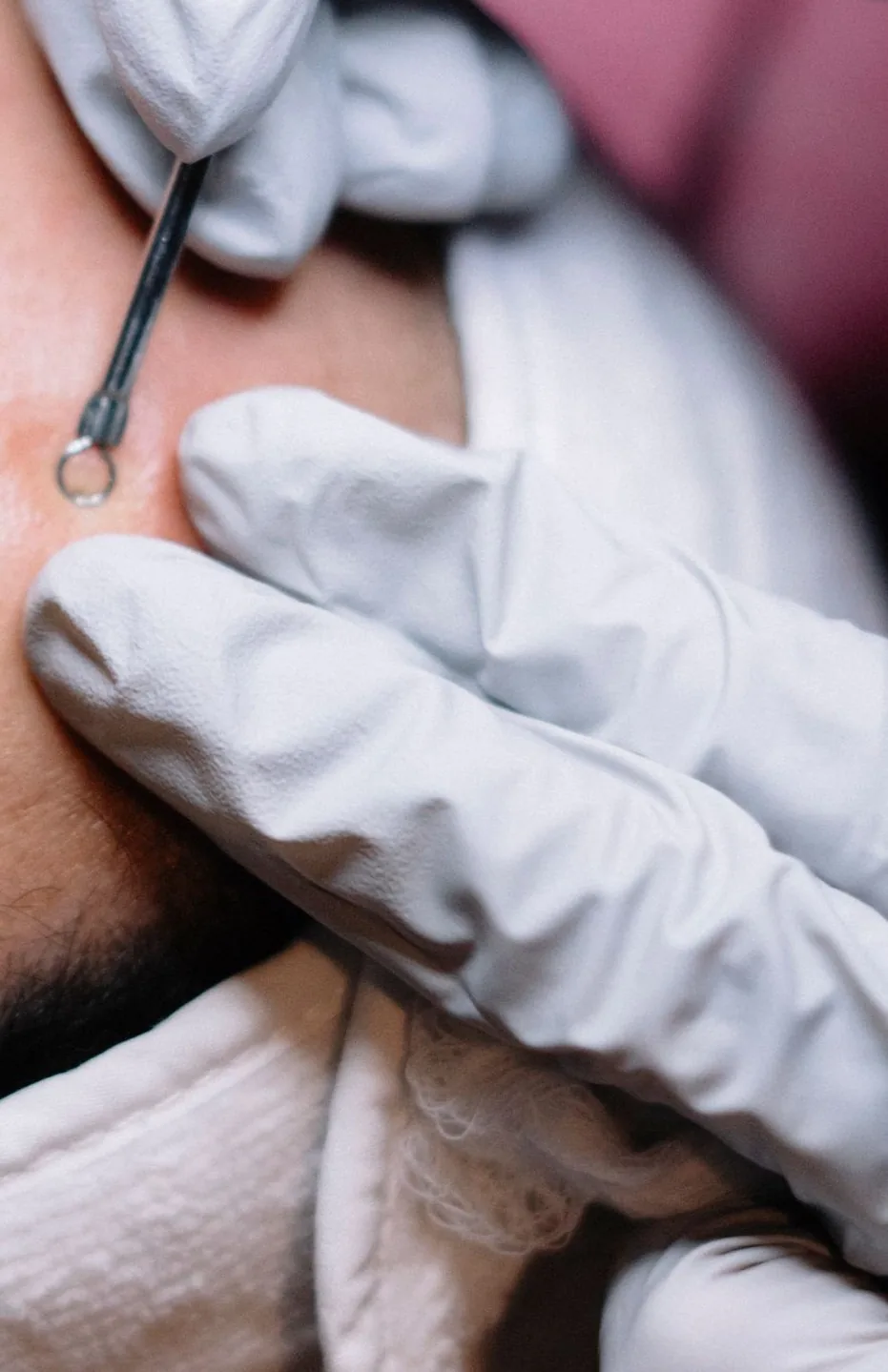
A sterilised loop extractor is pressed gently around a blocked pore on the cheek; the skin may be exfoliated before extraction.
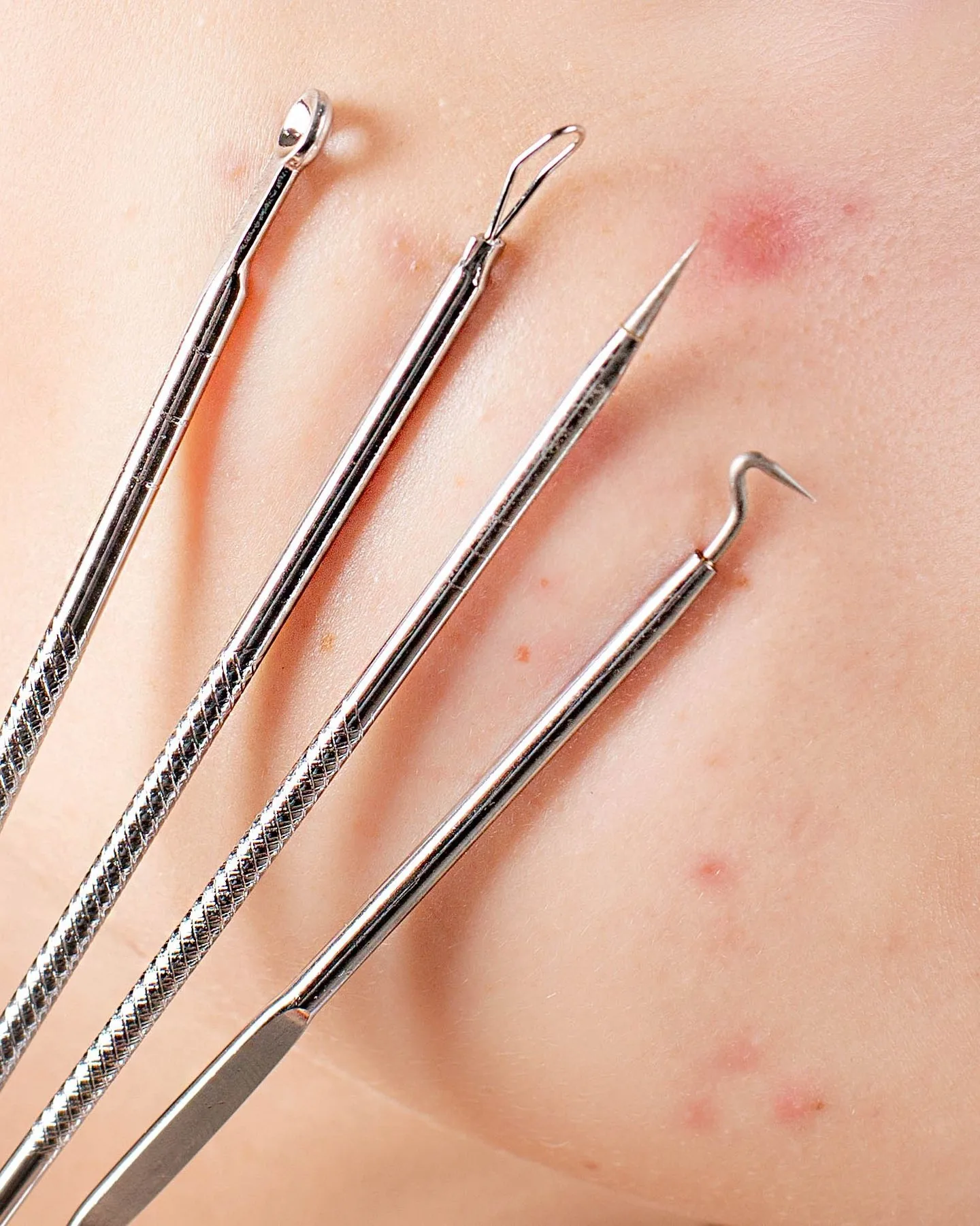
Sterilised extraction instruments, including loops, a fine lancet and a hook, which clinicians use to clear blocked pores during treatment.
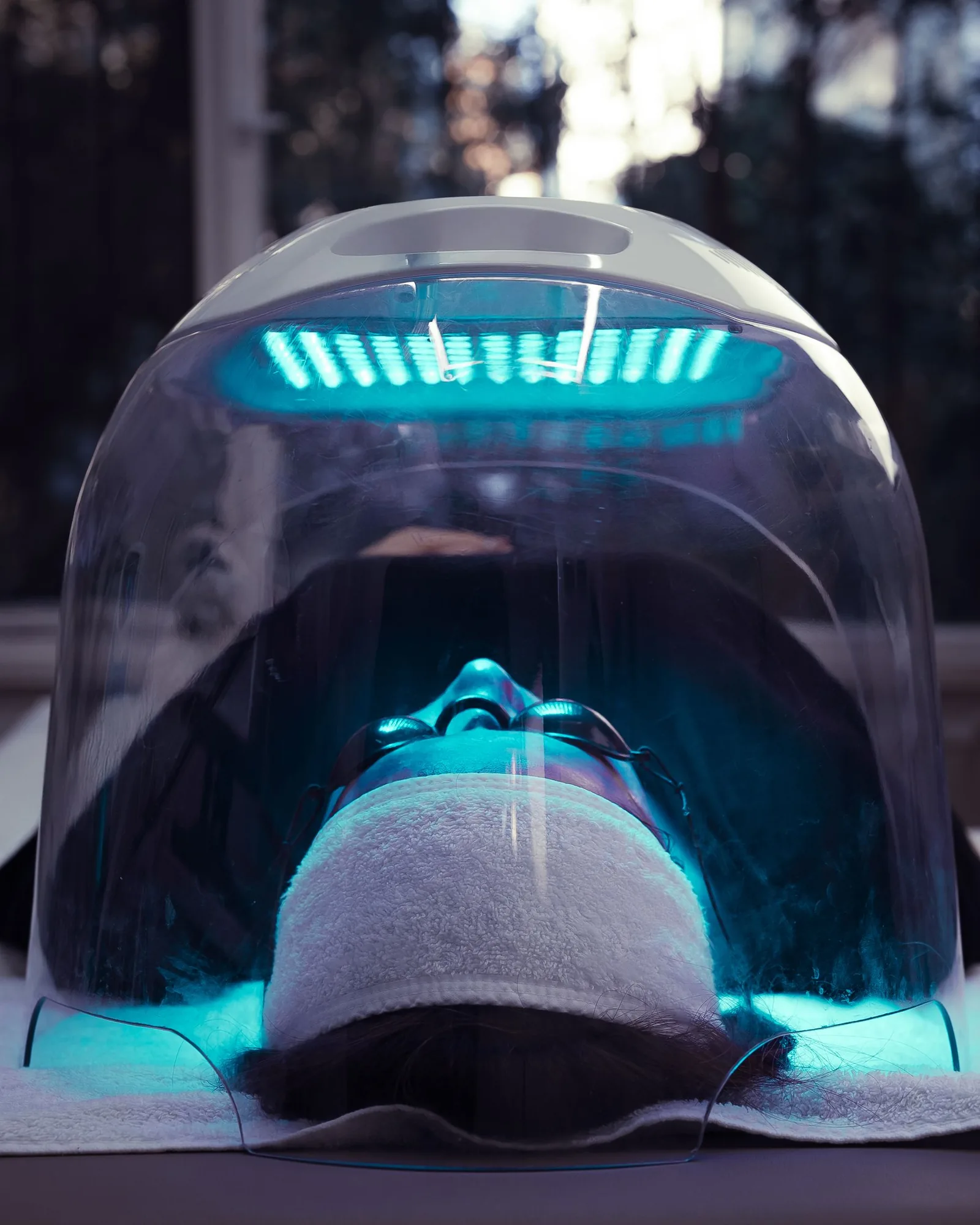
Blue light treatment: the patient lies under an LED panel with eyes protected; any redness afterwards usually fades within hours or by the next day.
Device and procedure images are provided by the manufacturers / licensed stock; they do not show COMEDI patients.
At a glance
- How it works
- Extraction clears blocked pores by hand. Light, laser and radiofrequency treatments use light or heat aimed at inflamed spots or at the oil glands.
- Sessions & interval
- The American Academy of Dermatology says several light or laser sessions work better than one. In a randomised trial of single-needle radiofrequency, patients had three treatments four weeks apart.
- What to expect
- Results usually appear some weeks after treatment and vary from person to person. Light and laser treatments rarely clear acne on their own, so they are normally combined with medication and follow-up sessions.
- Deep cysts and nodules
- A doctor may inject a corticosteroid into a painful cyst or nodule, or open and drain it with a sterile needle or blade. Squeezing spots yourself can cause scarring and infection.
Acne, scars, exfoliation and pore care work as a planned series alongside daily skin care rather than as a single session. Scars respond differently by type and may not disappear completely.
Acne needs ongoing care and is not resolved in a single visit.
References 6
- American Academy of Dermatology – Lasers and lights: How well do they treat acne?
- American Academy of Dermatology – Pimple popping: Why only a dermatologist should do it
- US FDA 510(k) K203013 – AGNES (AGNES Medical Co., Ltd.)
- US FDA 510(k) K254271 – Capri (ORO Co., Ltd.)
- US FDA 510(k) K181518 – Sebacia Microparticles
- Lasers in Surgery and Medicine 2020 – single microneedle radiofrequency for acne (randomised controlled trial)
Real cases
A case only helps when you can see the conditions behind it.
Sign in to see the before & after photos
Free. We use your Google name and email only to answer questions about these cases. Clinic names are shared in your private consultation.
 Before
 After
- Sessions
- 4 sessions (example)
- Combined
- None
- Photo timing
- after 4 sessions (example)
 Before
 After
- Sessions
- 4 sessions (example)
- Combined
- None
- Photo timing
- after 4 sessions (example)
 Before
 After
- Sessions
- 4 sessions (example)
- Combined
- None
- Photo timing
- after 4 sessions (example)
- SessionsOne session, or the result of a course
- CombinedWhether other treatments or surgery were done together
- Photo timingHow long after the procedure the photo was taken
What to ask in a consultation
Questions about whether it suits you and what the alternatives are.
Often considered when
- People with inflamed pimples, including on the back, which the American Academy of Dermatology says infrared light can treat.
- People bothered mainly by blackheads and whiteheads, which can be cleared by in-clinic extraction or photopneumatic therapy.
- People with a large, painful cyst or nodule who want it to settle quickly: a corticosteroid injection flattens most within 48 to 72 hours.
- People already using acne medicine who want an in-clinic treatment added to it.
Checks in Korea
- Korean hospitals and clinics that intend to attract foreign patients must register with the city or provincial government. Requirements include at least one board-certified specialist for each department through which they intend to attract foreign patients (except departments that are not specialties designated by Presidential Decree), and medical liability insurance or membership of a medical liability mutual aid association; registration is valid for three years from the date of registration.
- Under Korea's isotretinoin pregnancy prevention programme, a pregnancy check is required before prescribing, a prescription covers up to 30 days and must be dispensed within 7 days, contraception is required from one month before to one month after treatment, and blood donation is not allowed until at least one month after the last dose.
- Q01Which combination suits my skin, and what should come first?
- Q02How does the expected range differ for my type of scars or breakouts?
- Q03Who will perform the treatment, and what is their specialty?
- Q04Which device or product will be used, and is it the original I asked about?
- Q05How many sessions are usually planned, and can they fit into my stay?
- Q06What should I avoid before and after — sun, alcohol, flights, exercise?
- Q07What is included in the written estimate, and what could change after the consultation?
Check these yourself at the consultation
- Ask which device or product will be used (name and manufacturer) and what it is approved for.
- If Gold PTT is offered, ask which gold-particle product and which laser the clinic uses.
- Ask how many sessions are planned, how far apart, and whether medication is recommended alongside.
Recovery & schedule
Check swelling, daily routine, activity limits and review visits separately.
At a glance
- When medicine starts to work
- The American Academy of Dermatology notes that there is no one-size-fits-all acne treatment, so plans differ from person to person, and that it generally takes at least 6 to 8 weeks before breakouts start to lessen. The British Association of Dermatologists adds that, unless side effects mean stopping early, you may need to keep using a treatment for at least 12 weeks before deciding whether it has worked; your dermatologist sets the actual plan.
- Cyst injection
- A corticosteroid injection is used for a single, especially painful cyst or nodule, not for treating several blemishes; published guidance says it speeds healing, lowers the risk of scarring and flattens most lesions within 48 to 72 hours.
- Before extraction
- Extraction is done with sterilised instruments, and the skin may be exfoliated first.
- Isotretinoin course
- One course usually takes about four to five months, sometimes a little less or more.
- Keeping results
- Results from light and laser treatments are generally long lasting, but people often need follow-up treatments once or twice a year to maintain them.
- 01Swelling & bruising
Swelling & bruising: redness and swelling are common after many light and laser treatments, and some people feel stinging or burning; these are usually mild and fade within a few hours or by the next day.
- 02Back to routine
Back to routine: after a light peel, make-up can usually be worn straight away, sometimes from the next day.
- 03Activity limits
Activity limits: after photodynamic therapy you must avoid sunlight for 48 hours, so plan indoor time for the next two days.
- 04Follow-up & flying home
Follow-up & flying home: the best results are usually seen weeks after the last session, and unless side effects mean stopping early, you may need to keep using a treatment for at least 12 weeks before judging whether it has worked, so the assessment often happens after you are home; agree in advance how progress will be checked.
Published guidance; your own clinic sets the actual plan.
Before your visit day
What clinics ask of international patients, in one place.
- Bring your passportClinics register international patients with their passport, and any estimate or prescription is issued in the name on it.
- Patients under 19Adulthood in Korea starts at 19. For a younger patient, clinics generally ask a parent or legal guardian to consent in writing, and many ask them to attend. Tell us the patient's age when you write, and we check what the clinic needs.
- Coming with someoneA family member or friend can usually join you in the consultation room. Treatment and recovery areas follow each clinic's rules, so we check this before your visit. If more than one person is booking, tell us what each person is interested in.
- Language helpCoordinators reply in English, Japanese, Chinese and Korean. Interpretation on the day is arranged for your dates, and we confirm in writing what it covers before you travel.
- Medicines and allergiesWrite down the medicines you take and any allergies. The clinic asks about both before any treatment.
What changes the price
The same treatment can be quoted differently depending on the items below.
What differs from clinic to clinic
- Which devices the clinic has
- Blue and red light treat pimples but not blackheads, whiteheads, cysts or nodules; infrared light also reaches back acne; photopneumatic therapy treats blackheads, whiteheads and some pimples. What a clinic owns shapes what it can offer for your type of acne.
- PDT protocol
- The light-sensitising solution can be left on anywhere from 15 minutes to 3 hours, and clinics differ in solution, light source and timing.
- Procedure plus medicine
- Dermatologists may pair a light treatment with a medicine applied to the skin, and some clinics focus on procedures while others start with prescriptions; ask which approach is planned.
- Experience with your skin tone
- Peels in darker skin can leave permanent pigment problems without the right expertise, so a doctor's experience with your skin type matters.
- Plan for after you fly home
- Unless side effects mean stopping early, you may need to keep using a treatment for at least 12 weeks before judging whether it has worked, so clinics differ in how they track progress, adjust medicine and plan the next session once you have left Korea.
- Light or device type
- Which light, laser or energy device is used, since each one treats different kinds of acne.
- Number of spots injected or drained
- Whether the quote covers a set number of cysts or nodules, or is charged per lesion.
- PDT solution and waiting time
- Which light-sensitising solution is used and how long it stays on before the light.
- Preparation before extraction
- Whether exfoliation or a peel before extraction is included or separate.
- Follow-up checks
- Whether follow-up visits or remote progress checks over the following weeks are included.
- Combination
- Which procedures are combined
- Area & sessions
- Full face or part, and the planned sessions
- Prescriptions & products
- Whether medicines and care products are included
- Numbing & care
- Numbing cream and soothing care
Prices are set by the clinic after a consultation. Ask for an itemised, written estimate before you book, and check what is included and what could change.
Often charged separately
Ask whether each of these is in your estimate.
| Item | What to ask |
|---|---|
| Consultation fee | Whether the consultation is charged, and whether that amount comes off the treatment price. |
Clinics in Korea build a treatment estimate from the area, the amount used or the number of sessions.
The final figure is set after the doctor sees you at the consultation.
Ask for an itemised, written estimate that marks each item above as included or not, so you can compare two quotes on the same basis.
VAT before you compare quotes
The VAT refund for foreign visitors' cosmetic procedures covered only procedures received by 31 December 2025, so procedures received now are not refunded. Plan your budget without it, and ask each clinic whether VAT is included in the written quote so you compare the same total.
Ask COMEDI, for example
Clinics in Seoul differ in equipment, technique, specialist focus and what the price includes. Send us your question and we compare partner clinics for you.
- “My acne is mostly blackheads and a few cysts. Which partner clinics have devices suited to both?”
- “Which clinics offer PDT, and how long do they leave the solution on?”
- “Can a clinic check my progress remotely after I fly home?”
- “I have darker skin. Which dermatologists have experience treating acne in my skin type?”
Precautions & aftercare
General information. Follow the written instructions from your treating doctor for anything specific to you.
Side effects and precautions for Acne treatment are in one place at the top of this page.
Aftercare for this procedure
- Follow the clinic's before- and after-treatment instructions exactly; the American Academy of Dermatology calls this essential.
- Once peeled skin has healed, apply sunscreen every day to help keep the results.
- Blackheads and whiteheads can come back after extraction, so keep to a skin-care plan to prevent new ones.
- Ask whether a topical retinoid is recommended for maintenance once your acne is under control.
- Check with a doctor or pharmacist before using several acne treatments at the same time.
- If you take isotretinoin, do not donate blood during treatment and for one month after stopping.
- Tell the clinic about acne medicines (including tablets), possible pregnancy and any history of sensitive skin.
- Contact the clinic for severe burning, oozing or pain after a session.
- Ask when you can restart the products you use at home.
Information only. Suitability, risks, recovery and price are assessed by the treating doctor in a consultation.
Sources for this section 10
- Lasers and lights: How well do they treat acne? — American Academy of Dermatology
- Pimple popping: Why only a dermatologist should do it — American Academy of Dermatology
- Acne: Diagnosis and treatment — American Academy of Dermatology
- Isotretinoin: The truth about this acne treatment — American Academy of Dermatology
- Is any acne treatment safe to use during pregnancy? — American Academy of Dermatology
- Acne treatment — British Association of Dermatologists (Acne Support, linked from NHS)
- ABSORICA / ABSORICA LD (isotretinoin) prescribing information — DailyMed (US FDA label)
- 이소트레티노인 안전사용 카드뉴스 — 식품의약품안전처
- 의료 해외진출 및 외국인환자 유치 지원에 관한 법률 제6조 — 국가법령정보센터
- Chemical peels: FAQs — American Academy of Dermatology
Related questions & guides
Worth reading alongside this page.
Notes from people who used COMEDI
Written after a consultation we arranged, and matched to that request.
Common questions
How much does Acne treatment cost in Korea?+
Prices are set by each clinic after a consultation and depend on the technique, area and your needs. Ask for an itemised, written estimate before you book — it should list what is included and what could change. We help you request and compare estimates.
Can foreigners get Acne treatment in Korea?+
Yes. Many Seoul clinics see international patients. We help with clinic information, consultations in your language, written estimates and interpretation on the day.