
CoolSculpting& fat freezing
A controlled cooling device applied to localised areas of fat on the body.

- Type
- Non-surgical
- Usually by
- Dermatologist
- Category
- Body
- First step
- Consultation
Information only. Suitability, risks, recovery and price are assessed by the treating doctor in a consultation.
Side effects and precautionsWhat to know about CoolSculpting & fat freezing before you book15
Reactions that usually settle, signs to tell the clinic about straight away, and times to wait. Your doctor goes through the risks that apply to you at the consultation.
Known risks
- Redness, swelling, bruising, tenderness and numbness are common and can last up to several weeks; freeze burns and nerve problems have been reported. In rare cases the treated fat grows larger instead of shrinking (paradoxical hyperplasia), appearing two to five months later and sometimes needing surgery.
Usually settles on its own
- Redness, swelling, blanching, bruising, firmness, tenderness, cramping or aching in the treated area.
- Tingling, stinging, itching or skin sensitivity, and numbness that can last several weeks.
- A sense of discomfort in the throat after treatment under the chin or along the jawline.
Tell the clinic promptly
- Paradoxical hyperplasia: the treated area slowly grows larger 2 to 5 months later instead of shrinking. The CoolSculpting maker gives a rate of about 1 in 3,000 treatments and says it will not resolve untreated and may need surgery; tell the clinic if the area enlarges.
- Freeze burns on the skin, which the US FDA says can be severe: contact the clinic about blistering or skin damage.
- Nodules: small, temporary lumps in the fat that can be felt but not seen. The US FDA lists them among complications that may need treatment or have long-term effects, so tell the clinic if you notice them.
- A hernia in a weakened area, which the US FDA lists among the most serious complications.
- Long-term pain in the treated area, which the American Academy of Dermatology describes as rare.
- Darkening of the skin (hyperpigmentation), reported in 2% of patients in a 2025 meta-analysis, and surface irregularities or asymmetry, which ASPS lists as a risk.
Wait or rethink when
- Raynaud's disease, pernio or chilblains: the US FDA advises not having fat freezing.
- Cold urticaria: the US FDA advises not having fat freezing.
- Poor blood circulation in the area to be treated: the US FDA advises not having fat freezing.
- Severe varicose veins, dermatitis or other skin lesions in the treatment area: a 2015 review states it should not be performed there.
- Pregnancy, recent surgery or an existing hernia: the CoolSculpting maker asks you to tell your doctor about these before treatment.
Sources for this section 11
- US FDA – Non-invasive body contouring technologies
- CoolSculpting – Frequently asked questions
- Allergan Aesthetics News Center – CoolSculpting FAQ
- CLASSYS – CLATUU Alpha product overview
- Cryolipolysis — American Society of Plastic Surgeons
- Non-invasive fat removal: What can you expect? — American Academy of Dermatology
- CoolSculpting by Allergan Aesthetics Expands Body Contouring Portfolio With CoolSculpting Elite (2021-01-26) — AbbVie
- Ravindran et al., Cryolipolysis and associated health outcomes, adverse events, and satisfaction: A systematic review and meta-analysis — Obesity Reviews 2025 (doi:10.1111/obr.13925)
- Ingargiola et al., Cryolipolysis for Fat Reduction and Body Contouring: Safety and Efficacy of Current Treatment Paradigms — Plastic and Reconstructive Surgery 2015 (PMC4444424)
- 품목 및 업체검색 — 의료기기안심책방(식품의약품안전처)
- 외국인환자 유치기관 등록제도 — 메디컬코리아(한국보건산업진흥원)
What is it?
The purpose, the change you can expect and the limits.
A controlled cooling device applied to localised areas of fat on the body.
Cryolipolysis
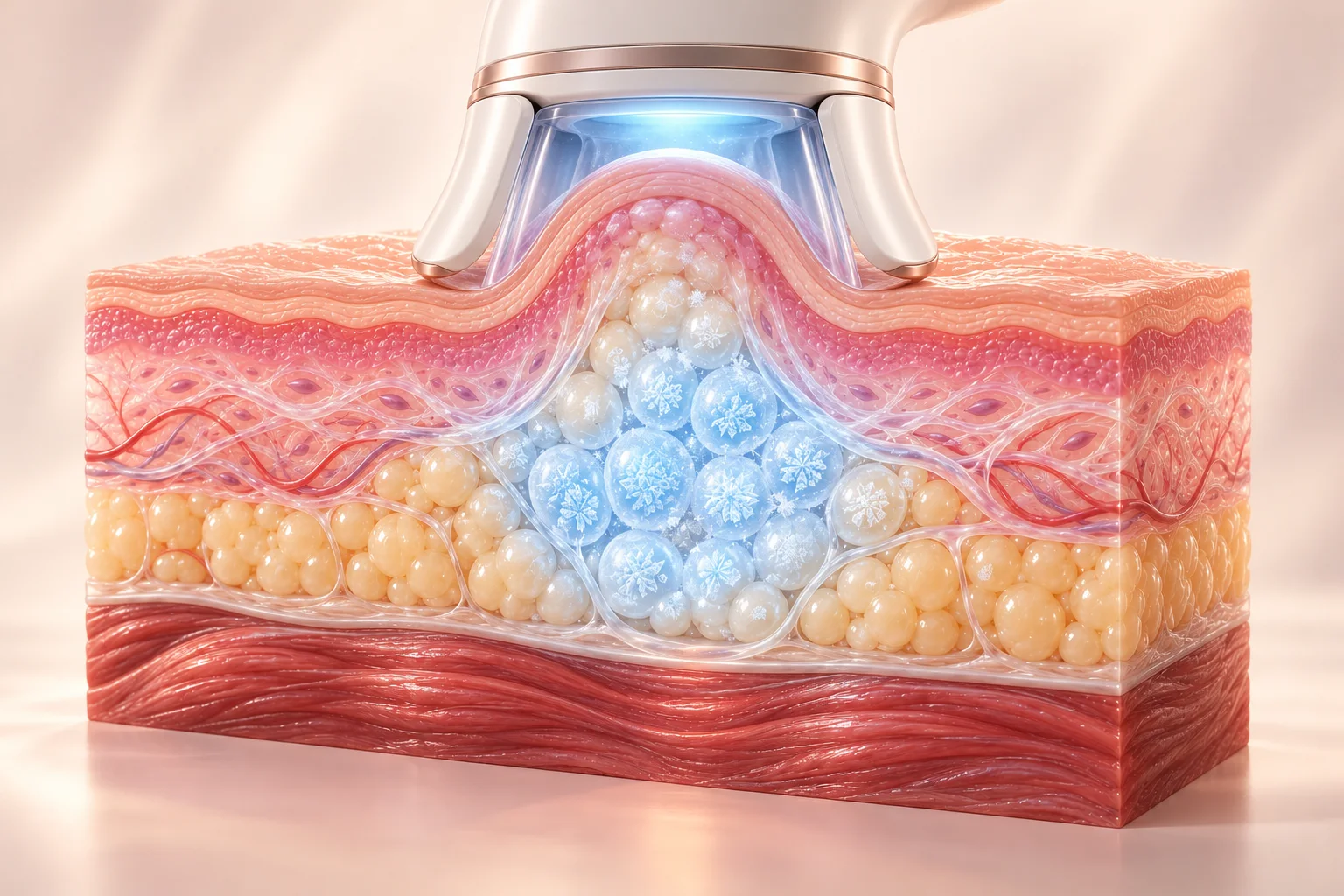
- CoolSculpting
- CoolSculpting Elite
- CLATUU Alpha
Devices & products used
- 01CoolSculptingAllergan Aesthetics (AbbVie), USA
A cryolipolysis system that draws a fold of fat into a cooling applicator; it is FDA-cleared for areas including the abdomen, flanks, thighs, upper arms, back and bra fat, the area under the buttocks and under the chin.
- 02CoolSculpting EliteAllergan Aesthetics (AbbVie), USA
A newer system in the same CoolSculpting range; ask the clinic which generation and which applicators it uses.
- 03CLATUU AlphaCLASSYS Inc., Korea
A Korean cryolipolysis device whose applicator cups cool the tissue from all sides (360°) and which can run two handpieces at once; the maker gives 40–60 minutes per session.
Clinics do not all carry the same devices, products or techniques. Ask which one will be used, by name, before you book.
How it is done, in photos
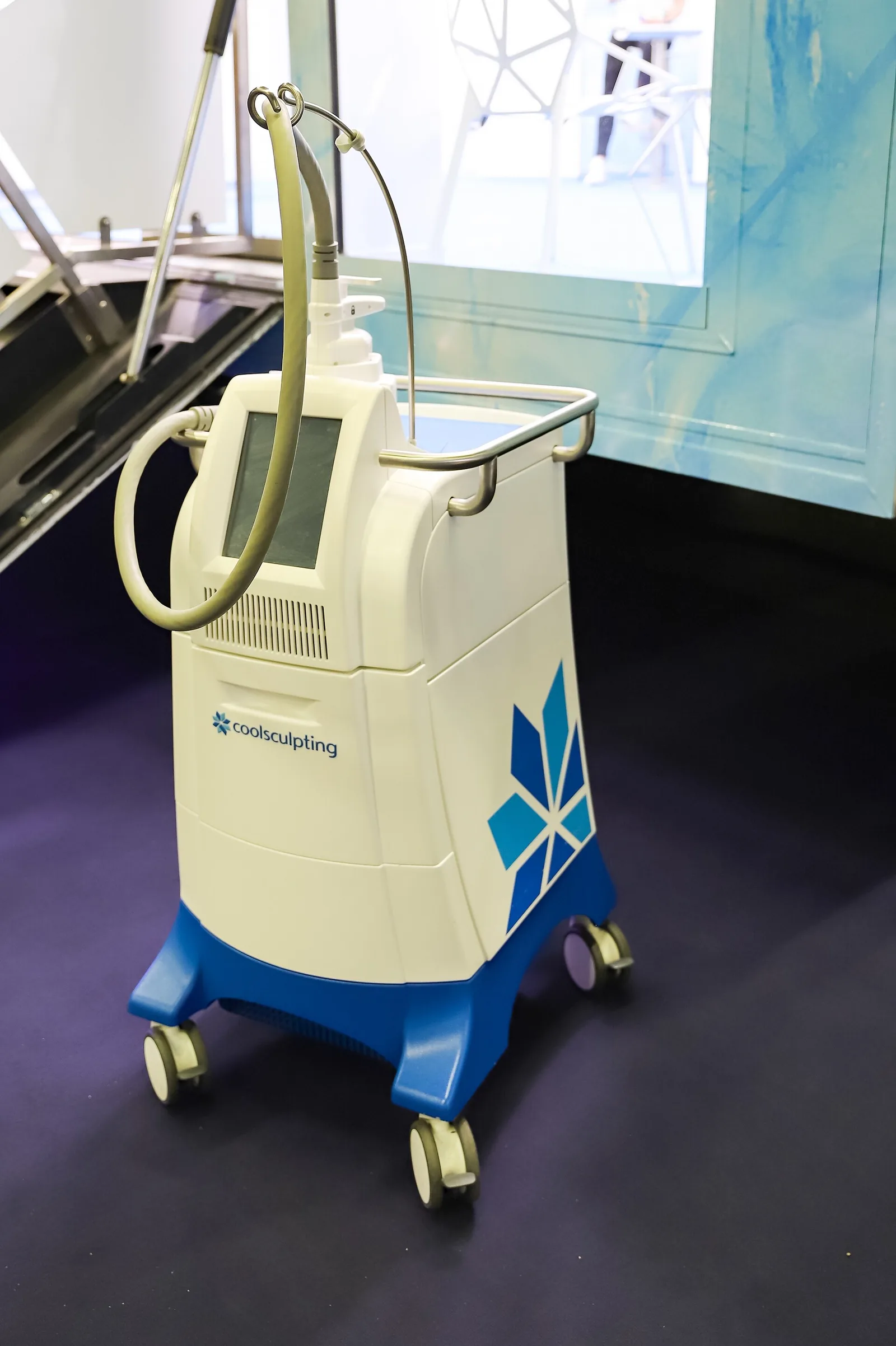
A CoolSculpting system with its applicator on a curved arm; each session tends to last 30 to 90 minutes, depending on the areas.
Photo: dronepicr / CC BY 2.0 / CC BY 2.0 via Wikimedia Commons
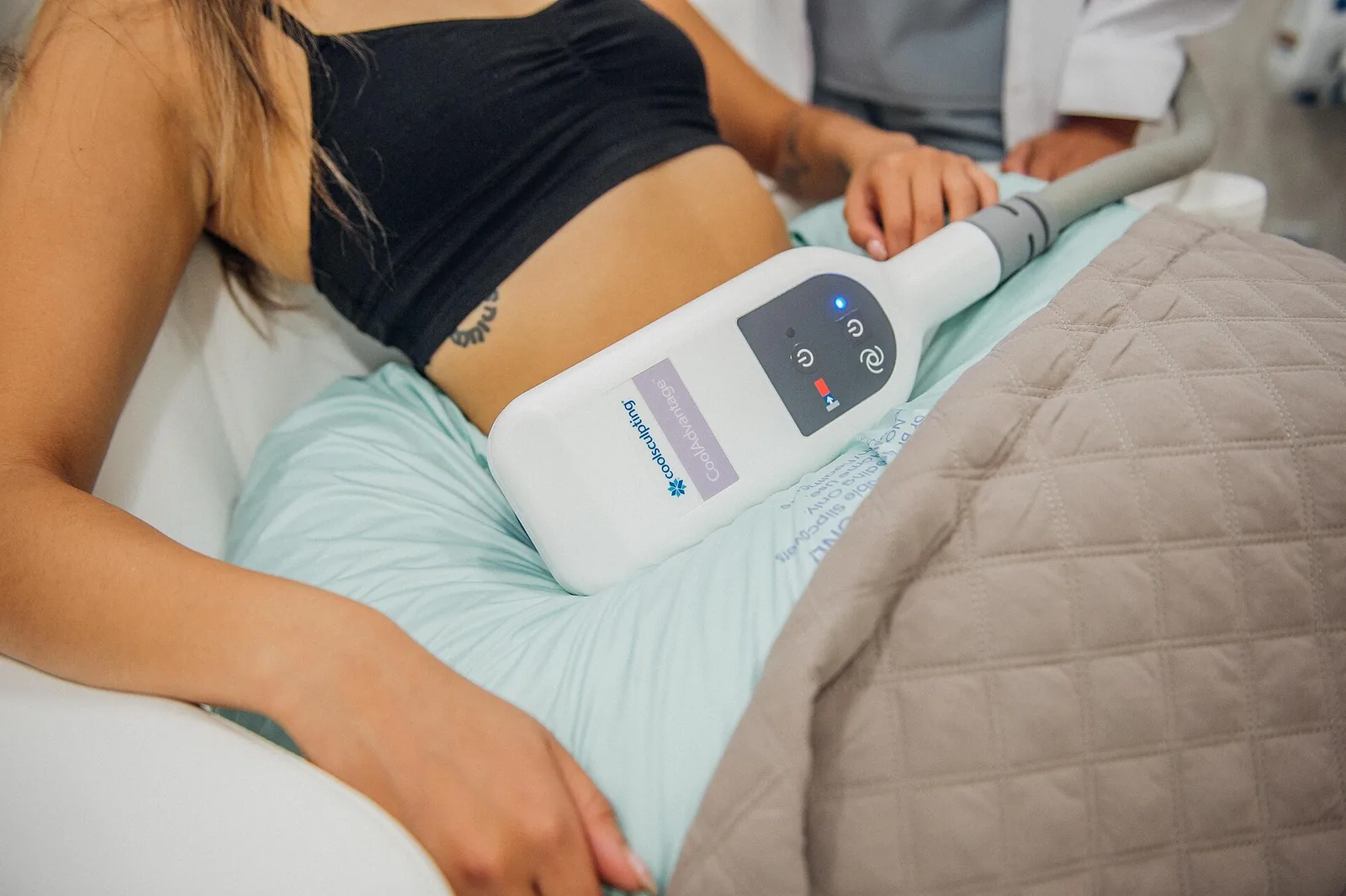
A CoolSculpting applicator sits on the lower abdomen over a gel pad that protects the skin; the vacuum's pull usually eases within minutes.
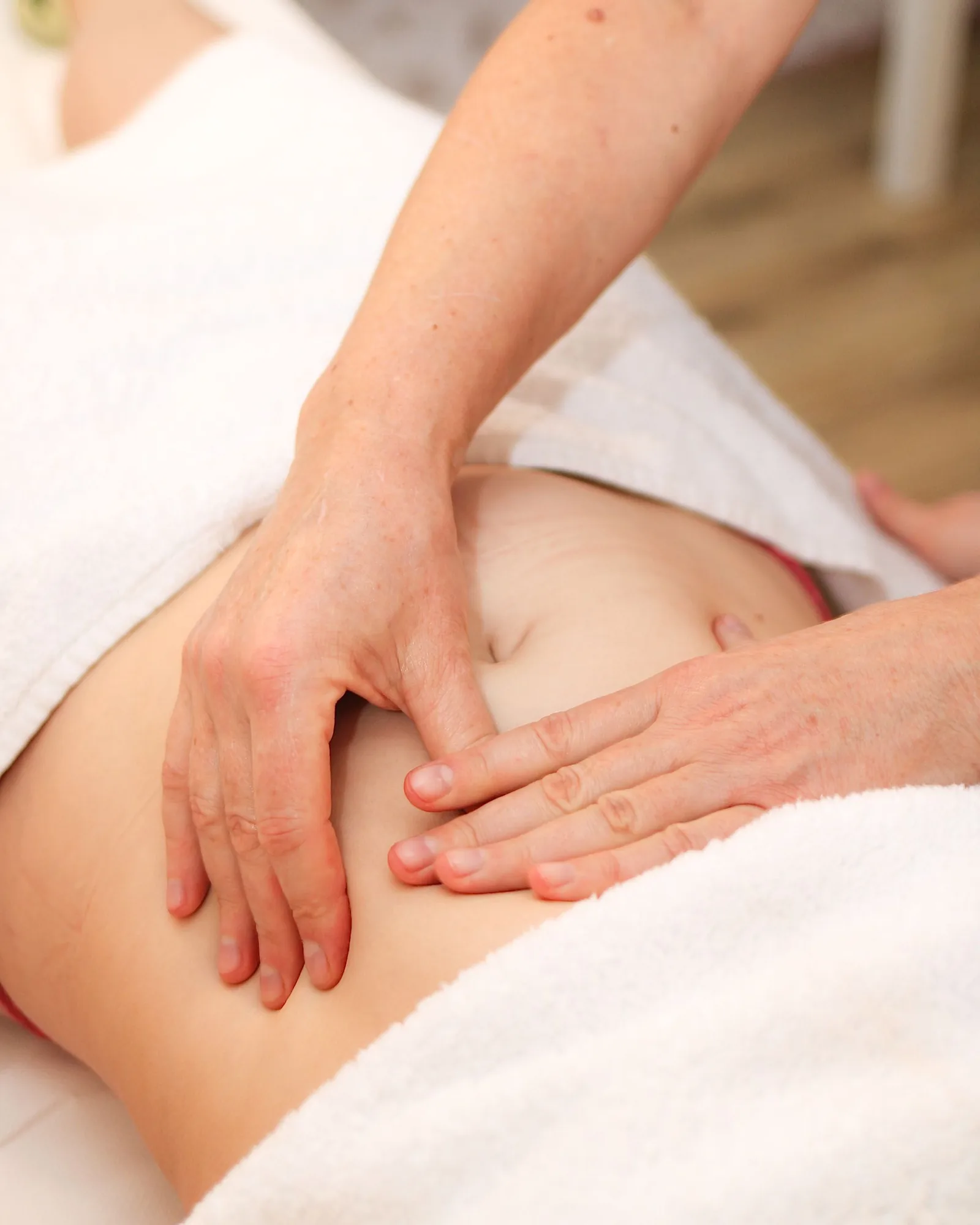
After each cooling cycle the applicator is removed and the treated area is massaged by hand before the next step.
Device and procedure images are provided by the manufacturers / licensed stock; they do not show COMEDI patients.
At a glance
- How it works
- Fat cells are more sensitive to cold than the skin and tissue around them. Controlled cooling damages the fat cells, and the body clears them gradually over roughly two to three months.
- Session time
- According to the US FDA, the fat is held in the applicator and cooled for up to an hour per area.
- What it feels like
- You may feel pulling, pinching, intense cold, tingling or aching at first, which eases as the area goes numb.
- Sessions & interval
- The CoolSculpting maker says most people need at least two sessions, typically 4–8 weeks apart, with results starting to show one to three months after treatment.
- Who should not have it
- People with cryoglobulinaemia, cold agglutinin disease or paroxysmal cold haemoglobinuria should not have cryolipolysis. It is a contouring treatment, not a weight-loss treatment.
These treatments target localised fat or hair; they are not weight-loss methods. Change appears gradually and several sessions may be needed.
It is not a weight-loss method; change is gradual and not every area is suitable.
Real cases
A case only helps when you can see the conditions behind it.
Sign in to see the before & after photos
Free. We use your Google name and email only to answer questions about these cases. Clinic names are shared in your private consultation.
 Before
 After
- Sessions
- One session (example)
- Combined
- None
- Photo timing
- 3 months after (example)
 Before
 After
- Sessions
- One session (example)
- Combined
- None
- Photo timing
- 3 months after (example)
- SessionsOne session, or the result of a course
- CombinedWhether other treatments or surgery were done together
- Photo timingHow long after the procedure the photo was taken
What to ask in a consultation
Questions about whether it suits you and what the alternatives are.
Often considered when
- A small bulge of fat that remains despite diet and exercise, with a weight within the normal range for your height (the American Academy of Dermatology's description of a good candidate).
- Fat you can pinch, since the treatment draws a fold of fat into the applicator by vacuum.
- Small or moderate amounts of fat in one area rather than a large volume; a 2015 review found these patients benefit most.
- Reasonably firm skin: the American Society of Plastic Surgeons notes that people with loose skin or poor tone may not be suitable candidates.
- You can wait several months to judge the result, since most people see the full effect 3 to 6 months after the last session.
Checks in Korea
- The medical device information site of Korea's Ministry of Food and Drug Safety (MFDS) lets you search devices by product name, model name, approval number or company name, and filter by status such as normal or cancelled. Ask the clinic for the device's approval number and look it up there.
- Hospitals and clinics registered to treat international patients can be searched on the government's Medical Korea system. Registration requires medical liability insurance or mutual-aid cover, and that cover must include international patients.
- Q01Is this method suitable for this area? How does it compare with a surgical option?
- Q02How many sessions do you expect, and when is the change assessed?
- Q03Who will perform the treatment, and what is their specialty?
- Q04Which device or product will be used, and is it the original I asked about?
- Q05How many sessions are usually planned, and can they fit into my stay?
- Q06What should I avoid before and after — sun, alcohol, flights, exercise?
- Q07What is included in the written estimate, and what could change after the consultation?
Check these yourself at the consultation
- Ask for the exact device name and manufacturer, and whether the applicators and gel pads are the manufacturer's genuine parts.
- Ask how many applicator cycles and sessions are planned for each area.
- Ask what the clinic would do if paradoxical hyperplasia appeared after you have returned home.
Recovery & schedule
Check swelling, daily routine, activity limits and review visits separately.
At a glance
- Anaesthesia
- ASPS describes the procedure as done without anaesthesia. A gel pad is placed to protect the skin before the applicator goes on, and the discomfort from the vacuum's pull usually resolves within minutes once the area is numb.
- Time in the chair
- The American Academy of Dermatology says each session tends to last 30 to 90 minutes. Ask the clinic how long your visit will take for the areas planned.
- Massage after each cycle
- After cooling, the applicator is removed and the area is massaged, which ASPS says may improve the final result. In one study reviewed in 2015, fat reduction at two months was 21.0% on the massaged side versus 12.6% on the side that was not massaged.
- A second session
- In a study of the outer thigh, two treatments reduced the fat layer by an average of 28.5% compared with 19.7% after one. The review notes that further sessions add less than the first.
- When results show
- According to the American Academy of Dermatology, some change may be noticed as early as three weeks, and most people see the full effect 3 to 6 months after the last session. ASPS describes an average fat reduction of about 20% in the treated bulge over four to six months.
- How long it lasts
- The American Academy of Dermatology explains that the treated fat cells are gone for good, but the fat cells that remain in the area can still expand if you gain weight.
- 01Swelling & bruising
A 2015 review reports that redness settled within a week and bruising and swelling shortly after, while changes in sensation never lasted beyond a month, with normal feeling returning after about 3.6 weeks on average. The US FDA notes numbness can persist for several weeks.
- 02Back to routine
The American Academy of Dermatology says most people return to everyday activities immediately. ASPS notes the area can feel sore, as if after a workout.
- 03Activity limits
ASPS states there are no activity restrictions after treatment. Ask the clinic whether it recommends any compression or massage at home, as this is not set out in the sources above.
- 04Follow-up & flying home
According to the American Academy of Dermatology, most people see the full effect 3 to 6 months after the last session, and enlarged tissue from paradoxical hyperplasia can appear 2 to 5 months after treatment. If your stay in Korea is shorter than that, the result will be judged after you fly home, so agree before leaving how the clinic will review progress photos.
Published guidance; your own clinic sets the actual plan.
Before your visit day
What clinics ask of international patients, in one place.
- Bring your passportClinics register international patients with their passport, and any estimate or prescription is issued in the name on it.
- Patients under 19Adulthood in Korea starts at 19. For a younger patient, clinics generally ask a parent or legal guardian to consent in writing, and many ask them to attend. Tell us the patient's age when you write, and we check what the clinic needs.
- Coming with someoneA family member or friend can usually join you in the consultation room. Treatment and recovery areas follow each clinic's rules, so we check this before your visit. If more than one person is booking, tell us what each person is interested in.
- Language helpCoordinators reply in English, Japanese, Chinese and Korean. Interpretation on the day is arranged for your dates, and we confirm in writing what it covers before you travel.
- Medicines and allergiesWrite down the medicines you take and any allergies. The clinic asks about both before any treatment.
What changes the price
The same treatment can be quoted differently depending on the items below.
What differs from clinic to clinic
- Device generation and applicators
- CoolSculpting Elite uses C-shaped applicators in seven shapes and sizes, which the maker says give up to an 18% larger cooling area than its previous-generation applicators (adding that the clinical significance has not been established), and can treat two areas at the same time. A Korean device such as CLATUU Alpha offers seven cup types of its own. Which cups a clinic has decides how well they fit your area.
- Treatment planning
- How many cycles a clinic places on one area, and whether it plans a second session, varies. In published data a second session added fat reduction, but less than the first.
- Massage after cooling
- ASPS says massaging the area after the applicator comes off may improve the final result, so ask whether the clinic does this and for how long.
- Who assesses and treats
- The American Academy of Dermatology advises meeting a doctor trained in non-invasive fat removal who treats patients with it often. Ask who will assess your area and how often that doctor performs this treatment.
- Hygiene and disposable parts
- The US FDA suggests asking how devices are cleaned between patients and whether any parts are disposable.
- Follow-up after you fly home
- Results and paradoxical hyperplasia both show months after treatment, so clinics differ in how they review photos remotely and what they offer if the area enlarges.
- Cycles per area
- How many applicator placements (cooling cycles) the quote covers for each area, since a larger bulge may need more than one placement.
- Applicator type
- Which applicator shape and size is planned for each area, as devices offer several cups for different body curves.
- One or two areas at once
- Whether two areas are treated at the same time with two applicators, which changes how long the visit takes.
- Second session
- Whether the quote is for one session or includes the second session that many people need, and when it would fall.
- Gel pads and massage
- Whether the skin-protecting gel pad for each cycle and the massage after cooling are included.
- Remote review
- Whether review of photos at around 3 to 6 months, after you have flown home, is included.
- Area & size
- Treated areas, their size and the number of applicators
- Sessions
- Recommended sessions and package terms
- Device & product
- The device or injectable product used
- Aftercare
- Whether care after the session is included
Prices are set by the clinic after a consultation. Ask for an itemised, written estimate before you book, and check what is included and what could change.
Often charged separately
Ask whether each of these is in your estimate.
| Item | What to ask |
|---|---|
| Consultation fee | Whether the consultation is charged, and whether that amount comes off the treatment price. |
| Medicine and aftercare products | Whether prescriptions, soothing creams or sun protection after treatment are included. |
Clinics in Korea build a treatment estimate from the area, the amount used or the number of sessions.
The final figure is set after the doctor sees you at the consultation.
Ask for an itemised, written estimate that marks each item above as included or not, so you can compare two quotes on the same basis.
VAT before you compare quotes
The VAT refund for foreign visitors' cosmetic procedures covered only procedures received by 31 December 2025, so procedures received now are not refunded. Plan your budget without it, and ask each clinic whether VAT is included in the written quote so you compare the same total.
Ask COMEDI, for example
Clinics in Seoul differ in equipment, technique, specialist focus and what the price includes. Send us your question and we compare partner clinics for you.
- “Which partner clinics use CoolSculpting Elite or another device with an applicator that fits my area?”
- “How many cycles per area would be planned, and is a second session included?”
- “Can two areas be treated at the same time so it fits a short stay?”
- “Will the clinic review my photos at three to six months after I fly home?”
Precautions & aftercare
General information. Follow the written instructions from your treating doctor for anything specific to you.
Side effects and precautions for CoolSculpting & fat freezing are in one place at the top of this page.
Aftercare for this procedure
- Expect soreness like after a workout, but tell the clinic about pain that is severe or keeps going rather than easing.
- Check the skin over the treated area in the first days and report blisters or broken skin, which can signal a freeze burn.
- Judge the result around 3 to 6 months after your last session, when most people see the full effect, not in the first weeks while swelling and firmness are still settling.
- If the area becomes larger and firmer 2 to 5 months later rather than smaller, send photos to the clinic instead of waiting for it to go down.
- Keep your weight stable, since the fat cells left in the area can still expand if you gain weight.
- Tell the clinic about cold-related conditions, hernias, possible pregnancy, medicines and skin conditions.
- Contact the clinic if severe pain, firm lumps or a change in skin colour continues.
- Ask for the clinic's advice on diet and exercise as part of the plan.
Information only. Suitability, risks, recovery and price are assessed by the treating doctor in a consultation.
Sources for this section 10
- Non-Invasive Body Contouring Technologies — US Food and Drug Administration
- Cryolipolysis — American Society of Plastic Surgeons
- Non-invasive fat removal: What can you expect? — American Academy of Dermatology
- CoolSculpting — Frequently asked questions (Allergan Aesthetics)
- CoolSculpting by Allergan Aesthetics Expands Body Contouring Portfolio With CoolSculpting Elite (2021-01-26) — AbbVie
- Ingargiola et al., Cryolipolysis for Fat Reduction and Body Contouring: Safety and Efficacy of Current Treatment Paradigms — Plastic and Reconstructive Surgery 2015 (PMC4444424)
- Ravindran et al., Cryolipolysis and associated health outcomes, adverse events, and satisfaction: A systematic review and meta-analysis — Obesity Reviews 2025 (doi:10.1111/obr.13925)
- CLATUU Alpha product overview — CLASSYS
- 품목 및 업체검색 — 의료기기안심책방(식품의약품안전처)
- 외국인환자 유치기관 등록제도 — 메디컬코리아(한국보건산업진흥원)
Related questions & guides
Worth reading alongside this page.
Notes from people who used COMEDI
Written after a consultation we arranged, and matched to that request.
Common questions
How much does CoolSculpting & fat freezing cost in Korea?+
Prices are set by each clinic after a consultation and depend on the technique, area and your needs. Ask for an itemised, written estimate before you book — it should list what is included and what could change. We help you request and compare estimates.
Can foreigners get CoolSculpting & fat freezing in Korea?+
Yes. Many Seoul clinics see international patients. We help with clinic information, consultations in your language, written estimates and interpretation on the day.